Painted Ceilings
Tashkent, Uzbekistan
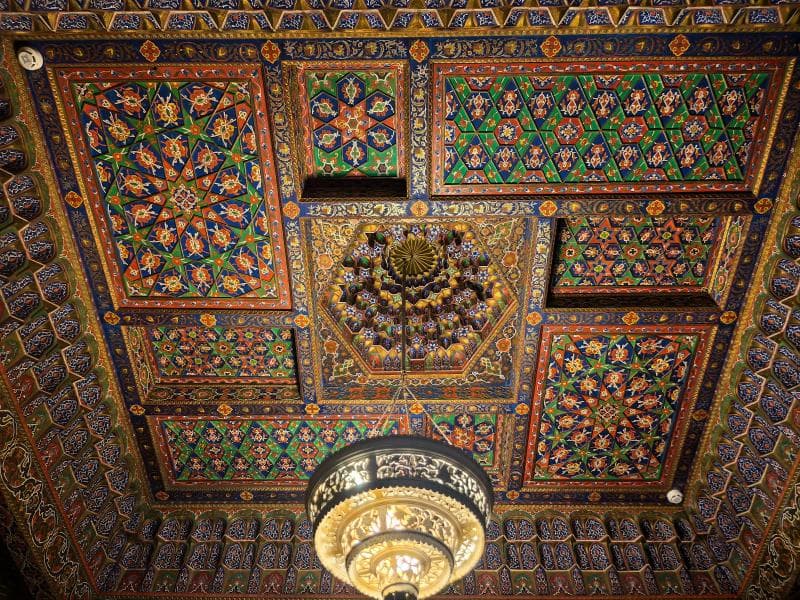
Discover the stunning Painted Ceilings at the Museum Of Applied Arts in Tashkent, Uzbekistan, a vibrant display of traditional Uzbek craftsmanship.
Overview
Stepping into the Museum Of Applied Arts in Tashkent, Uzbekistan, visitors are immediately captivated by its architectural grandeur, with the 'Painted Ceilings' standing out as a breathtaking testament to Uzbek artistry. This sub-spot isn't merely a decorative element; it's an integral part of the museum's identity, transforming a visit into an immersive cultural experience. The museum building, originally the opulent mansion of a Russian diplomat, Alexander Polovtsev, is a masterpiece in its own right, showcasing traditional Uzbek decorative arts not just in its collections, but in its very structure. The ceilings, along with the intricately carved walls, ganch (carved plaster) details, and vibrant tile work, create an atmosphere of profound historical and artistic significance, inviting travelers to delve deeper into the rich heritage of Central Asian craftsmanship.
These ceilings, found particularly in the museum's central hall and the aivan (covered veranda), are a dazzling display of geometric precision, floral motifs, and masterful painting techniques. They exemplify the meticulous skill of Uzbek artisans who transformed raw materials into enduring works of art. The experience of standing beneath these painted masterpieces offers a unique window into the aesthetic sensibilities and cultural narratives that have shaped this region for centuries, long before the building became a public museum.
History & Cultural Background
The story of the Painted Ceilings is interwoven with the history of the mansion itself, built around the turn of the 20th century for Alexander Polovtsev, a Russian diplomat and keen admirer of local craftsmanship. Rather than opting for European decor, Polovtsev commissioned master craftsmen from across Turkestan—including renowned artisans from Khiva, Bukhara, Samarkand, and Fergana—to adorn his residence. This ambitious project aimed to create an 'Eastern palace' from the inside out, blending European architectural proportions with purely Eastern finishing.
The construction and decoration phase, completed in 1907, saw these skilled artisans apply their traditional knowledge and techniques to every surface, including the magnificent ceilings. They utilized ganch, a type of carved plaster, alongside wood carving and painting to achieve the intricate patterns and vibrant colors visible today. After the Russian Revolution, the building served various functions, including an orphanage, before being transformed into the Handicraft Museum in 1937, which later evolved into the State Museum of Applied Arts. The preservation of these original interiors, including the elaborate ceilings, was a deliberate act to conserve a significant example of 19th-century Uzbek architectural decorative art.
What Makes It Special
What truly sets the Painted Ceilings apart is their exceptional detail and the narrative they subtly convey about regional artistic diversity. The central hall's ceiling, for instance, is not a simple dome but a complex system of beams, coffers, and stalactite forms known as muqarnas. A closer inspection reveals distinct stylistic differences, a direct result of the collaboration between masters from various cities. Artisans from Khiva contributed finer, more geometric patterns, while those from Bukhara were known for their larger, more flowing floral motifs. This fusion of regional styles within a single space creates a dynamic visual dialogue, showcasing the breadth of Uzbek artistic traditions.
Furthermore, the fact that 'every centimeter is either painted or carved' speaks to a philosophy of maximalist decoration, where no surface is left unadorned. This approach is characteristic of much Islamic and Central Asian architecture, aiming to create an all-encompassing aesthetic experience. The careful restoration efforts over the decades have ensured that the original vibrancy and intricate designs of these ceilings remain remarkably preserved, allowing contemporary visitors to appreciate the same awe-inspiring beauty that Polovtsev himself envisioned.
Stories, Fun Facts & Local Details
One fascinating detail is that Polovtsev, the original owner, reportedly did not even get to fully experience his completed mansion, having been reassigned elsewhere before its decoration was finalized. This adds a touch of irony to the enduring legacy of his architectural vision. The selection of master craftsmen from different regions wasn't just about skill; it was a testament to the distinct schools of artistry that flourished across Turkestan. Each region, from the Fergana Valley to Khiva, had its signature motifs and techniques, passed down through generations. The ceilings thus serve as a kind of 'atlas' of Uzbek decorative art, mapping out these diverse traditions in one grand display.
The 'ganch' used in the ceilings and walls is a traditional carved plasterwork unique to the region, often incorporating both geometric and organic patterns. The vivid pigments, derived from natural sources, have retained their intensity, a testament to the quality of materials and the skill of the original painters. The museum building itself is often mistaken for the residence of an emir, underscoring its authentic 'Eastern palace' aesthetic, largely thanks to its richly decorated interiors, including these iconic ceilings.
Visitor Perspective
For any curious traveler, beholding the Painted Ceilings is often a highlight of a visit to the Museum Of Applied Arts. The sheer scale and intricate beauty demand time for contemplation, encouraging visitors to crane their necks and absorb every detail. It's an experience that transcends mere observation; it's about feeling the cultural heartbeat of Uzbekistan. The ceilings provide an immediate immersion into the aesthetic world of historical Central Asia, setting the stage for the numerous artifacts housed within the museum's collections.
While the museum's exhibits themselves are rich and varied, covering everything from ceramics and textiles to jewelry and wood carving, many agree that the building's interior decoration, especially its ceilings, offers one of the most profound artistic statements. It helps visitors understand the context in which the applied arts flourished and provides a tangible link to the masterful craftsmanship that has defined Uzbek culture for centuries. It's a visual feast that leaves a lasting impression, making the museum a truly unforgettable stop in Tashkent.
Coordinates: 69.1534, 41.1803
View on Google Maps💬 How Travelers Describe This Place
Based on community votes
Must See
797Interesting
695Unique
396Beautiful
286Photogenic
22
Traveler Stories
Discover memorable experiences shared by travelers who have visited this place.
No traveler stories yet.
Be the first traveler to share what made this place memorable.

Tour
By
Spot
Discover amazing places around the world. Your journey starts here.
Explore
© 2026 TourBySpot. All rights reserved.