Outdoor Stage
Stockholm, Sweden
Discover the vibrant Outdoor Stage in Kungsträdgården, Stockholm, Sweden. Experience concerts, festivals, and cultural events in this historic park.
Overview
Nestled in the heart of Stockholm, Sweden, Kungsträdgården – affectionately known as 'Kungsan' by locals – stands as a vibrant urban park and a key cultural crossroads. While not a singular, permanent structure, the 'Outdoor Stage' refers to the dynamic central area within Kungsträdgården that transforms into an open-air venue for a myriad of events throughout the warmer months. This beloved public space serves as a natural gathering point, hosting everything from live music concerts and cultural festivals to dance performances and public celebrations, drawing both Stockholmers and international visitors alike.
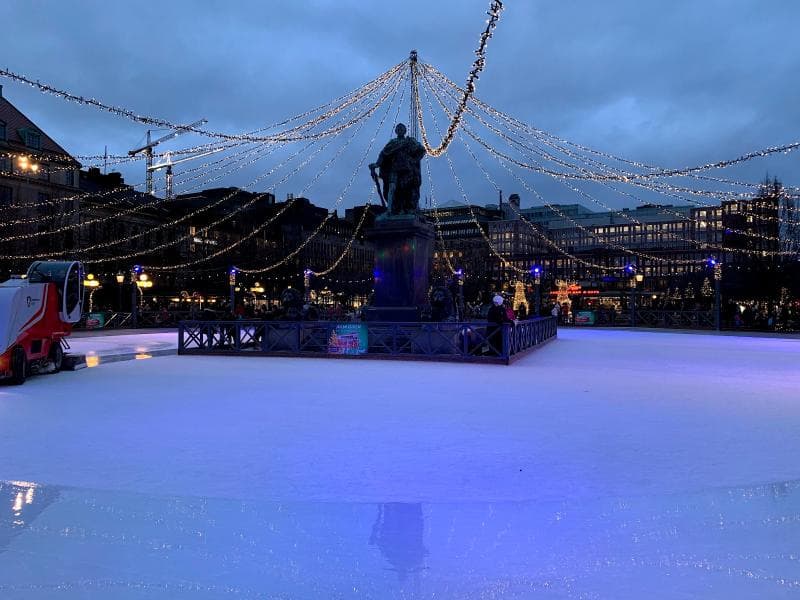
Kungsträdgården is a place of constant activity and transformation. In spring, it's famous for its stunning cherry blossoms; in winter, it converts into a popular ice-skating rink. During summer, the 'Outdoor Stage' area becomes the focal point, embodying the park's role as Stockholm's open-air living room. It's a place where the city's pulse is felt most strongly, offering a blend of historical grandeur and contemporary urban life.
History & Cultural Background
The history of Kungsträdgården stretches back to the 15th century, originating as a royal vegetable garden, or 'kålgård'. Under King Erik XIV, it evolved into a Baroque pleasure garden, a testament to royal leisure. It wasn't until the 1770s that this royal preserve was opened to the public, marking its transition into a shared civic space. The park's expansion after the 1825 fire of Makalös Palace further cemented its role in the city's urban landscape.
Kungsträdgården has not only witnessed history but also been a stage for it. A pivotal moment in modern Swedish history occurred here in 1971, during what became known as 'The Battle of the Elms'. Plans to remove elm trees for a subway entrance sparked significant public protest, demonstrating the power of civic engagement. The demonstrators succeeded in saving the trees, which stand today as living symbols of public participation in shaping the city. This rich past imbues the park, and its central event space, with deep cultural resonance.
What Makes It Special
The 'Outdoor Stage' area in Kungsträdgården is special not for a fixed architectural design, but for its remarkable versatility and central role in Stockholm's cultural calendar. Throughout the summer, this area becomes a vibrant hub for free daily concerts and open-air theater performances, attracting diverse audiences seeking entertainment and community.
Beyond its summer events, Kungsträdgården is celebrated for its seasonal transformations. The annual cherry blossom display in April paints the park in shades of pink, drawing thousands for a brief, spectacular period. In colder months, the central fountain is replaced by a lively ice-skating rink, complete with evening lighting and music. These varied uses, all centered around the park's main open space, highlight its significance as a continuously evolving public forum and entertainment venue.
Stories, Fun Facts & Local Details
One of the most cherished facts about Kungsträdgården is its annual cherry blossom spectacle. The 60 cherry trees that burst into bloom each spring were a gift from the Japanese government to King Carl XVI Gustaf. This beautiful gesture has transformed the park into one of Stockholm's most photographed locations and a symbol of spring's arrival.
Another fascinating detail lies beneath the park. The Kungsträdgården Metro Station, a stop on Stockholm's renowned 'world's longest art gallery' subway system, is an attraction in itself. Opened in 1977, its design evokes an underground cave, featuring vibrant ceilings and exposed rock walls, with art inspired by the demolished Makalös Palace. Uniquely, it's the only place in Northern Europe where the cave-dwelling Lessertia dentichelis spider can be found, believed to have arrived during construction. These hidden layers add to the rich tapestry of stories associated with the area above.
Visitor Perspective
Visiting the 'Outdoor Stage' area within Kungsträdgården offers an accessible and engaging experience for any traveler. As a public park, entry is completely free, and it is open 24 hours a day, all year round, allowing for spontaneous visits at any time.
The park is easily reachable via Stockholm's excellent public transportation network, with the Kungsträdgården Metro Station directly beneath. Visitors can expect public restrooms, benches for relaxation, and a variety of food stands and cafes within and surrounding the park. Whether you're there for a specific concert, to enjoy a festival, or simply to soak in the lively atmosphere, the 'Outdoor Stage' area provides a central, welcoming space to experience Stockholm's dynamic public life.
Coordinates: 18.0695, 59.3254
View on Google Maps💬 How Travelers Describe This Place
Based on community votes
Must See
276Interesting
152Photogenic
33Beautiful
30Unique
16
Traveler Stories
Discover memorable experiences shared by travelers who have visited this place.
No traveler stories yet.
Be the first traveler to share what made this place memorable.

Tour
By
Spot
Discover amazing places around the world. Your journey starts here.
Explore
© 2026 TourBySpot. All rights reserved.