Outdoor Exhibits
Los Angeles, United States
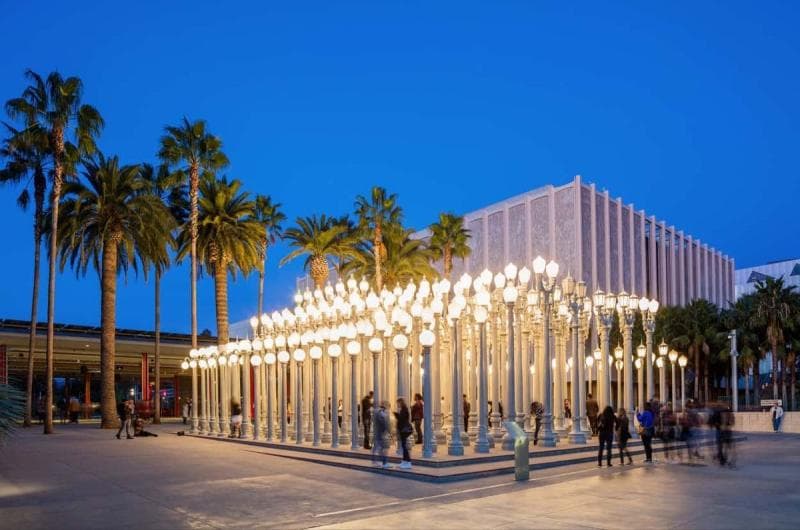
Explore the iconic outdoor exhibits at the Los Angeles County Museum of Art (LACMA) in Los Angeles, United States, featuring Urban Light and Levitated Mass.
Overview
The outdoor exhibits at the Los Angeles County Museum of Art (LACMA) offer a unique, expansive artistic experience that extends beyond the traditional gallery walls. These monumental installations transform the museum's campus into a vibrant public art park, inviting visitors to engage with art in an open-air setting. Far from being mere decorations, these works are integral to LACMA's identity, providing a compelling introduction to the museum's diverse collection and vision. They are a testament to the idea that art can be both profound and accessible, weaving itself into the urban fabric of Los Angeles.
History & Cultural Background
The genesis of LACMA's outdoor exhibits is marked by ambitious visions and significant cultural contributions. Perhaps the most iconic is Chris Burden’s 'Urban Light', inaugurated in February 2008. This striking installation comprises 202 restored streetlamps from the 1920s and 1930s, many of which once illuminated the streets of Southern California. Burden began collecting these vintage lamps years before the project, driven by a fascination with their design and historical significance. The sculpture quickly became an unofficial symbol of Los Angeles, celebrated for its historical ties and its transformation of utilitarian objects into a grand artistic statement.
Another monumental outdoor artwork is Michael Heizer’s 'Levitated Mass', which opened to the public in June 2012. This remarkable piece features a 340-ton granite megalith suspended over a 456-foot-long concrete trench, allowing visitors to walk directly underneath the massive boulder. Heizer conceived the idea for 'Levitated Mass' as early as 1969, but it took decades to find the appropriate boulder and realize the complex engineering required. Its dramatic 11-night journey across 105 miles of Southern California roads from a quarry in Riverside to LACMA became a widely publicized event, captivating thousands of onlookers and solidifying its place in local lore.
Beyond these two titans, LACMA's outdoor collection includes Alexander Calder’s 'Three Quintains (Hello Girls)', a dynamic fountain sculpture originally commissioned in 1964 and recently restored to a prominent location near the David Geffen Galleries. The Iris and B. Gerald Cantor Sculpture Garden also features an array of Auguste Rodin's celebrated bronzes, offering a serene counterpoint to the larger, more contemporary works. Yoshitomo Nara’s whimsical 'Miss Forest', a 25-foot-tall bronze sculpture, and Robert Irwin's 'Primal Palm Garden', which nods to the nearby La Brea Tar Pits, further enrich the campus's artistic landscape.
What Makes It Special
What sets LACMA's outdoor exhibits apart is their scale, accessibility, and ability to foster unique interactions. 'Urban Light' is not merely a collection of lamps; it's an immersive architectural experience, a 'building with a roof of light' as its creator described it, that invites people to walk among its glowing columns. Its arrangement, though seemingly a perfect grid, reveals different patterns depending on the viewer's perspective. The lamps are also powered by solar energy, adding a layer of contemporary relevance to their historical forms.
'Levitated Mass' offers a profound sense of awe and a playful subversion of gravity. The experience of walking into the gradually descending concrete slot, passing beneath a colossal rock that appears to float above, challenges perceptions of weight, space, and permanence. The meticulous engineering behind supporting such an enormous weight with minimal visible supports is a marvel in itself, designed to keep the focus on the artwork's 'levitation'.
These installations are more than static displays; they are dynamic elements that engage with their environment and audience. The Rodin sculptures in the Cantor Sculpture Garden encourage quiet contemplation amidst nature, while Calder’s mobiles dance with the wind and water, reflecting the changing light.
Stories, Fun Facts & Local Details
Chris Burden reportedly began collecting the vintage streetlights for 'Urban Light' from flea markets, driven by an obsession to preserve these pieces of Los Angeles history. The sculpture has since become one of the most photographed landmarks in the city, a popular backdrop for films, weddings, and countless social media posts, making it a true icon of Southern California.
The transportation of the 340-ton boulder for 'Levitated Mass' was an engineering feat in itself. Moving such an immense object required a specially designed transporter with 196 wheels, traveling at night at a maximum speed of about seven miles per hour. The circuitous 106-mile route was carefully planned to avoid busy roads and overpasses, creating a spectacle that drew crowds nightly to witness its slow, deliberate passage. The boulder's massive weight and journey underscore the audacity and scale of Heizer's artistic vision, linking ancient traditions of megalithic art with cutting-edge engineering.
Many of LACMA's outdoor works are freely accessible to the public, day and night, without requiring museum admission. 'Urban Light', for instance, illuminates the Wilshire Boulevard entrance 24 hours a day, seven days a week, with its lamps switching on at dusk, transforming the plaza into a glowing, welcoming beacon. This open accessibility embodies a commitment to public art, making significant cultural experiences available to everyone in Los Angeles.
Visitor Perspective
For visitors, the outdoor exhibits at LACMA offer a unique and highly personal art encounter. Unlike traditional museum galleries that might require tickets and specific visiting hours, many of these outdoor installations are freely accessible, inviting casual strolls or dedicated contemplation at any time. Walking through 'Urban Light' feels like stepping into a cinematic dreamscape, with the glow of the lampposts creating a captivating atmosphere that changes from day to night. It’s a favorite spot for photography, encouraging interaction and personal expression.
Experiencing 'Levitated Mass' is a moment of profound wonder. The gradual descent into the trench, culminating in standing directly beneath the enormous, seemingly floating boulder, is an unforgettable sensation that plays with perception and scale. These installations encourage visitors to slow down, look up, and appreciate the intersection of art, engineering, and nature. They offer a dynamic entry point to the museum, setting a tone of innovation and wonder even before one steps inside the main buildings, and serve as memorable landmarks that define the spirit of Los Angeles's vibrant art scene.
Coordinates: -118.3592, 34.0633
View on Google Maps💬 How Travelers Describe This Place
Based on community votes
Photogenic
958Interesting
794Must See
785Unique
571Beautiful
546
Traveler Stories
Discover memorable experiences shared by travelers who have visited this place.
No traveler stories yet.
Be the first traveler to share what made this place memorable.

Tour
By
Spot
Discover amazing places around the world. Your journey starts here.
Explore
© 2026 TourBySpot. All rights reserved.