Ottoman Dome Interior
Pristina, Kosovo
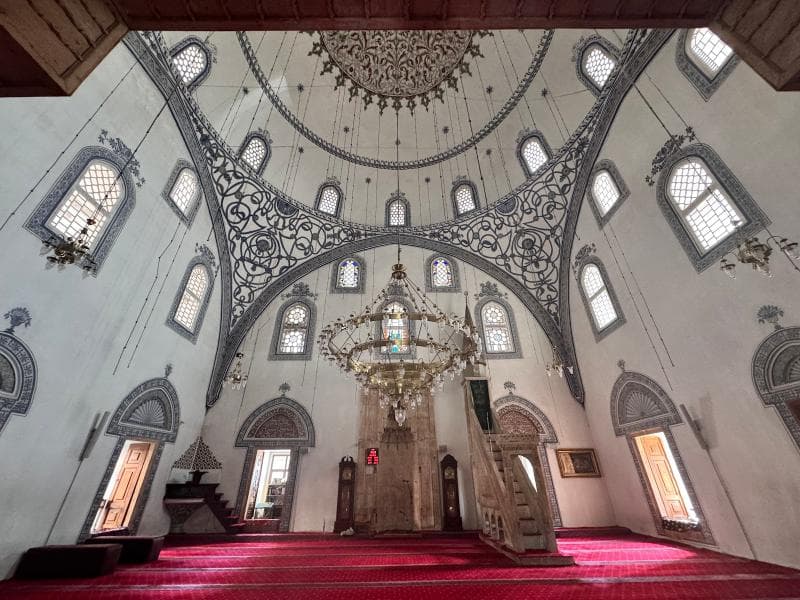
Explore the majestic Ottoman Dome Interior of the Imperial Mosque in Pristina, Kosovo. Discover 15th-century Ottoman architecture, intricate designs, and rich history of this cultural gem.
Overview
Stepping into the Imperial Mosque in Pristina, Kosovo, visitors are immediately drawn to the majestic Ottoman Dome Interior, a true testament to 15th-century architectural grandeur. Also known as the Sultan Mehmet Fatih Mosque or simply the King's Mosque (Xhamia e Mbretit), this sacred site stands as a profound symbol of Pristina's rich Ottoman heritage and cultural tapestry. Its imposing central dome, a marvel of historical engineering, dominates the prayer hall, inviting contemplation and admiration.
Situated prominently in the old quarter of Pristina, the mosque is not merely an architectural relic but a living, breathing part of the city's identity. Its interior, particularly the dome, is adorned with intricate decorative paintings and detailed floral designs that speak volumes about the artistic sophistication of its era. This sub-spot within the larger Imperial Mosque offers a unique glimpse into the spiritual and aesthetic world of the Ottoman Empire, preserved through centuries of history and change.
History & Cultural Background
The Imperial Mosque was built in 1461 by the direct order of Sultan Mehmed II the Conqueror, the very same sultan who conquered Constantinople. This makes it one of the earliest and most significant Ottoman structures erected in the region, marking the expansion and influence of the Ottoman Empire in the Balkans.
Its history is as rich and complex as the region itself. During the Austro-Turkish Wars in the late 17th century, the mosque faced a remarkable transformation, temporarily serving as a Catholic church. Notably, the prominent Albanian writer Pjetër Bogdani was interred within its walls during this period, only for his remains to be exhumed and cast out when the Ottomans regained control in 1690. The mosque has undergone several significant restorations, including those in 1682-1683 during the reign of Sultan Mehmed IV and crucial interventions after a devastating earthquake in 1955. These efforts have continuously aimed to preserve its authentic Ottoman architectural style, ensuring its historical and cultural value endures. In 1990, it was officially declared a Monument of Culture of Exceptional Importance, underscoring its immense value.
What Makes It Special
What truly sets the Ottoman Dome Interior apart is its remarkable blend of structural ingenuity and breathtaking artistry. The central dome, boasting a diameter of approximately 14 to 15 meters, was an impressive feat for a 15th-century construction and remains one of the largest domes of its kind in Eastern Europe. Its vast expanse is a canvas for elaborate decorative paintings and detailed floral motifs, rendered in the distinctive 'al secco' technique.
The interior's overall aesthetic is a quintessential example of classical Ottoman architecture, echoing the refined Bursa school style. Beyond the dome, visitors will discover intricately carved marble mihrab (prayer niche) and minbar (pulpit), which showcase the exquisite craftsmanship of the era. The presence of twelve hooped columns and three sets of windows further contributes to the harmonious and well-lit atmosphere of the prayer hall, creating an immersive experience of space and spirituality.
Stories, Fun Facts & Local Details
The mosque, known affectionately by locals as 'Xhamia e Mbretit' or the King's Mosque, holds many layers of local lore and historical anecdotes. It was designed to be a dominating presence on Pristina's landscape, a clear statement of Ottoman power and cultural identity. The resilience of the structure itself tells a compelling story; it has withstood not only the passage of centuries but also the physical shocks of earthquakes and the turmoil of wars, each time being lovingly restored to its former glory.
One poignant detail is the inscription above its entrance, written in Arabic, which precisely dates its construction to 1461 according to the Gregorian calendar (or Hijra 865). This enduring inscription serves as a direct link to its founder, Sultan Mehmed II, grounding the mosque in its foundational moment. The surrounding area, rich in history, includes the nearby Great Hammam and the Clock Tower, forming a historical ensemble that speaks to Pristina's past as a vibrant Ottoman city.
Visitor Perspective
For the curious traveler, visiting the Imperial Mosque offers a profound journey back in time. As you step inside, the bustling sounds of modern Pristina fade, replaced by a sense of calm and reverence that permeates the spacious prayer hall. The sheer scale and delicate ornamentation of the Ottoman Dome Interior create an atmosphere of awe, encouraging visitors to slow down and absorb the artistic and spiritual beauty.
Observing the sunlight filtering through the numerous windows and illuminating the intricate designs of the dome and walls can be a truly meditative experience. It is a place where history feels not just told but truly lived, as it continues to function as an active house of worship for the local community. The mosque stands as a bridge between the past and present, offering a tangible connection to the deep cultural roots of Pristina and Kosovo, and leaving a lasting impression of Ottoman elegance and enduring faith.
Coordinates: 21.1670097, 42.6669856
View on Google Maps💬 How Travelers Describe This Place
Based on community votes
Must See
961Interesting
710Beautiful
448Unique
156Photogenic
87
Traveler Stories
Discover memorable experiences shared by travelers who have visited this place.
No traveler stories yet.
Be the first traveler to share what made this place memorable.

Tour
By
Spot
Discover amazing places around the world. Your journey starts here.
Explore
© 2026 TourBySpot. All rights reserved.