Ottoman Architecture
Tirana, Albania
Explore the unique Ottoman Architecture of Et'hem Bey Mosque in Tirana, Albania, renowned for its rare and vibrant landscape frescoes.
Overview
Nestled in the vibrant heart of Tirana, Albania, the Et'hem Bey Mosque stands as a serene and captivating example of Ottoman architecture. Completed in the early 19th century, this historic mosque is not merely a place of worship but a cherished cultural monument that eloquently narrates centuries of Albanian history and artistic expression. Its elegant proportions, single dome, and slender minaret reflect the classical Ottoman style, yet it holds a distinctive charm that sets it apart.
What truly distinguishes the Et'hem Bey Mosque, both locally and globally, are its extraordinary frescoes. Unlike the geometric and calligraphic patterns typically found in Islamic art, the mosque's interior and exterior walls, including its portico, are adorned with vibrant, hand-painted landscapes. These unique depictions of trees, waterfalls, bridges, and even cityscapes offer a rare glimpse into a localized artistic tradition fused with Ottoman influences.
History & Cultural Background
The construction of the Et'hem Bey Mosque began between 1791 and 1794, initiated by Molla Bey, a member of the influential Toptani family. The ambitious project was later brought to completion by his son, Haxhi Et'hem Bey, between 1819 and 1823, from whom the mosque derives its name.
Strategically situated in Tirana's old bazaar district, the mosque was originally part of a larger complex, reflecting typical Ottoman urban planning where mosques served as social and economic anchors for the city center. Its enduring presence has witnessed Tirana's transformation from a provincial Ottoman settlement to a bustling modern capital. The mosque's history is also deeply intertwined with Albania's tumultuous 20th century. During the communist regime, when all religious practices were banned and many places of worship were destroyed, the Et'hem Bey Mosque was preserved as a cultural monument due to its historical and artistic value.
It gained profound significance as a symbol of religious freedom in 1991 when, despite official bans, thousands of citizens gathered there to pray, marking a pivotal moment in the country's return to religious liberty.
What Makes It Special
The Ottoman architecture of the Et'hem Bey Mosque is celebrated for its harmonious proportions and intricate detailing. Its design centers around a square prayer hall, gracefully capped by a single, elegant dome. The entrance portico features finely painted columns and arches, creating an inviting transition into the sacred space. A slender minaret rises proudly beside the main structure, emblematic of classic Ottoman style.
However, the most compelling aspect of its architecture lies in its extensive use of frescoes. These painted walls, inside and out, illustrate lush natural landscapes including cypress trees, cascading waterfalls, winding bridges, and even pavilions. This artistic choice is particularly unusual for an Islamic religious building, which traditionally favors geometric motifs, calligraphy, or floral patterns. Scholars suggest these nature-inspired images are a rare expression of local creativity blended with Ottoman tradition, possibly showcasing influences from Persian miniature paintings.
Furthermore, the mosque's construction exhibits remarkable resilience. Albania is an earthquake-prone region, yet the Et'hem Bey Mosque has stood for over two centuries, a testament to its earthquake-resistant design, where the single central dome evenly distributes loads to withstand seismic forces.
Stories, Fun Facts & Local Details
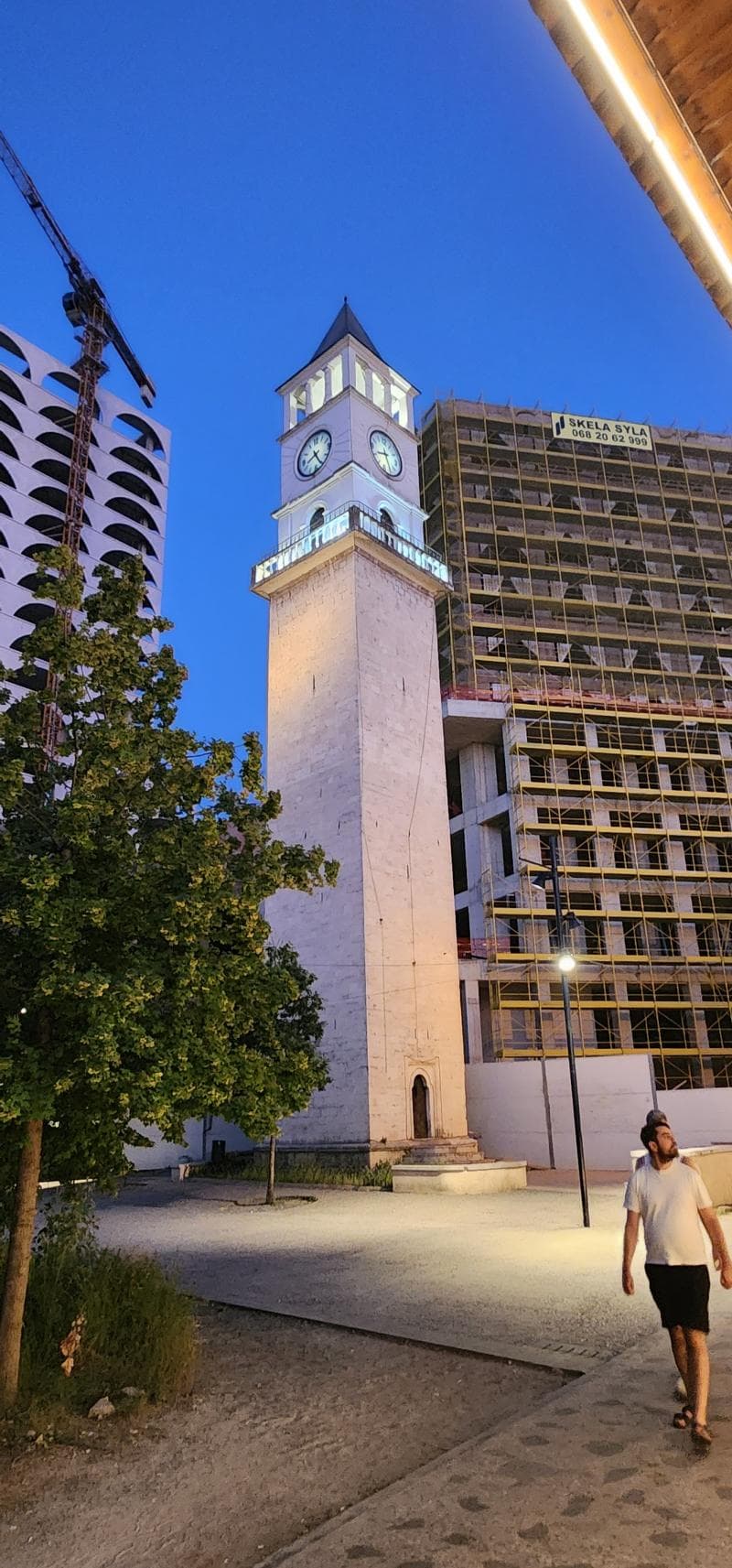
A fascinating detail about the Et'hem Bey Mosque is that it was not commissioned by an Ottoman Sultan but by the influential Toptani family, a powerful landowning family, reflecting their desire to embed their legacy directly into the city's commercial heart. Its placement was highly strategic, built within the old bazaar district, and it forms an iconic architectural complex with the adjacent Clock Tower, making them inseparable landmarks of Tirana's historical center.
The unique frescoes within the mosque, while depicting natural landscapes, are not always literal portrayals of Tirana. Some academic research suggests that certain painted skylines might reference elements of Istanbul, such as the Suleymaniye Mosque or scenes associated with the Bosphorus, linking Tirana to a larger imperial world. The mosque's survival during Albania's communist period, when it was safeguarded as a cultural monument, highlights its perceived artistic and historical value even under an atheist regime. Its dramatic reopening in 1991, with thousands gathering without official permission, remains a powerful story of collective defiance and the reclamation of religious freedom.
Visitor Perspective
Visiting the Et'hem Bey Mosque offers a truly enriching experience for any traveler exploring Tirana. Located prominently on Skanderbeg Square, it is easily accessible and forms a central point for discovering other major attractions. As an active place of worship, visitors are welcomed outside of prayer times to explore its stunning interiors and marvel at the intricate frescoes.
Guests are respectfully asked to observe modest dress and remove their shoes before entering the prayer hall. Scarves are often available for women at the entrance, ensuring everyone can enter respectfully. The atmosphere inside is often described as peaceful and contemplative, inviting quiet reflection. Touring the mosque provides not just an appreciation for its architectural beauty and unique art, but also a deeper understanding of Albania's complex history, cultural identity, and enduring spirit of religious tolerance.
Coordinates: 19.81933, 41.3278
View on Google Maps💬 How Travelers Describe This Place
Based on community votes
Beautiful
894Unique
862Interesting
443Must See
304Photogenic
184
Traveler Stories
Discover memorable experiences shared by travelers who have visited this place.
No traveler stories yet.
Be the first traveler to share what made this place memorable.

Tour
By
Spot
Discover amazing places around the world. Your journey starts here.
Explore
© 2026 TourBySpot. All rights reserved.