Organ Loft
Dublin, Ireland
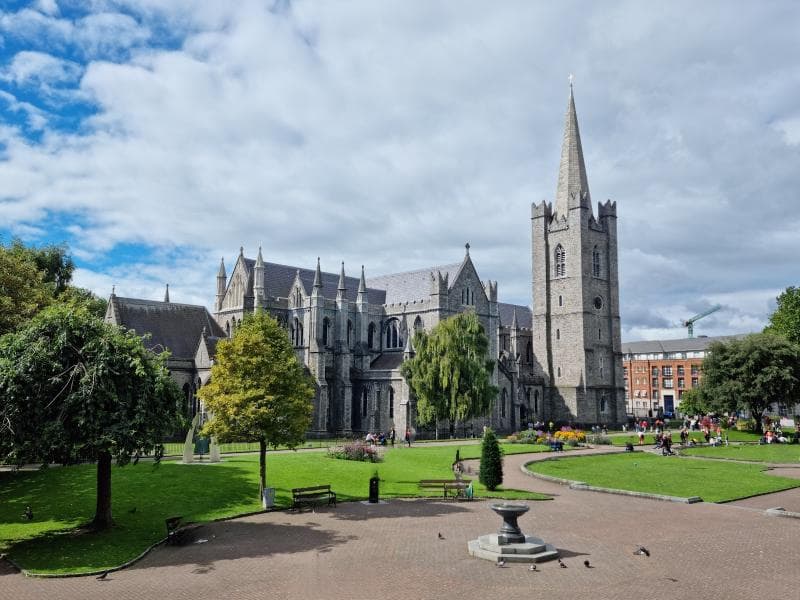
Explore the majestic Organ Loft and its historic pipe organ at St. Patrick's Cathedral in Dublin, Ireland. Discover its rich history and powerful sound.
Overview
Deep within the ancient walls of St. Patrick's Cathedral in Dublin, Ireland, lies a sub-spot that, while often unseen by casual visitors, profoundly shapes the cathedral's spiritual and atmospheric essence: its magnificent Organ Loft. More accurately, it houses one of Ireland's largest and most historically significant pipe organs. Perched primarily within a specially constructed chamber in the north triforium, high above the choir aisle, this instrument is a sonic heart of the cathedral, a testament to centuries of musical tradition and architectural ingenuity. Its presence ensures that the soaring Gothic architecture of St. Patrick's is not only a visual feast but also an auditory marvel, filling the vast space with resonant harmonies during worship and special performances.
While the 'loft' itself is a working space for organists and largely inaccessible to the public, the powerful voice of the organ is central to the visitor experience, echoing through every corner of the venerable building. It provides a rich, immersive soundscape, making it an indispensable element of the cathedral's identity and its enduring appeal as a cultural and spiritual landmark in Dublin.
History & Cultural Background
The history of the organ at St. Patrick's Cathedral is as rich and layered as the cathedral itself, tracing its origins back to the 15th century. The earliest record dates to 1471, when Archbishop Tregury bequeathed 'a pair of organs' for the Lady Chapel. This marked the humble beginnings of a musical tradition that would evolve significantly over hundreds of years.
One of the most notable early instruments was the Renatus Harris organ installed in 1697. This impressive piece of craftsmanship was originally situated on a screen that divided the nave from the choir, a prominent visual and sonic feature of the cathedral at the time. Intriguingly, some pipes from this 17th-century instrument are believed to still be incorporated into the current organ, offering a tangible link to its distant past.
Throughout the 18th and 19th centuries, the organ underwent numerous repairs, modifications, and expansions by various esteemed builders. However, a pivotal moment arrived in 1902 when a new, grand organ was commissioned from the renowned firm of Henry Willis and Sons, generously gifted by Lord Iveagh. This ambitious project necessitated the construction of a dedicated chamber in the north triforium, designed to integrate seamlessly with the cathedral's Gothic architecture. The planning was heavily influenced by 'Father' Willis himself, who, despite his passing shortly before its completion, laid the groundwork for what would become a masterpiece. His son, Henry Willis, brought the vision to fruition, particularly excelling in the voicing of its powerful reed stops.
Subsequent decades saw further developments, including a significant rebuild in 1963 by J.W. Walker & Sons Ltd., which modernized its internal mechanisms, replacing pneumatic actions with electro-pneumatic ones and installing a new console. The instrument received further technological updates in the 1980s with a solid-state system. In the mid-1990s, Harrison & Harrison Ltd. undertook a meticulous restoration, aiming to bring the organ's tonal qualities even closer to 'Father' Willis’s original 1902 design, ensuring its continued grandeur for future generations.
What Makes It Special
What truly sets the Organ Loft of St. Patrick's Cathedral apart is the exceptional instrument it houses: one of Ireland's largest and most significant pipe organs, renowned for its rich romantic tonal palette. With over 4,000 pipes and 65 speaking stops across four manuals, it is a monumental feat of musical engineering. Its sheer scale allows for an incredible dynamic range and a vast array of tonal colours, from the softest whisper to the thunderous full organ that can envelop the entire cathedral.
The current organ is primarily a testament to the craftsmanship of Henry Willis and Sons from 1902, a period considered the golden age of English organ building. Its design was carefully planned in consultation with Sir George Martin, organist of St. Paul's Cathedral in London, ensuring an instrument of international calibre. The 1990s restoration by Harrison & Harrison specifically sought to preserve and enhance these Willis-era characteristics, confirming its status as the 'finest romantic organ in Ireland.'
Beyond its technical specifications, the organ's special quality lies in its deep integration with the cathedral's acoustics and spiritual life. Its sound is specifically designed to fill the vast stone interior, complementing the sacred space and enhancing the worship experience. It is not merely an instrument but an integral voice of St. Patrick's, contributing to its unique atmosphere and continuing its centuries-old musical heritage.
Stories, Fun Facts & Local Details
One fascinating detail connects the present organ to its distant past: a handful of pipes from the Renatus Harris organ of 1697 are still in use today. Imagine sounds produced by pipes that have resonated through the cathedral for over three centuries, bearing witness to countless services, national events, and historical moments. This makes listening to the organ not just an auditory experience but a journey through time.
The organ's immense power is such that, when played, 'there's no escaping' its sound; it fills 'every corner of this magnificent building.' This detail highlights the sheer scale and immersive quality of its music, a true force within the cathedral's hallowed halls. The console, where the organist sits, was originally a Willis creation, and though replaced in 1963, the original Willis console is preserved in the Cathedral as a memorial to George Hewson, an interesting nod to its own history.
St. Patrick's Cathedral is also renowned for its world-famous choir, established as early as 1432. This choir performs daily during school terms, and the organ provides their magnificent accompaniment. The interplay between the human voices of the choir and the grand voice of the organ creates a truly sublime musical experience that is a cornerstone of the cathedral's living tradition.
Visitor Perspective
As a visitor to St. Patrick's Cathedral, while you might not directly enter the physical Organ Loft, the presence of its magnificent instrument is undeniable and deeply impactful. The organ is largely unseen by most visitors, nestled away in its custom-built chamber in the north triforium, high above the choir aisle. This discreet placement, however, belies its overwhelming auditory command. When the organ is played, its rich, resonant sound cascades through the vast space, embracing every individual within the cathedral walls. It is a powerful, enveloping experience that highlights the grandeur of the Gothic architecture and elevates the spiritual atmosphere.
Experiencing the organ during a service or one of the cathedral's frequent musical recitals is highly recommended. The sound is designed to fill every corner, creating an immersive acoustic environment that is both moving and awe-inspiring. It serves as a stirring reminder of the cathedral's enduring legacy as a centre for musical excellence and worship. Though you won't see the organist at work in the lofty chamber, the music itself is a profound connection to centuries of history and devotion. Visitors often describe the experience as breathtaking, a moment where the ancient stones of the cathedral truly sing. The organ isn't just an instrument; it's a living, breathing part of St. Patrick's soul, transforming a visit into an unforgettable sensory journey.
Coordinates: -6.27139, 53.33944
View on Google Maps💬 How Travelers Describe This Place
Based on community votes
Interesting
981Unique
795Beautiful
753Must See
172Photogenic
66
Traveler Stories
Discover memorable experiences shared by travelers who have visited this place.
No traveler stories yet.
Be the first traveler to share what made this place memorable.

Tour
By
Spot
Discover amazing places around the world. Your journey starts here.
Explore
© 2026 TourBySpot. All rights reserved.