Organ Loft
Salzburg, Austria
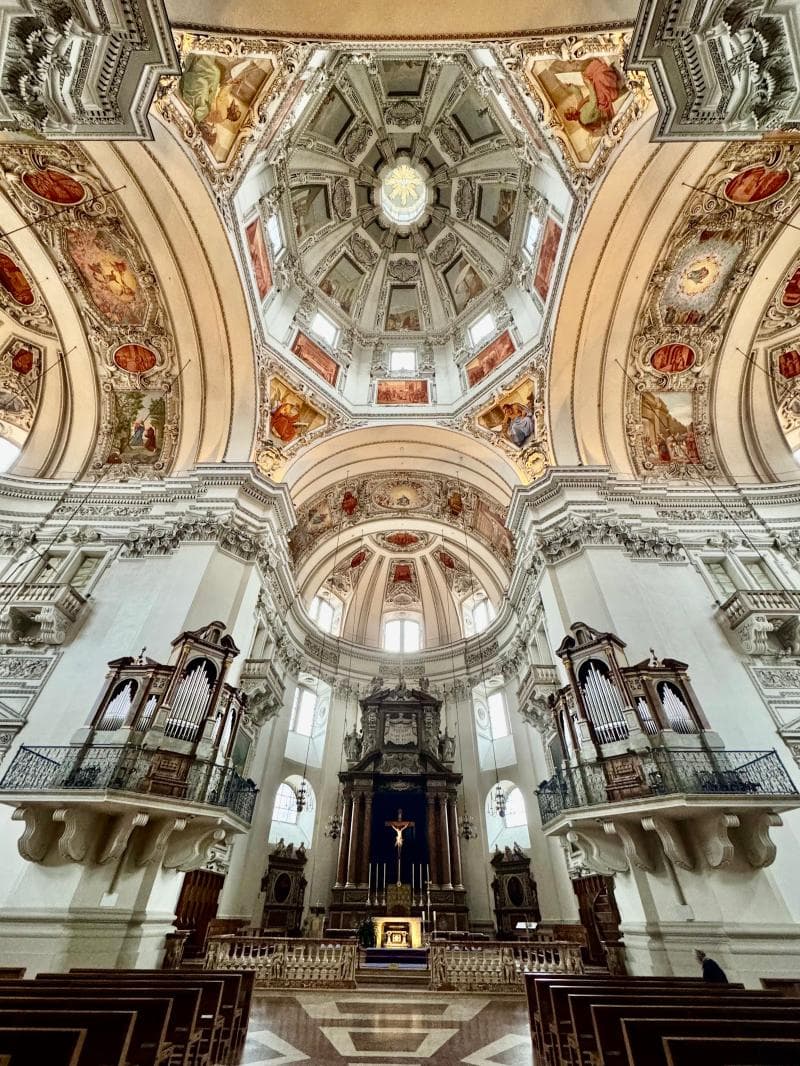
Discover the unique Organ Lofts of Salzburg Cathedral, Austria, home to seven magnificent organs. Explore their rich history, Mozart's connection, and unique sounds.
Overview
Within the majestic Salzburg Cathedral in Salzburg, Austria, lies not just one organ, but a remarkable 'organ landscape' consisting of seven independent instruments. This unique configuration, established fully by 1995, makes the cathedral a significant destination for music lovers and architectural enthusiasts alike, particularly north of the Alps. The grand main organ graces the west gallery, while four distinct pillar organs, known as 'crossing organs' or 'Vierungsorgeln', are strategically placed on the transept corners, designed to engage in a magnificent musical dialogue. A portable continuo organ completes this impressive ensemble, offering unparalleled musical versatility for both liturgical services and concerts.
History & Cultural Background
The musical heritage of Salzburg Cathedral's organ lofts stretches back centuries. Upon the cathedral's consecration in 1628, two 'well-adorned organs' were already installed on the eastern dome pillars, followed by two more on the western galleries after 1640. This early setup was a testament to the then-prevalent practice of polychoral music, a tradition deeply influenced by Italian masters who performed with multiple organs in cathedrals like St. Mark's Basilica in Venice. However, this baroque organ landscape was tragically dismantled during renovations in 1859, leaving only the main west-end organ. The vision for restoring the cathedral's multi-organ soundscape was rekindled in the late 20th century. Between 1988 and 1995, a comprehensive reconstruction project brought back the glory of the multi-organ setup, enabling the authentic performance of historic polychoral works once more.
What Makes It Special
What truly sets the Organ Lofts of Salzburg Cathedral apart is the deliberate design to facilitate polychoral music, allowing several groups of musicians to perform simultaneously from different locations within the vast space. The current configuration includes the substantial main organ on the west gallery, built in 1988, which adheres to the South German-Austrian organ building tradition. Complementing this are the four crossing organs: the Hoforgel and Heilig Geist-Orgel on the eastern pillars (rebuilt in 1991), and the Renaissance and Venetian organs on the western pillars (completed in 1995). The western pillar organs, crafted by Italian builders, are notably tuned in meantone temperament, often featuring double keys to accommodate historical compositions. All seven organs boast purely mechanical playing and stop actions, a testament to their robust and reliable construction, ensuring longevity and authentic sound production.
Stories, Fun Facts & Local Details
One of the most captivating connections to the Organ Lofts is that of Wolfgang Amadeus Mozart. During his time as court organist from 1779 to 1781, Mozart himself regularly played the Hoforgel, situated on the southeast pillar. Imagine the young genius creating music that filled this grand space, his hands dancing across the very keys now preserved within this sacred architecture. This direct link to one of history's greatest composers imbues the Hoforgel with a special significance, making it a tangible piece of musical history. The architectural design of the organ cases, especially those of the crossing organs, is also noteworthy, crafted by Dutch architect Corneille F. Janssen, drawing inspiration from the 'Serliana' motif. The collective sound of all seven organs performing together is a rare and powerful experience, truly bringing the cathedral to life as a vibrant center of musical artistry.
Visitor Perspective
For visitors to Salzburg Cathedral, the Organ Lofts are not merely static displays but living, breathing instruments. The cathedral regularly hosts organ concerts and matinees, offering a unique opportunity to experience the full grandeur of this 'organ landscape.' Hearing the distinct timbres of organs designed in different regional styles – from South German-Austrian to Italian baroque – converge and intertwine within the cathedral's acoustics is an unforgettable auditory journey. Guided organ tours are also available, providing deeper insights into the instruments' history, mechanics, and musical significance. These tours often offer a privileged perspective, sometimes even from the organ lofts themselves, allowing a closer look at the intricate pipework and consoles that produce such divine sounds. It's an experience that connects visitors not just to the architecture and history of the cathedral, but to centuries of profound musical tradition.
Coordinates: 13.0467, 47.7979
View on Google Maps💬 How Travelers Describe This Place
Based on community votes
Beautiful
995Must See
964Interesting
929Unique
730Photogenic
275
Traveler Stories
Discover memorable experiences shared by travelers who have visited this place.
No traveler stories yet.
Be the first traveler to share what made this place memorable.

Tour
By
Spot
Discover amazing places around the world. Your journey starts here.
Explore
© 2026 TourBySpot. All rights reserved.