Opera Square
Frankfurt, Germany
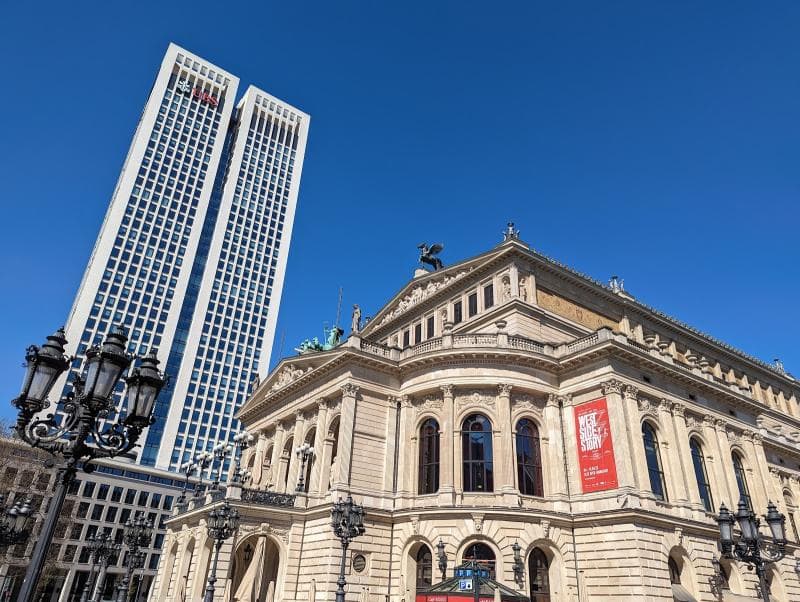
Discover Opera Square (Opernplatz) in Frankfurt, Germany – a historic and vibrant hub surrounding the magnificent Alte Oper concert hall. Explore its rich history, stunning architecture, and lively cultural events.
Overview
Opera Square, or Opernplatz as it's known locally, stands as a grand and vibrant focal point in Frankfurt, Germany. Situated in the city's Innenstadt (Inner City) and at the heart of the bustling Bankenviertel (Banking District), this central square is defined by the magnificent Alte Oper Frankfurt, a historic landmark that now functions as a premier concert hall. More than just a traffic hub, Opernplatz offers a striking blend of architectural splendor and modern urban life, serving as a popular gathering place for both residents and visitors alike.
Flanked by elegant architecture and dynamic street life, the square invites travelers to pause and soak in the atmosphere of a city that seamlessly marries its rich past with a forward-looking present. Its strategic location makes it an excellent starting point for exploring Frankfurt's cultural highlights, upscale shopping avenues, and financial district.
History & Cultural Background
The history of Opernplatz is deeply intertwined with that of Frankfurt itself. Before its current incarnation, the area held significant defensive importance, once housing the Bockenheimer Gate within the city's fortifications. The square's most iconic structure, the Alte Oper, was originally constructed between 1873 and 1880, conceived by Berlin architect Richard Lucae and financed entirely by the citizens of Frankfurt. This act of civic pride resulted in one of Germany's most important opera houses, a cultural beacon where significant works, including Carl Orff's famous 'Carmina Burana', premiered. Kaiser Wilhelm I himself was reportedly amazed at its grand opening in 1880, witnessing a performance of Mozart's 'Don Juan'.
Tragically, the grandeur was not to last. During World War II, the Alte Oper was extensively damaged by Allied bombing in 1944, leaving it a burnt-out ruin. For decades, the shell stood as a poignant reminder of the war's devastation, earning it the nickname 'Germany's most beautiful ruin'. There were even proposals to demolish it and build modern office blocks. However, a powerful citizen's initiative rallied to 'Save the Old Opera', raising substantial funds for its reconstruction. This monumental effort led to its reopening in 1981, not as an opera house (as Frankfurt had built a new one in 1951), but as a world-class concert hall. The exterior and lobby were meticulously restored to their original Neo-Renaissance glory, while the interior was redesigned with modern acoustics and facilities.
What Makes It Special
Opernplatz's unique charm lies in its harmonious blend of historical grandeur and contemporary vitality. The Neo-Renaissance architecture of the Alte Oper, with its intricate details and the iconic panther quadriga atop its facade, is a masterpiece that captivates every eye. The square itself is designed to evoke the feeling of an Italian piazza, complete with the elegant Lucae Fountain, comfortable benches, and shady trees, making it a perfect spot to relax and observe the city's pulse.
Beyond its aesthetic appeal, Opernplatz is a vibrant urban space. It serves as a gateway to some of Frankfurt's most exclusive shopping streets, such as Goethestraße and Freßgass, offering a dynamic environment where high culture meets high fashion and fine dining. This area truly embodies Frankfurt's cosmopolitan spirit, where historic landmarks stand tall amidst a backdrop of modern skyscrapers, creating a visually compelling urban tapestry.
Stories, Fun Facts & Local Details
One of the most heartwarming stories associated with Opernplatz is the tale of its rebirth. The decision to rebuild the war-damaged Alte Oper was largely a grassroots movement, driven by citizens who refused to let such a significant part of their heritage be lost. This determination not only preserved a landmark but also forged a deeper connection between the city and its residents. A testament to this enduring spirit is the annual Opera Square Festival (Opernplatzfest), which originated in 1978 as the Lucae Fountain Festival. It was initially conceived by the mayor to thank the local community for enduring the lengthy reconstruction of the Alte Oper. Today, this festival is a major summer highlight, transforming the square into a lively celebration of music, culinary delights, and community spirit.
It's also a fun fact for visitors to note that while the building is called 'Old Opera', it no longer stages full operas. Instead, it hosts a diverse program of classical concerts, jazz performances, pop shows, and various cultural events, while the city's opera company performs at the 'new' Oper Frankfurt on Willy-Brandt-Platz.
Visitor Perspective
For the curious traveler, Opernplatz offers an enriching experience that combines cultural immersion with leisurely exploration. Imagine starting your day with a coffee at one of the charming street cafés, taking in the majestic facade of the Alte Oper and the elegant Lucae Fountain. It's an ideal spot for people-watching, as locals and tourists alike converge here, creating a lively atmosphere.
From Opernplatz, you can easily venture into the surrounding areas. Stroll down the upscale shopping streets, explore the nearby banking district with its impressive skyscrapers, or wander along sections of the former city ramparts, now transformed into green spaces. If you visit during the summer, you might be lucky enough to experience the vibrant Opera Square Festival, where the square comes alive with music, delicious food from around the world, and a joyous communal spirit. Whether you're a history enthusiast, an architecture admirer, or simply looking for a beautiful place to relax, Opernplatz promises a memorable and authentically Frankfurian experience.
Coordinates: 8.67139, 50.11528
View on Google Maps💬 How Travelers Describe This Place
Based on community votes
Beautiful
963Unique
723Photogenic
482Must See
463Interesting
274
Traveler Stories
Discover memorable experiences shared by travelers who have visited this place.
No traveler stories yet.
Be the first traveler to share what made this place memorable.

Tour
By
Spot
Discover amazing places around the world. Your journey starts here.
Explore
© 2026 TourBySpot. All rights reserved.