Open Plaza
Bishkek, Kyrgyzstan
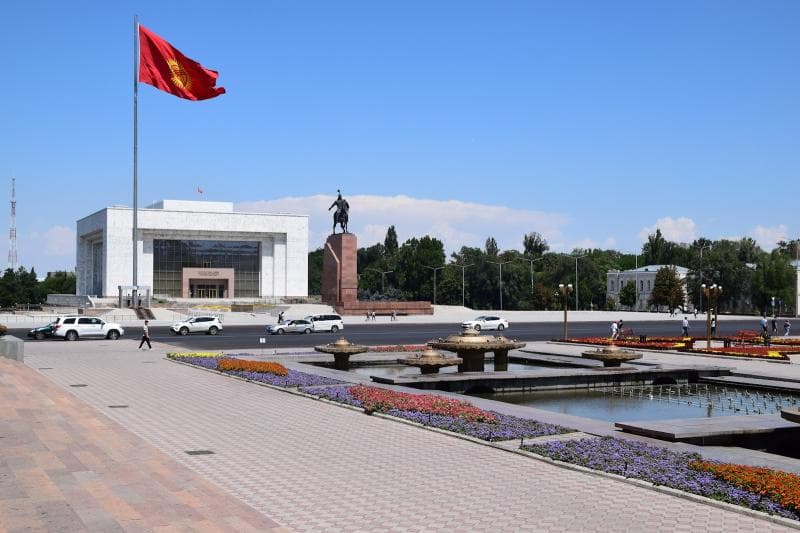
Discover Open Plaza in Ala-Too Square, Bishkek, Kyrgyzstan – the vibrant heart of the capital, steeped in history, culture, and national symbolism.
Overview
The Open Plaza, situated within Bishkek's central Ala-Too Square, serves as the vibrant heart of Kyrgyzstan's capital. This expansive public space is not merely a landmark but a dynamic gathering point, open to visitors and locals alike, twenty-four hours a day, seven days a week, with no admission fees. Its wide pathways, green spaces, and monumental features invite leisurely strolls, quiet contemplation, and active participation in city life.
Flanked by significant government buildings and cultural institutions, the plaza offers a continuous tableau of Bishkek's pulse, from the daily routines of its citizens to grand national celebrations. On a clear day, the majestic Tian Shan mountains provide a dramatic backdrop, underscoring the square's name, 'Ala-Too,' which fittingly translates to 'colorful mountains.'
History & Cultural Background
Ala-Too Square, and by extension its central Open Plaza, possesses a rich and often tumultuous history that mirrors Kyrgyzstan's journey through the 20th and 21st centuries. Originally established in 1984 to commemorate the 60th anniversary of the Kirghiz Soviet Socialist Republic, it was initially known as Lenin Square and featured a prominent statue of Vladimir Lenin.
With Kyrgyzstan's independence from the Soviet Union in 1991, the square began a transformation. The statue of Lenin was relocated in 2003 to a smaller square behind the National Historical Museum. In its place, a statue named Erkindik, meaning 'Freedom,' was erected, symbolizing the nation's newfound sovereignty. Later, in 2011, commemorating the 20th anniversary of Kyrgyzstan's independence, the Erkindik statue was replaced by the towering monument of Manas, the legendary hero of Kyrgyz folklore.
Beyond its monumental changes, Ala-Too Square has been a focal point for significant political events, most notably the 2005 Tulip Revolution. During this anti-government protest, over 15,000 people gathered in the square, leading to clashes and ultimately forcing the resignation of the then-president, highlighting its role as a crucible of national identity and political expression.
What Makes It Special
The Open Plaza is defined by its powerful symbolism and impressive features. The bronze statue of Manas, mounted on his horse Ak-Kula, stands as the square's spiritual and physical center. This monument is more than just a sculpture; it is a primary symbol of Kyrgyz national identity, resistance, and unity, depicting the hero whose epic tale defines the nation's cultural heritage.
Adjacent to the Manas statue is a 45-meter-high flagpole proudly displaying the national flag of Kyrgyzstan. This flagpole is notable for its ceremonial changing of the guard, a precise and dignified spectacle performed by uniformed soldiers that draws observers throughout the day, offering a glimpse into national pride. At the northern edge of the square stands the grand National Historical Museum, a treasure trove of Kyrgyz history from ancient times to the present.
During warmer months, the square comes alive with refreshing fountains and meticulously arranged flowerbeds, transforming the open space into an inviting oasis.
Stories, Fun Facts & Local Details
The legend of Manas, the hero immortalized in the square's central statue, is a cornerstone of Kyrgyz culture. His epic, one of the longest in world literature, is traditionally recited by bards known as Manaschis, weaving tales of war, unity, and the establishment of the Kyrgyz homeland. The temporary Erkindik statue, a winged woman holding a 'tunduk' (the circular frame of a yurt), was replaced by Manas, partly due to rumors that a woman lifting the tunduk was controversial or brought bad luck, highlighting interesting cultural beliefs.
The square serves as the primary venue for national celebrations, including Independence Day on August 31st and New Year's festivities, when it becomes adorned with festive decorations and a large tree. In summer evenings, the plaza buzzes with locals skateboarding, meeting friends, and enjoying the lively atmosphere. It's a place where families gather, relax, and enjoy the city's vibrant energy, often accompanied by musical fountain shows.
Even the relocated Lenin statue, now behind the Historical Museum, tells a story of a nation's transition, not erased but respectfully repositioned, signifying a unique approach to post-Soviet heritage compared to other former republics.
Visitor Perspective
Visiting the Open Plaza within Ala-Too Square offers a profound experience for any traveler. It's a place where history can be 'read' in the open air, a blend of Soviet monumental architecture, national pride, and a dynamic urban space. The square is incredibly accessible, making it an ideal starting point for exploring central Bishkek on foot, with many other attractions just a short walk away.
Travelers can spend time admiring the Manas statue, observing the ceremonial changing of the guard, or simply people-watching from one of the many benches. For those interested in deeper cultural immersion, the State Historical Museum provides extensive insights into Kyrgyzstan's past. The atmosphere shifts throughout the day; early mornings offer a serene, photogenic setting, while evenings are lively with locals and, seasonally, illuminated fountains. Comfortable shoes are recommended for exploring the spacious plaza and its surroundings.
Coordinates: 74.60389, 42.87639
View on Google Maps💬 How Travelers Describe This Place
Based on community votes
Unique
995Photogenic
839Beautiful
603Must See
581Interesting
388
Traveler Stories
Discover memorable experiences shared by travelers who have visited this place.
No traveler stories yet.
Be the first traveler to share what made this place memorable.

Tour
By
Spot
Discover amazing places around the world. Your journey starts here.
Explore
© 2026 TourBySpot. All rights reserved.