Olympic Tower
Munich, Germany
Discover the Olympic Tower (Olympiaturm) in Munich, Germany. Explore its history, unique revolving restaurant, and panoramic views of the city and Alps.
Overview
Soaring majestically above Munich's iconic Olympiapark, the Olympic Tower, known locally as the Olympiaturm, stands as a prominent landmark and a enduring symbol of the city's modern era. Reaching a height of 291 meters with its antenna, it proudly claims the title of Munich's tallest building, offering an unparalleled perspective of the Bavarian capital and its breathtaking surroundings. Constructed between 1965 and 1968, the tower was originally conceived as a television tower to enhance broadcast capabilities. Its significance, however, grew immensely when Munich was chosen to host the 1972 Summer Olympics, leading to its seamless integration into the sprawling Olympic Park complex.
Today, the Olympiaturm is much more than just a telecommunications hub; it's a beloved destination for millions of visitors seeking panoramic views. From its observation decks, positioned between 171 and 192 meters, one can gaze upon the vibrant cityscape, the verdant expanses of the Olympiapark, and on exceptionally clear days, the distant, snow-capped peaks of the Bavarian Alps. Although currently undergoing renovation, the tower remains a powerful visual anchor, beckoning travelers to discover the rich history and vibrant atmosphere of this unique part of Munich.
History & Cultural Background
The story of the Olympic Tower is intrinsically linked with Munich's post-war resurgence and its ambition to present a new, democratic image to the world. Before the Olympiapark took shape, the area was known as Oberwiesenfeld, a former airfield that had become a 'Trümmerberg' or 'rubble hill' from the extensive bombings during World War II. The decision to construct a television tower was made in 1964 by the Munich City Council, with architect Sebastian Rosenthal laying the foundation for its design.
A pivotal moment arrived in 1966 when Munich won the bid for the 1972 Summer Olympics. This presented a unique opportunity for urban redevelopment, transforming the former wasteland into a groundbreaking Olympic venue. The planners envisioned 'green Olympic Games' emphasizing democratic ideals, openness, and harmony with nature, a stark contrast to the authoritarian overtones of previous games held in Germany. The Olympic Tower was thus incorporated into this visionary landscape, becoming a symbol of progress and a central attraction within the newly designed park. Its construction, completed in 1968, predated the Olympics by four years, ensuring it was ready to welcome the world and provide an iconic backdrop to the 'Games of the XX Olympiad.'
What Makes It Special
What truly sets the Olympic Tower apart is its dual role as both a functional telecommunications facility and a world-class visitor attraction, seamlessly integrated into a site of profound historical and cultural significance. Its impressive height of 291 meters not only makes it a dominant feature of Munich's skyline but also offers an unparalleled 360-degree panoramic view. From the observation decks, visitors are treated to sweeping vistas that extend far beyond the city limits, encompassing the picturesque Bavarian countryside and, on clear days, the majestic Alps, stretching from the Salzkammergut to the Allgäu Alps.
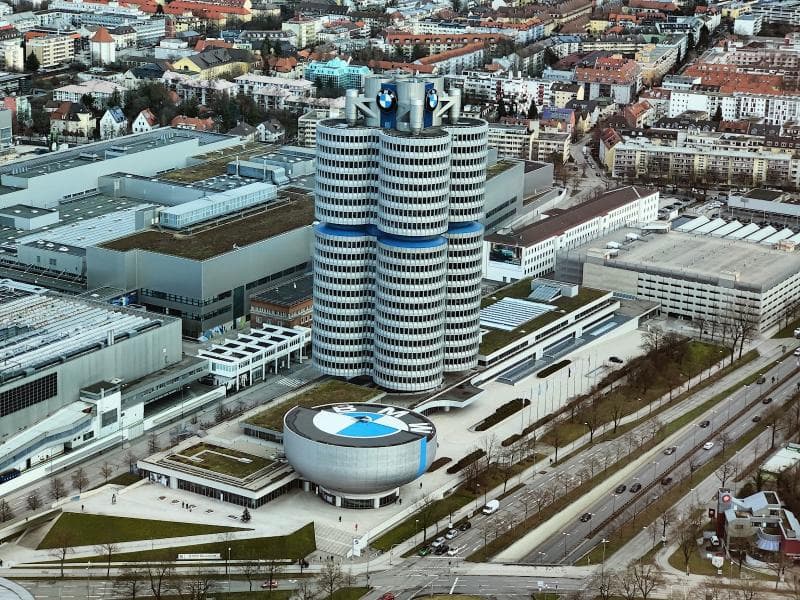
A unique highlight is the tower's revolving restaurant, Restaurant 181, situated at a height of 182 meters. Here, guests can enjoy a meal while the restaurant slowly rotates, completing a full revolution in approximately 53 minutes. This provides an ever-changing perspective of Munich's landmarks, such as the Allianz Arena, the Theatinerkirche, and even the BMW Museum, all from a comfortable, elevated perch. The efficient visitor lifts whisk guests up to the viewing platforms at a speed of 7 meters per second, making the ascent an experience in itself, taking only about 30 seconds.
Stories, Fun Facts & Local Details
Over 45 million people have ascended the Olympic Tower since its opening in 1968, making it one of Munich's most visited landmarks. This colossal structure, weighing 52,500 tons, is three times higher than the towers of Munich's famous Frauenkirche, illustrating its sheer scale and engineering prowess. For many years, the tower also housed a small rock-and-roll museum, showcasing memorabilia that delighted music enthusiasts before its closure in 2021. Currently, an exhibition commemorates the tower's 50th anniversary.
One spirited tradition associated with the Olympiaturm was the Munich Olympic Tower Run, an event where participants would race up the tower's 1230 internal stairs, a feat not for the faint of heart! While the tower itself offers incredible views, it's worth noting that it was initially planned purely for television and radio transmission. Its integration into the Olympic Park after Munich secured the 1972 Games transformed it into the iconic landmark we know today, forever linking its purpose to the spirit of the 'Green Olympics.'
Visitor Perspective
For any curious traveler exploring Munich, the Olympic Tower offers a compelling experience. While the tower is currently undergoing extensive renovation work, with an expected reopening in early 2027, its presence within the Olympiapark remains a key attraction. Typically, visitors would enjoy swift elevator rides to the various observation levels, allowing for unobstructed views from behind thick glass or from secure outdoor platforms.
Even with the tower's interior closed, the surrounding Olympiapark itself is a marvel to explore. You can still admire the tower's striking architecture from below and enjoy the vast green spaces, lakes, and the iconic tent-roofed Olympic Stadium. For an alternative elevated view during the renovation period, visitors can hike up the nearby Olympic Hill (Olympiaberg) within the park, which offers a fantastic vantage point of the tower and the city skyline. When the Olympic Tower reopens, it will undoubtedly continue to be an essential stop for anyone wanting to grasp the scale and beauty of Munich from a bird's-eye perspective.
Coordinates: 11.5536, 48.1744
View on Google Maps💬 How Travelers Describe This Place
Based on community votes
Photogenic
836Must See
287Interesting
255Beautiful
231Unique
86
Traveler Stories
Discover memorable experiences shared by travelers who have visited this place.
No traveler stories yet.
Be the first traveler to share what made this place memorable.

Tour
By
Spot
Discover amazing places around the world. Your journey starts here.
Explore
© 2026 TourBySpot. All rights reserved.