Olympic Stadium
Munich, Germany
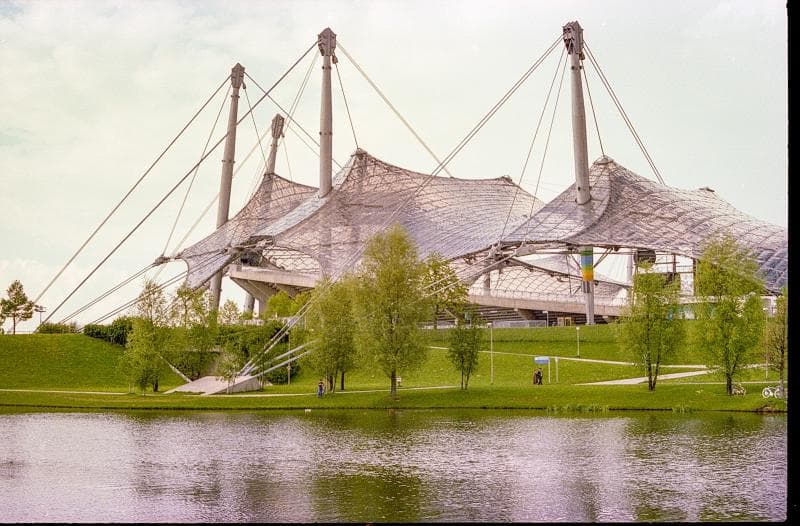
Discover Munich's iconic Olympic Stadium, a marvel of 1972 Olympic architecture in Germany's Olympiapark, famous for its unique tent roof. Learn its history.
Overview
Nestled within the sprawling greenery of Olympiapark, the Olympic Stadium in Munich, Germany, stands as an iconic testament to visionary architecture and a vibrant past. Built as the central venue for the 1972 Summer Olympics, it immediately captivated the world with its revolutionary design. More than just a sports arena, it symbolizes a new, optimistic Germany emerging from its post-war history. Today, the stadium remains a prominent landmark, recognized globally for its distinctive tent-like roof structure, which appears to float effortlessly above the grounds.
While its primary sporting role has evolved, the Olympic Stadium continues to be a hub for large-scale cultural events, drawing international artists and crowds to its unique setting. Its integration into the wider Olympiapark ensures that it remains a focal point for recreation, history, and architectural appreciation for both locals and travelers alike.
History & Cultural Background
The story of Munich's Olympic Stadium begins with the city's ambition to host the 1972 Summer Olympics, awarded in 1966. The site chosen, Oberwiesenfeld, had a somber past, having served as an airfield until 1939 and later as a rubble dump for debris from World War II bombings. The German government sought to use the Games as an opportunity to present a new, democratic, and forward-looking image of the nation, deliberately distancing itself from the propaganda-laden Berlin Olympics of 1936.
Construction commenced in 1968, culminating in its inauguration on May 26, 1972. The architectural firm of Günther Behnisch and his partners, along with engineer Frei Otto, were tasked with creating a complex that embodied 'transparency and lightness,' integrating the sports facilities into a harmonious landscape. This design philosophy aimed for 'Olympic Games in the Green,' promoting an optimistic outlook. Following the Olympics, the stadium became the revered home for Munich's premier football clubs, FC Bayern Munich and TSV 1860 Munich, until 2005. It hosted significant footballing milestones, including the 1974 FIFA World Cup Final, which saw West Germany clinch victory, and the UEFA Euro 1988 Final, cementing its place in sporting lore.
What Makes It Special
The Olympic Stadium's defining feature, and what truly sets it apart, is its breathtaking tensile roof structure. Designed by Günther Behnisch and the pioneering engineer Frei Otto, this revolutionary canopy of acrylic glass and steel cables was unprecedented in its scale and complexity. Its sweeping, undulating form evokes the majestic peaks of the Alps, while its transparency symbolizes the open and democratic ideals that Munich wished to project to the world.
This architectural marvel is seamlessly integrated into the surrounding Olympiapark, designed by landscape architect Günther Grzimek, creating a harmonious blend of built environment and natural beauty. The roof's innovative engineering quickly made it an international icon and a source of national pride, becoming synonymous not just with Munich, but with a modern, democratic West Germany. Even decades later, its unique construction continues to impress, earning it a place among Munich's most recognizable and cherished landmarks.
Stories, Fun Facts & Local Details
The construction of the entire Olympiapark complex, including the stadium, was a monumental undertaking, costing an estimated 1.35 billion German marks, with a significant portion dedicated to the stadium itself and its elaborate roof. During the 1972 Olympics, the stadium had an original capacity of 80,000 spectators, hosting the opening and closing ceremonies, as well as numerous athletic competitions.
Beyond its Olympic legacy, the stadium witnessed many other historic moments. It was here that West Germany famously triumphed in the 1974 World Cup Final. The stadium has also served as a stage for global cultural figures, hosting concerts by legendary musicians like the Rolling Stones, Michael Jackson, and Prince. In a remarkable intersection of faith and public life, Pope John Paul II even held a mass within its expansive grounds in 1987. These diverse events highlight the stadium's adaptability and enduring importance as a venue for both grand spectacles and moments of deep cultural significance.
Visitor Perspective
For the curious traveler, the Olympic Stadium remains an essential stop within Munich's Olympiapark. While the stadium itself is currently undergoing renovations, starting September 2025 and expected to last two to three years, direct access to the interior and certain experiences like roof climbs and zip-lines are temporarily suspended.
However, the Olympiapark, located in the Milbertshofen-Am Hart district and easily accessible via public transport (U-Bahn Olympiazentrum), continues to offer a rich visitor experience. Even during renovation, visitors can still admire the stadium's iconic architecture from various vantage points within the park. Exhibitions such as 'Olympic Stadium 1972-2022' provide a detailed look back at its history through thematic displays and films. Guided walking tours of the Olympiapark are available, offering insights into the stadium's design, construction, and its enduring legacy as part of the 'Olympic Games in the Green' concept. These tours often feature explanations of the famous tent roof's engineering and the park's overall design, ensuring that the spirit and history of this architectural marvel remain accessible to all.
Coordinates: 11.54667, 48.17306
View on Google Maps💬 How Travelers Describe This Place
Based on community votes
Beautiful
791Photogenic
613Unique
514Must See
457Interesting
207
Traveler Stories
Discover memorable experiences shared by travelers who have visited this place.
No traveler stories yet.
Be the first traveler to share what made this place memorable.

Tour
By
Spot
Discover amazing places around the world. Your journey starts here.
Explore
© 2026 TourBySpot. All rights reserved.