Old Town Hall
Munich, Germany
Explore Munich's Old Town Hall (Altes Rathaus) in Marienplatz, a historic Gothic gem dating back to 1310, home to the charming Toy Museum.
Overview
Nestled gracefully at the eastern edge of Marienplatz, the bustling heart of Munich, Germany, stands the Old Town Hall, known locally as Altes Rathaus. While its often more ornate neighbor, the New Town Hall, captures much of the immediate attention, the Old Town Hall offers a captivating journey through centuries of Munich's rich history and architectural evolution. Dating back to its first documentation in 1310, this venerable structure has witnessed the city's transformation from a medieval market town to a vibrant modern metropolis. Despite numerous destructions and reconstructions, it proudly maintains its distinct Late Gothic charm, providing a striking contrast to the Neo-Gothic grandeur of the newer town hall. Today, it serves both as a symbolic representation of the city's heritage and a home to a delightful treasure trove within its historic tower.
History & Cultural Background
The story of the Old Town Hall begins long before its current form. First mentioned in town records in 1310, its origins are intertwined with Munich's early fortifications. The structure's tower, in fact, was originally the Talburg Gate (Talburgtor), part of the city's first defensive wall from the 12th century, making it older than the rest of the building itself. The Grand Hall, a pivotal part of the original complex, was constructed between 1392 and 1394. However, fate intervened in 1460 when the entire ensemble was struck by lightning and tragically burned down.
A significant rebirth occurred between 1470 and 1480, when Jörg von Halsbach, the esteemed master builder responsible for the iconic Frauenkirche, meticulously rebuilt the Old Town Hall in the Late Gothic style. Over subsequent centuries, the building underwent various stylistic transformations, adapting to Renaissance and Baroque fashions. A notable restoration in the Neo-Gothic style took place between 1861 and 1864 under architect Arnold Zenetti. For centuries, until 1874, the Old Town Hall served as the seat of Munich's municipal government. With the completion of the more expansive New Town Hall, civic administration relocated, and the 'Altes Rathaus' took on its current name and representative role.
The 20th century brought significant challenges, as the Old Town Hall suffered severe damage during World War II in 1944, with its tower even facing collapse. Post-war reconstruction efforts were painstaking, focusing on restoring the building to its 15th-century Gothic specifications, a process that saw the spire's completion between 1971 and 1974. This commitment to historical authenticity ensures that visitors today can appreciate a structure that largely reflects its medieval grandeur.
What Makes It Special
What truly sets the Old Town Hall apart is its enduring spirit and its layered history. Often perceived as 'plainer' than its elaborate Neo-Gothic neighbor, the New Town Hall, its unassuming facade belies its ancient roots, making it over 400 years older. This architectural humility allows for a deeper appreciation of its genuine historical substance. Its most distinctive feature is arguably its 55-meter-tall tower, which not only stands as a testament to medieval engineering but also houses a unique cultural institution today.
Inside, the Grand Hall, also known as the 'Tanzhaus' (Dance House), reveals an exquisite barrel-vaulted timber ceiling adorned with intricate decorative beams and golden stars. This Late Gothic masterpiece by master carpenter Hans Wengler, though almost entirely destroyed in WWII, was meticulously restored, showcasing remarkable craftsmanship. The hall's historical importance is also cemented by the preserved statues of Ludwig the Bavarian and Henry the Lion on its facades. These details, combined with its role as a venue for official city council events, give the Old Town Hall a unique blend of civic importance and historical gravitas.
Stories, Fun Facts & Local Details
The Old Town Hall is steeped in stories and fascinating details. For many years, the cellars of the building served a much grimmer purpose: as the state jail. A more light-hearted aspect is found in the Grand Hall, which was once decorated with the 'Morris dancers,' carved figures created by the sculptor Erasmus Grasser in the 15th century. These lively wooden figures depict a popular ballet-like jumping dance of the era, and their historical replicas are a vibrant nod to the building's past as a place of celebration.
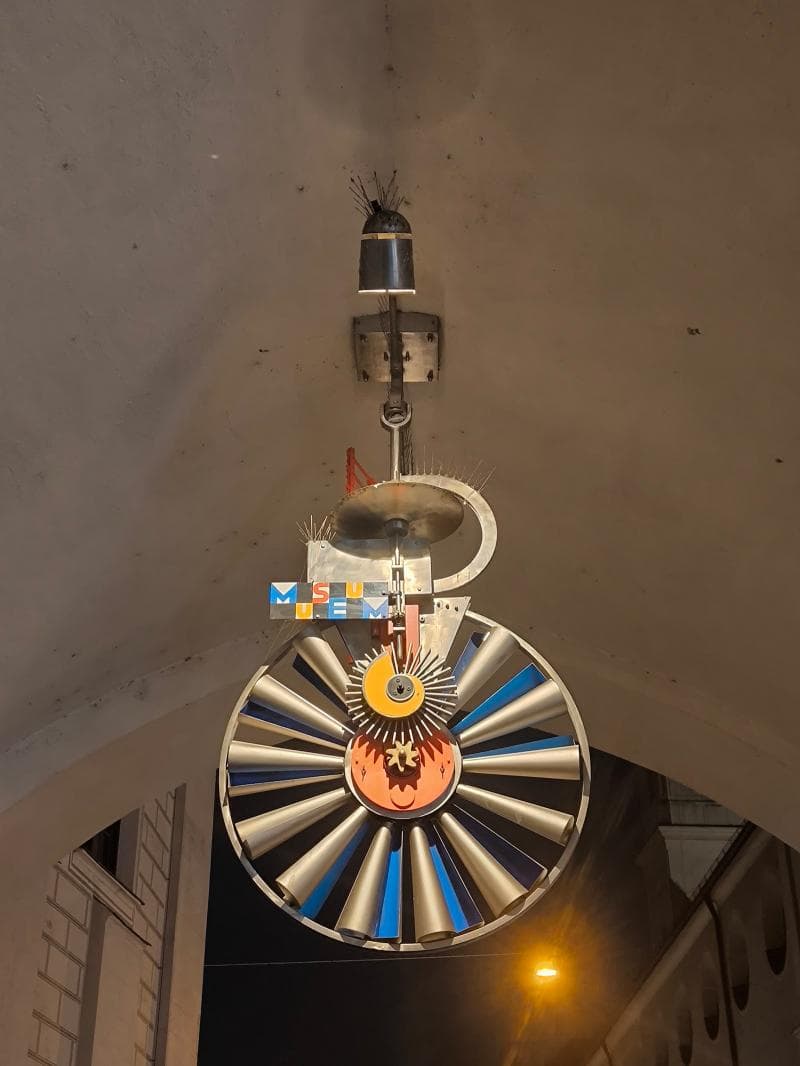
A significant, albeit somber, moment in history occurred here on November 9, 1938, when Joseph Goebbels delivered a speech in the Grand Hall that served as the prelude to the tragic Kristallnacht. This stark reminder of darker times contrasts with the joy now housed in the tower: the Munich Toy Museum. Opened in 1983, it features the extensive private collection of Czech artist Ivan Steiger and his wife Eva. Visitors can discover everything from antique teddy bears and porcelain dolls to vintage model trains and Barbie outfits, offering a nostalgic trip for adults and a magical experience for children.
Another curious detail found near the Old Town Hall's archway is a golden statue of Juliet Capulet, a gift from Munich's sister city, Verona. Legend has it that rubbing Juliet's right breast brings good luck in love – a local tradition evident by the polished bronze.
Visitor Perspective
For visitors to Marienplatz, the Old Town Hall offers an approachable yet profound cultural experience. While the New Town Hall draws crowds for its Glockenspiel, the Old Town Hall provides a quieter immersion into history. Its ceremonial Grand Hall is occasionally used for official city events, but the main draw for many is the Toy Museum, the 'Spielzeugmuseum.'
Located across four narrow floors within the historic tower, the museum is accessed via a spiral staircase, though a small lift is available for those with limited mobility. It's an enchanting place where time seems to stand still, inviting reflection on childhood and the evolution of play. The museum is generally open daily from 10:00 to 17:30, typically closing on Tuesdays. To experience the Old Town Hall and its charming museum without the densest crowds, consider visiting on a weekday morning, right after the Toy Museum opens, before the major Glockenspiel performances attract larger numbers to the square. Don't forget to look up as you pass through the archway; the vaulted ceiling, adorned with historic coats of arms, is a beautiful detail often missed.
Coordinates: 11.57706, 48.13682
View on Google Maps💬 How Travelers Describe This Place
Based on community votes
Must See
491Photogenic
443Beautiful
414Interesting
310Unique
277
Traveler Stories
Discover memorable experiences shared by travelers who have visited this place.
No traveler stories yet.
Be the first traveler to share what made this place memorable.

Tour
By
Spot
Discover amazing places around the world. Your journey starts here.
Explore
© 2026 TourBySpot. All rights reserved.