Old Royal Palace
Prague, Czech Republic
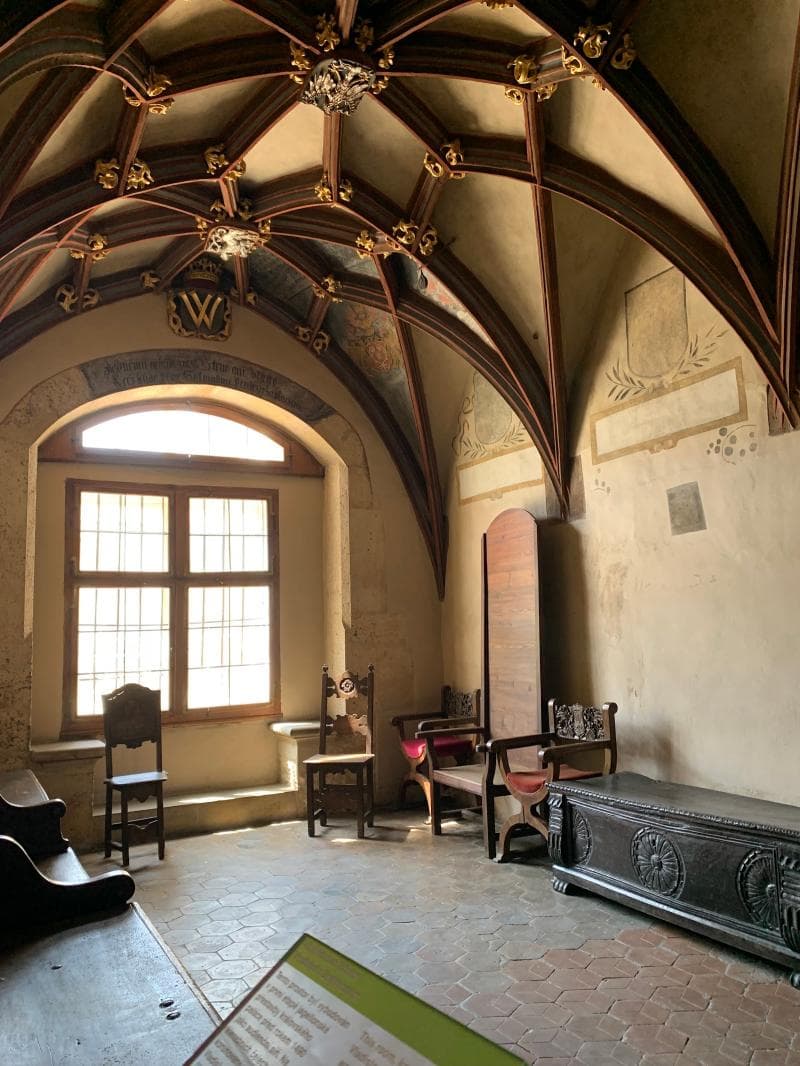
Explore the Old Royal Palace, a historic gem within Prague Castle, Czech Republic. Discover its Gothic Vladislav Hall, rich history, and the site of the Defenestration.
Overview
Nestled within the sprawling complex of Prague Castle, the Old Royal Palace stands as a testament to centuries of Bohemian history and architectural evolution. This remarkable sub-spot, located in Prague, Czech Republic, served as the primary seat for Bohemian dukes, kings, and Holy Roman Emperors from the 10th to the 16th centuries. It is not merely a single structure but a fascinating amalgamation of various architectural styles—Romanesque, Gothic, and Renaissance—reflecting the continuous rebuilding and expansion over generations. A visit here offers a deep dive into the heart of Czech royal heritage, featuring grand halls like the Vladislav Hall, the historic Ludwig Wing, and the serene All Saints' Church. As an integral part of the UNESCO World Heritage site that is Prague Castle, the Old Royal Palace offers an unparalleled journey through time, inviting curious travelers to uncover the stories etched into its ancient stones.
History & Cultural Background
The Old Royal Palace's origins trace back to a humble wooden stronghold erected in the 9th or 10th century, though its exact location remains largely undocumented. The first significant transformation occurred in the 12th century when Prince Soběslav I commissioned a stone Romanesque palace, the foundations of which can still be observed today. The 14th century marked another pivotal era under Charles IV, who expanded the modest structure into a magnificent Gothic palace, worthy of his imperial status.
However, the palace achieved its most celebrated form under King Vladislav Jagiello after 1483. This period saw the integration of Late Gothic artistry with burgeoning Renaissance elements, famously orchestrated by architect Benedikt Ried. For centuries, the palace was the vibrant stage for state affairs, grand ceremonies, coronations, and opulent banquets. It served as the undisputed center of power for Bohemian rulers until administrative functions gradually shifted to newer wings within the broader castle complex.
What Makes It Special
The Old Royal Palace is distinguished by several key features that highlight its historical and architectural significance:
- Vladislav Hall: This breathtaking masterpiece of Late Gothic architecture, designed by Benedikt Ried, is one of the largest secular vaulted halls in medieval Europe. Its intricate, interwoven ribbed vaulting is a marvel of engineering and artistry, making it a focal point for coronations, banquets, and even knightly tournaments where horses could enter directly via the unique Riders' Staircase.
- Ludwig Wing: Historically significant, this wing was the scene of the dramatic Second (or Third) Defenestration of Prague in 1618. This event, where two imperial regents and a scribe were thrown from a window, directly triggered the devastating Thirty Years' War, a conflict that reshaped much of Europe.
- All Saints' Church: Originally a Romanesque chapel, this church was rebuilt in a magnificent Gothic style by Petr Parler, reminiscent of Sainte-Chapelle in Paris. Though damaged by fire in 1541, it was later renewed and connected to the Vladislav Hall.
- Architectural Tapestry: The palace offers a unique lesson in architectural history, showcasing a blend of Romanesque, Gothic, and Renaissance styles all within one structure, a result of its continuous evolution over more than seven centuries.
Stories, Fun Facts & Local Details
Imagine knights on horseback clattering into the grand Vladislav Hall through the wide Riders' Staircase, ready for a tournament – a truly unique feature of this space. The innovative vaulting of the Vladislav Hall, with its seemingly gravity-defying stone ribs, was a pinnacle of Late Gothic design, pushing the boundaries of what was architecturally possible at the time. A rather dramatic event, the Defenestration of Prague in 1618, saw officials survive a 20-meter fall, a curious detail often shared with visitors. Many visitors are surprised by the palace's rich interiors, as its facade was covered with 18th-century plaster, subtly concealing the historical grandeur within. Don't miss the observation gallery on the southern wall of the Vladislav Hall, offering splendid panoramic views of Prague and the picturesque Garden on the Ramparts.
Visitor Perspective
For any traveler exploring Prague Castle, the Old Royal Palace is a crucial stop, generally included as part of the main castle circuit ticket. Stepping inside is an immersive experience, allowing you to walk through halls once frequented by Bohemian royalty and witness the architectural splendor firsthand. It offers invaluable cultural insights into medieval and Renaissance life in Central Europe. Beyond the palace itself, your visit will complement other iconic Prague Castle sights such as St. Vitus Cathedral, St. George's Basilica, and the charming Golden Lane, creating a comprehensive historical journey.
Coordinates: 14.3984, 50.0897
View on Google Maps💬 How Travelers Describe This Place
Based on community votes
Must See
684Beautiful
363Photogenic
302Unique
250Interesting
88
Traveler Stories
Discover memorable experiences shared by travelers who have visited this place.
No traveler stories yet.
Be the first traveler to share what made this place memorable.

Tour
By
Spot
Discover amazing places around the world. Your journey starts here.
Explore
© 2026 TourBySpot. All rights reserved.