Old Palace
Berlin, Germany
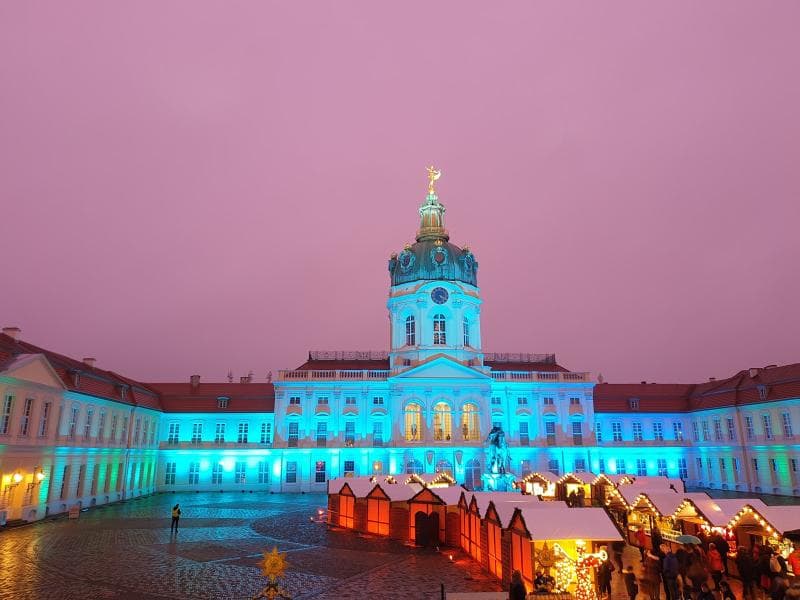
Discover the historic Old Palace at Charlottenburg Palace in Berlin, Germany. Explore Baroque royal apartments, the stunning Porcelain Cabinet, and Queen Sophie Charlotte's legacy.
Overview
Step into a captivating journey through time at the Old Palace, or 'Altes Schloss', nestled within the magnificent Charlottenburg Palace in Berlin, Germany. This venerable section represents the very heart of the entire complex, being its original structure and the first royal residence established on this site. It offers an unparalleled glimpse into the opulent world of Prussian royalty, showcasing exquisite Baroque architecture and design, and providing a foundation for understanding the palace's subsequent expansions. Visitors to the Old Palace are invited to explore the foundational elegance and historical significance that define Charlottenburg Palace as Berlin's largest and most significant royal estate.
Today, the Old Palace functions as a museum, meticulously restored to reflect its former grandeur, particularly after the extensive damage it sustained during the Second World War. It's a place where every room tells a story, from grand state apartments to intimate chambers, all adorned with period furnishings, art, and invaluable collections that survived the ravages of time. The experience here is one of immersion, allowing curious travelers to connect directly with centuries of Prussian history and the lives of those who shaped it.
History & Cultural Background
The story of the Old Palace begins in 1695, when it was commissioned by Sophie Charlotte of Hanover, the intelligent and cultured wife of Elector Frederick III of Brandenburg, who would later become King Frederick I of Prussia. Initially named Lietzenburg Palace, it served as her beloved summer residence, a retreat from the bustling court life in Berlin. Sophie Charlotte was renowned for her intellectual curiosity and her passion for the arts, music, and philosophy. She transformed Lietzenburg into a vibrant 'court of the muses', regularly hosting poets, philosophers, musicians, and artists. It was a place of enlightened discourse and artistic flourishing, where even her husband, the King, needed a personal invitation to attend her gatherings.
Following Sophie Charlotte's untimely death in 1705 at the age of just 36, a grief-stricken Frederick I renamed the palace and the surrounding area 'Charlottenburg' in her enduring honor. The original Baroque design by Johann Arnold Nering was expanded upon by architects like Andreas Schlüter and Martin Grünberg, culminating in the completed palace around 1713. This initial structure, the Old Palace, laid the groundwork for the sprawling complex we see today, which later saw additions like the New Wing, primarily for Frederick the Great, introducing Rococo styles.
What Makes It Special
The Old Palace stands out not only as the oldest part of Charlottenburg but also for its exceptionally preserved and reconstructed interiors that vividly bring Baroque court life to light. One of its most captivating features is the Porcelain Cabinet. This breathtaking room is a true marvel, adorned from floor to ceiling with nearly 3,000 pieces of exquisite Chinese and Japanese blue-and-white porcelain. The ingenious use of mirrors throughout the room creates a dizzying effect, multiplying the collection into an endless display that mesmerizes all who enter.
Beyond the Porcelain Cabinet, the Old Palace houses the State Apartments, a series of ceremonial rooms – including antechambers, an audience chamber, and the royal bedchamber – that reveal the strict etiquette and grandeur of an early 18th-century court. These spaces are furnished with original and period pieces, offering an authentic glimpse into the daily lives and official functions of Prussian royalty. Visitors can also admire displays of the remaining Prussian crown jewels, elaborate royal silver, and fine porcelain tableware, which collectively paint a picture of immense wealth and artistic patronage.
Stories, Fun Facts & Local Details
The spirit of Queen Sophie Charlotte truly permeates the Old Palace. It's said that her 'court of the muses' was a hub of intellectual thought and creative expression, a remarkable deviation from typical royal formalities of the era. She was known to stroll through the palace grounds with her friend, the renowned philosopher Gottfried Wilhelm Leibniz, discussing profound ideas.
A poignant detail reflecting the palace's resilience is its rebuilding after World War II. Much of Charlottenburg Palace, including parts of the Old Palace, was severely damaged by Allied bombing in 1943. Yet, through diligent efforts, particularly by figures like State Palaces Director Margarete Kühn, the palace was meticulously reconstructed, often stone by stone, restoring its former glory and preserving its historical integrity for future generations. This monumental rebuilding effort speaks volumes about Berlin's commitment to its cultural heritage.
Visitor Perspective
Visiting the Old Palace offers a unique and deeply enriching experience for any traveler interested in European history, art, and architecture. The palace interiors are designed for a smooth narrative flow, with a marked route guiding visitors through the various rooms and collections. It's recommended to follow this sequence to fully appreciate the layout and historical progression.
To make the most of your visit, allocate ample time, especially for the Porcelain Cabinet, where the sheer volume and artistry of the collection invite prolonged admiration. While the magnificent Charlottenburg Palace Gardens are free to enter, access to the Old Palace requires a ticket, often with a fixed admission time to manage visitor flow and enhance the experience. The 'Charlottenburg+' ticket is a convenient option if you plan to explore other parts of the palace grounds, such as the New Wing, Belvedere, or Mausoleum. Remember to check current opening hours, as they can vary by season.
Coordinates: 13.2957, 52.5209
View on Google Maps💬 How Travelers Describe This Place
Based on community votes
Interesting
636Must See
280Photogenic
134Unique
90Beautiful
38
Traveler Stories
Discover memorable experiences shared by travelers who have visited this place.
No traveler stories yet.
Be the first traveler to share what made this place memorable.

Tour
By
Spot
Discover amazing places around the world. Your journey starts here.
Explore
© 2026 TourBySpot. All rights reserved.