Offshore Temple Rock
Bali, Indonesia
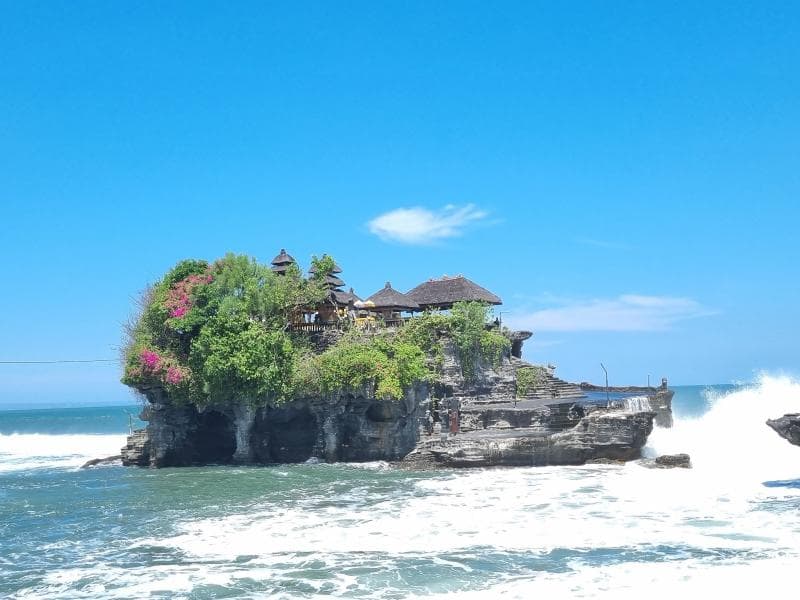
Explore Tanah Lot Temple's Offshore Temple Rock in Bali, Indonesia. Discover its ancient history, spiritual legends, and stunning seaside views.
Overview
Perched majestically on an offshore rock, the Tanah Lot Temple, or Pura Tanah Lot, is an iconic Hindu pilgrimage temple in Bali, Indonesia. Its name, meaning 'Land in the Sea,' perfectly describes its dramatic setting, as it appears to float on the Indian Ocean, especially during high tide. This breathtaking silhouette, framed by crashing waves and vibrant sunsets, has made it one of Bali's most photographed and cherished cultural landmarks. More than just a picturesque sight, Tanah Lot holds profound spiritual significance for the Balinese people, serving as a revered place of worship dedicated to the sea gods and a symbol of their deep connection to the natural world.
History & Cultural Background
The origins of Tanah Lot Temple trace back to the 15th or 16th century, inextricably linked with the revered Hindu priest Dang Hyang Nirartha, also known as Dang Hyang Dwijendra. During his mission to spread Hinduism from Java to Bali, Nirartha was drawn to this particular rock formation, perceiving its spiritual aura. Legend recounts that he chose this spot for meditation, but encountered strong opposition from Bendesa Beraban Sakti, the then-local leader who adhered to monotheism and wished to expel him.
Using his powerful spiritual abilities, Nirartha famously moved the entire rock island further into the sea, establishing it as a sacred place and constructing a shrine to honor Dewa Baruna, the powerful sea god. Overwhelmed by Nirartha's spiritual might, Bendesa Beraban Sakti and the local population converted to Hinduism. The temple's creation also involved another significant legend: to protect the newly formed temple, Nirartha transformed his sash into venomous sea snakes, believed to guard the sacred site from intruders and malevolent forces. Tanah Lot is an integral part of a chain of seven sea temples strategically positioned along Bali's southwestern coast, each designed to be visible from the next, forming a spiritual defense against evil spirits from the ocean and maintaining the delicate balance between land and sea.
What Makes It Special
What truly sets Tanah Lot apart is its extraordinary location. Situated on a large offshore rock formation, the temple becomes an island separated from the mainland at high tide, creating a mesmerizing spectacle. Visitors can typically walk across to the base of the rock during low tide, offering a unique opportunity to experience its grandeur up close. The temple's architectural design, featuring tiered shrines (merus), is a testament to traditional Balinese Hindu craftsmanship, blending seamlessly with the rugged natural elements of its environment. The constant interaction with the powerful ocean waves has shaped its rocky pedestal over centuries. Significant restoration efforts, partly funded by the Japanese government in the 1980s, were undertaken to preserve its structural integrity against erosion, with portions of the current structure being artificial rock designed to mimic the natural formation.
Stories, Fun Facts & Local Details
Beyond its visual splendor, Tanah Lot is steeped in captivating myths and local beliefs that add layers of intrigue for curious travelers. The most prominent legend involves the sacred sea snakes. It is widely believed that venomous sea snakes inhabit the caves at the base of the rock, acting as vigilant guardians of the temple. These black-and-white sea snakes are considered sacred and are thought to be descendants of the serpent created by Nirartha from his sash.
Another fascinating belief is associated with the holy freshwater spring found near the base of the rock. Locals and visitors alike sometimes seek out this spring, as it is rumored that drinking its water can grant youth and well-being. Furthermore, a commonly heard local myth warns that unmarried couples who visit Tanah Lot together may find their relationship ending prematurely, a tale that adds a touch of playful caution for some visitors. The kris, a sacred dagger gifted by Nirartha to Bendesa Beraban Sakti, is another piece of local lore, believed to protect crops from disease, with special offering ceremonies held every six months at the temple.
Visitor Perspective
Visiting the Offshore Temple Rock at Tanah Lot offers an experience that transcends mere sightseeing; it's an immersion into Balinese spirituality and natural grandeur. Travelers are often captivated by the temple's imposing presence against the vast ocean, especially during sunset when the sky erupts in a palette of fiery colors, creating a truly unforgettable backdrop. While non-Hindus cannot enter the inner sanctum of the temple itself, the surrounding areas provide ample opportunity to observe traditional Balinese Hindu architecture and soak in the spiritual ambiance. Pathways connect the main temple area to other nearby points of interest, including Pura Batu Bolong, another sea temple on a distinctive rock with a 'hollow' archway, offering different perspectives and photographic opportunities. The interplay of natural beauty, ancient legends, and profound cultural heritage makes a visit to this offshore marvel a deeply meaningful journey into the heart of Bali.
Coordinates: 115.08716, -8.62107
View on Google Maps💬 How Travelers Describe This Place
Based on community votes
Unique
886Interesting
564Must See
443Beautiful
233Photogenic
201
Traveler Stories
Discover memorable experiences shared by travelers who have visited this place.
No traveler stories yet.
Be the first traveler to share what made this place memorable.

Tour
By
Spot
Discover amazing places around the world. Your journey starts here.
Explore
© 2026 TourBySpot. All rights reserved.