Odeon Of Agrippa
Athens, Greece
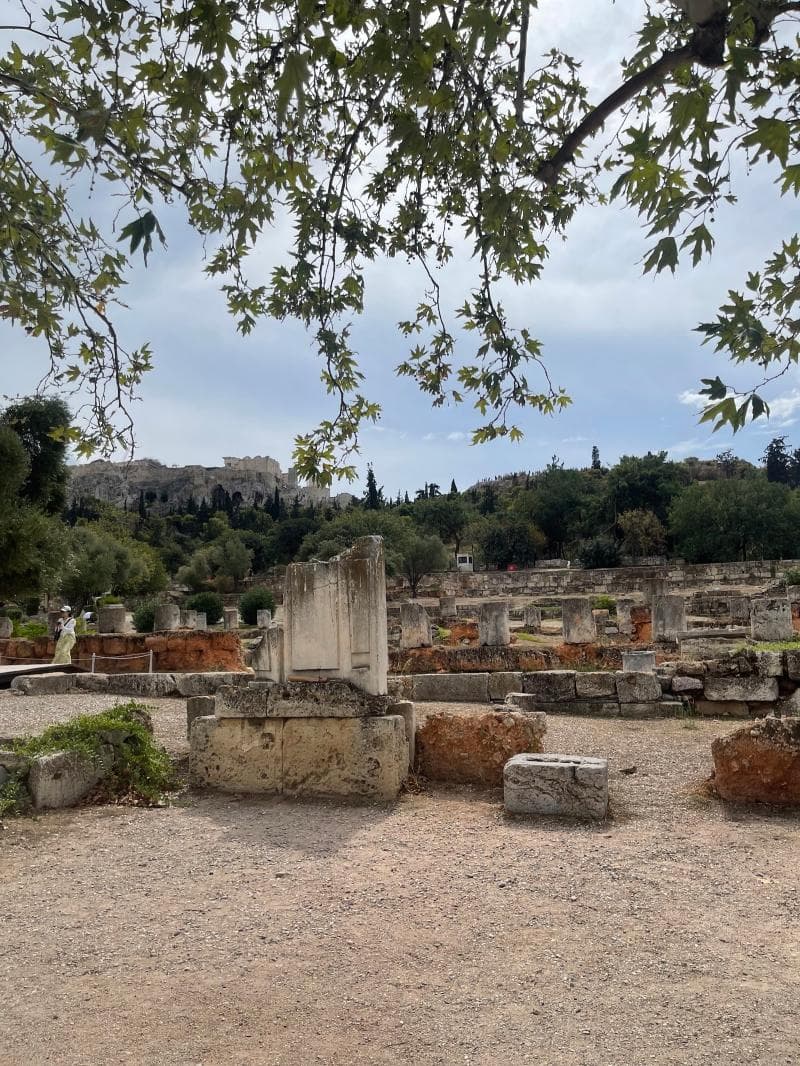
Discover the Odeon of Agrippa in Athens, Greece – a grand ancient concert hall and lecture venue in the Ancient Agora, a gift from Rome. Explore its historical ruins and colossal statues.
Overview
Deep within the sprawling archaeological marvel that is the Ancient Agora of Athens, you'll discover the intriguing remnants of the Odeon of Agrippa. This grand structure, a testament to Roman influence in the heart of classical Athens, was once a vibrant hub for musical performances and intellectual discourse. Built around 15 BC, it was a generous gift from Marcus Vipsanius Agrippa, a prominent Roman statesman and general, to the people of Athens. Originally designed as a large concert hall, it dominated the center of the Agora and could accommodate approximately 1,000 spectators, featuring a raised stage and a marble-paved orchestra.
History & Cultural Background
The construction of the Odeon of Agrippa marked a significant moment, transforming what had previously been an open space in the Agora's center. It reflected Athens' evolving relationship with the rising power of Rome, as Roman benefactors invested in the city's public infrastructure. The original Odeon was an architectural feat, a two-story auditorium adorned externally with Corinthian pilasters and surrounded by a subterranean cryptoporticus with stoae above. However, its ambitious design, particularly the impressive 25-meter unsupported span of its roof, proved unsustainable. Around 150 AD, the roof tragically collapsed.
Following this architectural setback, the Odeon was rebuilt, though on a smaller scale, with its seating capacity reduced to around 500. This reconstruction also brought a more elaborate northern facade, famously decorated with colossal pillars carved in the form of 'giants' (with snake tails) and 'tritons' (with fish tails), some of which are still visible today. This second phase saw its use shift more towards philosophical lectures and a smaller, more intimate setting for gatherings. The Odeon's story came to an end in 267 AD when it was destroyed by the Herulians during their invasion. In the early 5th century AD, a sprawling palace, often referred to as the 'Palace of the Giants' or Gymnasium, was constructed on its ruins, repurposing some of the Odeon's impressive facade elements.
What Makes It Special
What truly sets the Odeon of Agrippa apart is its layered history, reflecting periods of grandeur, architectural ambition, catastrophic failure, and subsequent adaptation. The sheer audacity of its original design, with its massive unsupported roof, speaks volumes about the engineering aspirations of the time. The iconic 'Giants and Tritons' statues, now weathered but still commanding, are perhaps the most striking visual legacy of the Odeon's second phase. These sculptures, salvaged and re-erected, stand as silent guardians, embodying the resilience of Athenian culture and the lasting Roman imprint on the city. Its transformation from a grand concert hall to a more focused lecture venue highlights a shift in its cultural function, showcasing how public spaces evolved to meet the changing needs of the populace.
Stories, Fun Facts & Local Details
Imagine the buzz of anticipation as a thousand Athenians once gathered here, eager to listen to music or watch a performance, making it a pivotal center for entertainment and intellectual life. It was also known by various names, including the 'Kerameikos Theatre' or 'Agrippeion', a direct nod to its Roman benefactor. The dramatic collapse of its roof in the 2nd century AD is a compelling story, revealing the challenges of ancient engineering and leading to its thoughtful, albeit smaller, reconstruction. The colossal statues of Giants and Tritons, initially six in number, were later incorporated into the entrance of the subsequent 'Palace of the Giants' built over the Odeon's remains. These figures are not merely decorative; they tell a tale of monumental architecture and the continuous re-use and reinterpretation of space in the Agora over centuries. Their presence today offers a tangible link to these multiple historical phases.
Visitor Perspective
Today, visitors to the Ancient Agora of Athens can explore the substantial foundations and, most notably, the impressive colossal statues of the Giants and Tritons that once adorned the Odeon's northern facade. These powerful sculptures now form part of the entrance to what was later known as the 'Palace of the Giants,' which occupied the site. Walking through the ruins, it's easy to visualize the scale of this Roman-era building and ponder its role in the daily lives of ancient Athenians. Stand amidst these remnants and try to imagine the voices of performers or philosophers echoing across the marble stage, connecting you directly to the vibrant intellectual and cultural life of ancient Athens. The Odeon of Agrippa serves as a profound reminder of Athens' enduring allure and its complex history under various influences, inviting curious travelers to delve deeper into its storied past.
Coordinates: 23.723135, 37.975124
View on Google Maps💬 How Travelers Describe This Place
Based on community votes
Unique
996Photogenic
673Beautiful
585Interesting
143Must See
69
Traveler Stories
Discover memorable experiences shared by travelers who have visited this place.
No traveler stories yet.
Be the first traveler to share what made this place memorable.

Tour
By
Spot
Discover amazing places around the world. Your journey starts here.
Explore
© 2026 TourBySpot. All rights reserved.