Observation Viewpoints
Sarajevo, Bosnia and Herzegovina
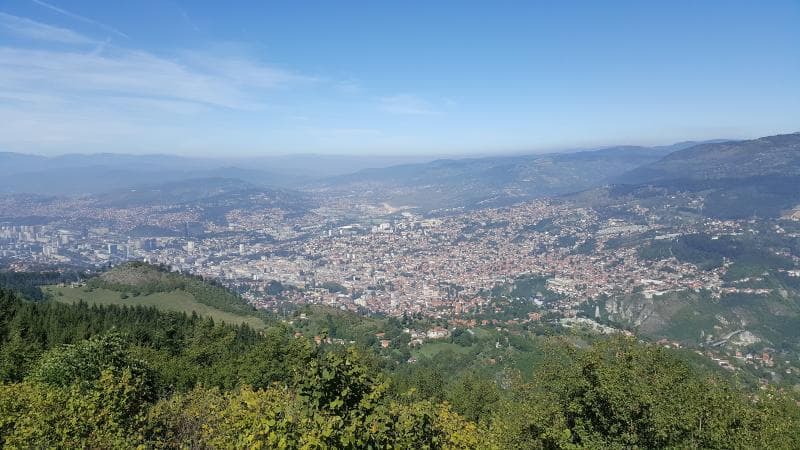
Explore Observation Viewpoints at Sarajevo City Hall (Vijećnica), Bosnia and Herzegovina. Discover its Pseudo-Moorish architecture, rich history, and stunning views.
Overview
The Sarajevo City Hall, known locally as Vijećnica, stands as a magnificent emblem of Sarajevo's rich history, architectural grandeur, and enduring spirit. Nestled gracefully on the banks of the Miljacka River, at the very edge of the historic Baščaršija district, its distinctive Pseudo-Moorish architecture immediately captures the imagination. More than just a building, Vijećnica is a living testament to the city's ability to rise from adversity, serving today as both a vibrant cultural monument and the seat of Sarajevo's city administration. It offers visitors a unique opportunity to delve into centuries of Bosnian heritage, from its grand halls to its insightful exhibitions, and to appreciate breathtaking vistas from designated observation viewpoints.
History & Cultural Background
Vijećnica's story began during the Austro-Hungarian period, with its construction taking place between 1892 and 1894, officially opening its doors in 1896. Conceived as a symbol of the empire's ambitions and an acknowledgment of the region's Islamic heritage, its design was meticulously crafted, with architect Alexander Wittek even traveling to Cairo to study Mamluk-period buildings. Initially serving as Sarajevo's City Hall, it later transformed into the National and University Library of Bosnia and Herzegovina in 1949, becoming a crucial repository of the nation's intellectual and cultural treasures, housing an extensive collection of books and manuscripts.
However, the building's most poignant chapter unfolded during the Siege of Sarajevo. On August 25-26, 1992, Vijećnica was heavily shelled and set ablaze, leading to the catastrophic loss of approximately 90% of its invaluable collection, an event described by many as 'bibliocide.' For years, it stood as a skeletal ruin, a stark symbol of the war's devastation. A painstaking and extensive reconstruction effort began in 1996, relying on surviving documentation, architectural fragments, and historical photographs. This monumental task, costing millions and lasting 18 years, culminated in its triumphant reopening on May 9, 2014, aptly coinciding with Europe Day, symbolizing resilience and rebirth.
What Makes It Special
The allure of Vijećnica lies in its distinctive Pseudo-Moorish architectural style, a harmonious blend of Eastern and Western influences. Its facade boasts bold geometric patterns, pointed arches, and a vibrant interplay of colors, evoking an oriental palace. Stepping inside, visitors are greeted by an equally impressive interior. The majestic central atrium, crowned by an ornate glass dome, floods the space with natural light, illuminating elegant staircases, intricately decorated columns, and colorful tilework. This architectural masterpiece is not merely a visual feast; it is a profound symbol of Sarajevo's multiculturalism and its unwavering spirit. Today, Vijećnica serves multiple purposes: it houses the Mayor's office and City Council, continues to host a part of the National and University Library, and features a museum with exhibitions detailing its turbulent history and the city's resilience.
Stories, Fun Facts & Local Details
One of Vijećnica's most historically significant moments occurred on June 28, 1914, when Archduke Franz Ferdinand and his wife, Sophie, attended a reception here just moments before their assassination nearby, an event that notoriously triggered the start of World War I. The story of its destruction during the siege, with countless pages from burned books reportedly floating through the air 'like snow,' remains a deeply moving and powerful memory for locals and a testament to the cultural loss endured. Today, beyond its role as a museum, Vijećnica is a vibrant hub for cultural life, hosting a variety of events from concerts and art exhibitions to ceremonial protocols and even weddings, embodying the city's renewed energy and hope.
Visitor Perspective
For the curious traveler, the Observation Viewpoints within and around Sarajevo City Hall offer distinct perspectives. Inside, the upper gallery provides an iconic vantage point, allowing for a classic view down to the beautifully patterned floor and an upward gaze towards the magnificent glass roof and the intricate arcades on its three levels. This internal panorama truly highlights the meticulous restoration and the grandeur of its design. For the best exterior views, cross the Miljacka River to the south bank. From here, one can capture a pristine three-quarter facade of the building, often with the river creating a picturesque foreground. Photographers note that morning light is ideal for interior shots, as it softly illuminates the atrium, while early mornings or late afternoons are perfect for warming the exterior facade with a gentle glow, enhancing its vibrant colors. Allow approximately 45 to 60 minutes for a thorough visit to appreciate both the architecture and the exhibitions detailing the building's extraordinary journey.
Coordinates: 18.43339, 43.85917
View on Google Maps💬 How Travelers Describe This Place
Based on community votes
Unique
961Interesting
695Photogenic
605Must See
404Beautiful
336
Traveler Stories
Discover memorable experiences shared by travelers who have visited this place.
No traveler stories yet.
Be the first traveler to share what made this place memorable.

Tour
By
Spot
Discover amazing places around the world. Your journey starts here.
Explore
© 2026 TourBySpot. All rights reserved.