Observation Points
Lucerne, Switzerland
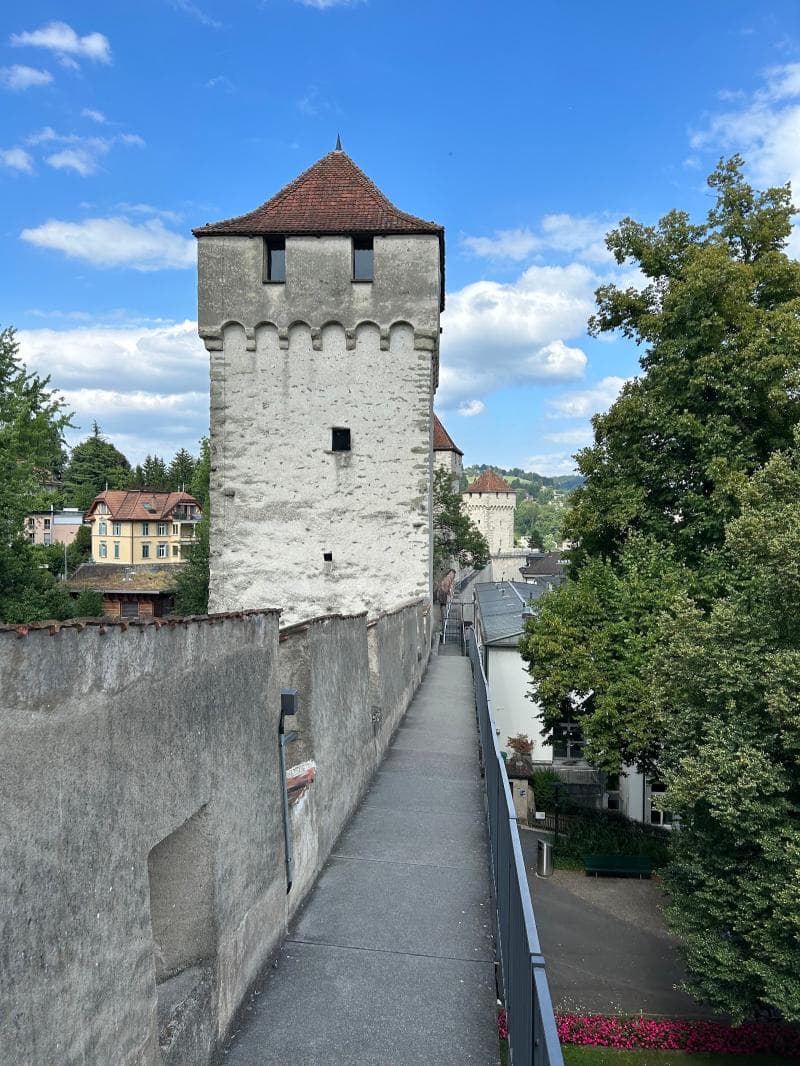
Discover Lucerne's Musegg Wall observation points! Climb medieval towers for panoramic views of the city, lake, and Alps in Switzerland. Learn its rich history.
Overview
Perched majestically above the charming city of Lucerne, Switzerland, the Observation Points of the Musegg Wall offer a captivating journey through time and an unparalleled visual spectacle. This remarkably preserved medieval city wall, known locally as the Museggmauer, stretches approximately 870 meters, forming a distinctive crown around Lucerne's old town. While nine towers punctuate its length, four are freely accessible to the public, inviting curious travelers to ascend their ancient steps. From these vantage points, visitors are treated to breathtaking panoramic vistas of Lucerne's historic rooftops, the serene expanse of Lake Lucerne, and the majestic peaks of the surrounding Central Swiss mountains, including the iconic Mount Pilatus. It's a treasured landmark, providing a unique blend of history, architecture, and natural beauty.
History & Cultural Background
The story of the Musegg Wall begins in the 13th century, with its primary construction occurring between the 14th and 15th centuries. It was built as a crucial defensive fortification for the growing city of Lucerne, designed to protect its inhabitants from external threats. Originally, a more extensive network of city walls included around 30 towers, but today, nine of these medieval sentinels proudly stand along the Musegg ridge. The wall's military significance waned over centuries, leading to a period of decline, but its historical value was recognized and preserved through significant restoration efforts between 2007 and 2015. The Musegg Wall holds the distinction of being Switzerland's longest continuous city wall, a testament to medieval engineering and the city's enduring heritage. Each of its surviving towers, such as the Männli, Zyt, Wacht, and Schirmer, carries its own unique history and architectural nuances, reflecting centuries of adaptation and purpose.
What Makes It Special
What truly sets the Musegg Wall's observation points apart is the immersive, multi-sensory experience they offer. It's more than just a view; it's a 'time-traveling experience' that transports visitors back to the medieval ages. Walking atop the battlements, you can almost hear the echoes of watchmen from centuries past. The unobstructed 360-degree views encompass not only the city and lake but also the dramatic Alpine landscape that cradles Lucerne, creating postcard-perfect photographic opportunities. Beyond its historical grandeur, the Musegg Wall is a living monument, serving as a valuable habitat for specialized and sometimes endangered flora and fauna, including rare bird species like kestrels and alpine swifts, bats, and wall lizards. This intertwining of human history and natural ecosystem makes it a truly special place.
Stories, Fun Facts & Local Details
Among the accessible towers, the Zyt Tower (Clock Tower) stands out with a particularly fascinating tale. It houses Lucerne's oldest working clock, whose mechanism dates back to 1535. This historical timepiece proudly strikes the hour 'one minute before' all other clocks in Lucerne, a unique privilege that highlights its ancient significance. The Männli Tower is easily recognizable by the 'iron Männli,' a figure with a standard that crowns its peak, visible from afar. The Wacht Tower, also known as the Heuturm (Hay Tower), has a dramatic past; it was once used to store hay and gunpowder, and in 1701, a lightning strike caused the gunpowder to explode, devastating the tower before its subsequent rebuilding. The Schirmer Tower once served as a vital gateway, marking the city's boundary and leading out into the surrounding countryside. These towers, maintained partly by local guilds, are not merely historical structures but custodians of Lucerne's rich cultural narrative.
Visitor Perspective
Exploring the Musegg Wall and its observation points is a rewarding activity for travelers seeking an authentic Lucerne experience. The wall and its accessible towers are generally open from April to November, typically between 8:00 AM and 7:00 PM, and admission is free. While the walk along the wall offers gentle strolls, ascending the towers involves navigating 'steep stairs' and narrow passages, making them unsuitable for strollers or those with significant mobility concerns. Many visitors suggest an early morning visit to enjoy the fantastic views with fewer crowds or aiming for the 'golden hour' for particularly stunning photographic light. Allowing 1 to 2 hours for exploration provides ample time to soak in the views, appreciate the history, and perhaps even spot some of the unique wildlife that calls the wall home. It's a journey that combines physical engagement with intellectual and emotional discovery, truly connecting you with the heart of Lucerne.
Coordinates: 8.30561, 47.05469
View on Google Maps💬 How Travelers Describe This Place
Based on community votes
Beautiful
958Interesting
728Must See
719Photogenic
481Unique
382
Traveler Stories
Discover memorable experiences shared by travelers who have visited this place.
No traveler stories yet.
Be the first traveler to share what made this place memorable.

Tour
By
Spot
Discover amazing places around the world. Your journey starts here.
Explore
© 2026 TourBySpot. All rights reserved.