Observation Points
Yerevan, Armenia
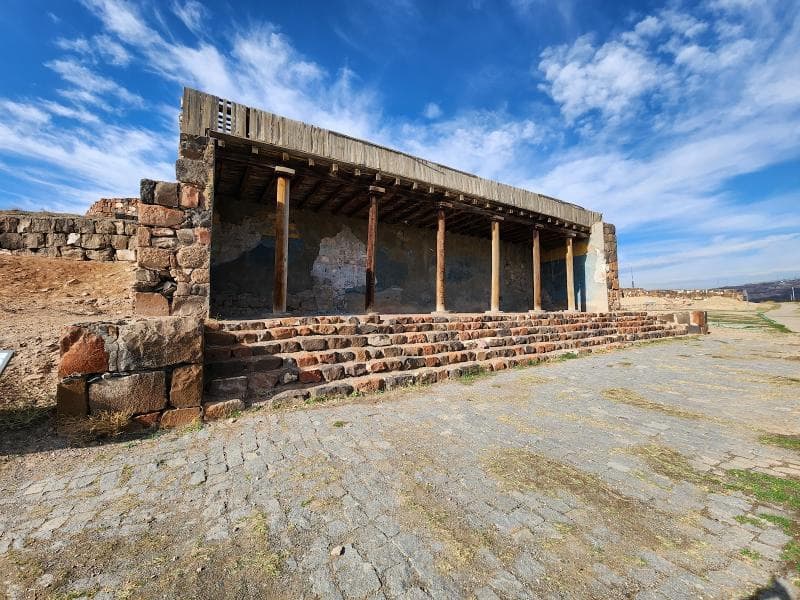
Discover the historic Observation Points at Erebuni Fortress in Yerevan, Armenia, offering panoramic views of the city and Mount Ararat from an ancient Urartian stronghold.
Overview
Perched atop Arin Berd hill in Yerevan, Armenia, Erebuni Fortress offers a journey back in time, providing breathtaking 'observation points' over the modern capital and the sprawling Ararat plain. While not a distinct named sub-spot, the entire fortress site is inherently an observation deck due to its strategic elevation and ancient purpose. Founded in 782 BC, this archaeological marvel is a testament to the advanced civilization of the Urartian kingdom. From its ancient stones, visitors can soak in expansive vistas, imagining the same strategic views that its builders, King Argishti I and his people, once commanded. The ruins, partially reconstructed, allow for a vivid sense of the ancient city's layout against a backdrop of contemporary Yerevan, making it a unique historical and visual experience.
History & Cultural Background
Erebuni Fortress stands as one of the most significant archaeological sites in Armenia, dating back nearly three millennia. It was established by King Argishti I of the Urartian kingdom in 782 BC, predating Rome itself. This makes Erebuni a foundational piece of Yerevan's identity, often referred to as the birthplace of the modern city. The location on Arin Berd hill, rising approximately 65 meters (215 feet) above the surrounding area, was not chosen by accident. It served as a crucial military stronghold, protecting the kingdom's northern borders and overseeing vital trade routes and the fertile Ararat plain. The Urartians were formidable engineers and architects; the fortress's construction involved massive basalt stones for foundations and intricate water systems, including stone pipes that brought water from considerable distances. Erebuni was more than a military outpost; it functioned as a vital political, economic, and cultural hub for the vast Urartian kingdom, showcasing their sophisticated urban planning and defensive architecture.
What Makes It Special
What truly distinguishes Erebuni's 'observation points' is the unparalleled panoramic sweep they offer. Standing amidst the ancient ruins, one can gaze upon the vibrant cityscape of Yerevan stretching out below, a striking contrast between past and present. On clear days, the iconic silhouette of Mount Ararat majestically dominates the horizon, providing a deeply symbolic and picturesque view. The site itself, with its knee-high basalt walls, column bases, and partially reconstructed sections of palaces, temples, and storerooms, invites visitors to walk through history. It provides a rare opportunity to connect with an ancient civilization, seeing the world from the very vantage points that Urartian kings and soldiers used to monitor their domain. The quiet, often windswept atmosphere of the hilltop, away from the hustle of the city, allows for a contemplative experience that few other sites can offer.
Stories, Fun Facts & Local Details
One of the most captivating facts about Erebuni is its direct linguistic and historical link to modern-day Yerevan. The name 'Yerevan' is widely believed to be derived from 'Erebuni', making the fortress a living ancestor of Armenia's capital. Evidence of this deep connection lies in the cuneiform inscription discovered at the site, which details King Argishti I's founding of Erebuni in 782 BC. This inscription is often referred to as Yerevan's 'birth certificate', marking the city's precise founding date and making it one of the world's oldest continuously inhabited cities. Archaeological findings reveal the ingenuity of the Urartians; the fortress was once encircled by strong walls, some originally up to 12 meters (39 feet) high, built in three layers using basalt and mudbrick. They even engineered an impressive underground stone piping system to supply water to the citadel from sources that could be a 40-minute drive away. For photographers, the 'golden hour'—early morning or the hour before sunset—is particularly recommended, as the light beautifully illuminates the volcanic stone and the city below, enhancing the views to Mount Ararat.
Visitor Perspective
A visit to the 'observation points' of Erebuni Fortress is an immersive journey. After exploring the Erebuni Museum at the base of Arin Berd hill, which houses a wealth of Urartian artifacts and a model of the original fortress, a path leads upwards to the ruins. The climb, while moderate, is rewarded with increasingly expansive views at every turn. Once on the hilltop, visitors can wander among the foundations of ancient buildings, tracing the outlines of a civilization that thrived millennia ago. The feeling of the wind across the volcanic stone and the distant hum of modern Yerevan below create a powerful sense of timelessness. It's a place where you're encouraged to slow down, sit on the ancient walls, and let the historical significance of the panorama sink in. The experience is not just about seeing but also about feeling the layers of history that connect the ancient Urartian kingdom to present-day Armenia. Sturdy shoes and water are advisable, especially during warmer months, as the site is exposed to the elements.
Coordinates: 44.5381, 40.1406
View on Google Maps💬 How Travelers Describe This Place
Based on community votes
Beautiful
556Interesting
470Photogenic
410Unique
254Must See
145
Traveler Stories
Discover memorable experiences shared by travelers who have visited this place.
No traveler stories yet.
Be the first traveler to share what made this place memorable.

Tour
By
Spot
Discover amazing places around the world. Your journey starts here.
Explore
© 2026 TourBySpot. All rights reserved.