Observation Points
Almaty, Kazakhstan
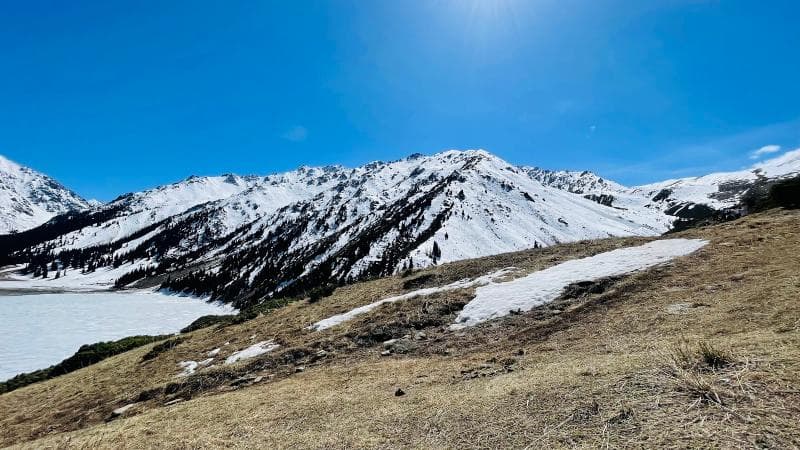
Discover the stunning Observation Points at Big Almaty Lake in Almaty, Kazakhstan, offering panoramic views of turquoise waters and majestic mountains.
Overview
High in the majestic Trans-Ili Alatau mountains, just a short drive from Almaty, Kazakhstan, lies the breathtaking Big Almaty Lake. This natural alpine reservoir, often affectionately called the 'Pearl of the Tien Shan,' is renowned for its mesmerizing turquoise waters that shift in hue with the seasons and sunlight. Perched at an elevation of approximately 2,511 meters (8,235 feet) above sea level, the lake is cradled within the Ile-Alatau National Park, offering a pristine escape into nature's grandeur.
The 'Observation Points' at Big Almaty Lake are not a single, fixed location but rather a collection of designated viewpoints and elevated areas designed to showcase its stunning beauty and the dramatic surrounding landscape. The most accessible and popular observation spot is typically found near the northern dam, providing panoramic vistas across the lake's 1.6-kilometer expanse. From here, visitors can marvel at the reflection of three prominent peaks—Sovetov Peak (4,317 m), Ozyorny Peak (4,110 m), and Turist Peak (3,954 m)—which form a spectacular natural amphitheater. Higher up, the Tien Shan Astronomical Observatory and the even more remote Cosmostation offer unparalleled perspectives, not just of the lake but of the vast mountain ranges and night sky.
History & Cultural Background
Big Almaty Lake's origins are deeply rooted in the geological history of the Tien Shan mountains. It was formed approximately 10,000 years ago, a result of significant tectonic movements and the powerful sculpting forces of Quaternary glaciers. Earthquakes in the region triggered landslides, which in turn created natural dams that allowed glacial meltwater to accumulate, forming the lake we see today.
Beyond its geological formation, the lake holds cultural significance for the local Kazakh people. One enchanting legend, often shared, suggests that the lake was formed from the tears of a giant who once resided in these mountains. This storytelling reflects a deep connection between the land and its people, where natural wonders are imbued with mystical tales. More pragmatically, the lake has been a vital resource for centuries; during the Soviet era, significant infrastructure was built, including water intake structures and hydroelectric power stations, ensuring that the glacial-fed waters provide essential drinking water and electricity to the city of Almaty.
What Makes It Special
The ethereal beauty of Big Almaty Lake lies primarily in its captivating, ever-changing colors. Depending on the angle of the sunlight, the time of day, and the season, the water can transition from a milky blue in spring, due to increased glacial melt, to a brilliant turquoise or deep emerald in late summer and early autumn. This stunning chromatic display is a natural phenomenon caused by the high mineral content and 'glacial flour'—fine rock particles suspended in the water that scatter light, creating its iconic glow.
The observation points provide a dramatic foreground to the majestic backdrop of the surrounding peaks: Sovetov, Ozyorny, and Turist. These towering summits, often capped with snow, frame the lake, creating postcard-worthy views that are a photographer's dream. The high altitude contributes to a crisp, clear atmosphere, offering exceptional visibility, particularly in the mornings. Furthermore, the presence of scientific research stations like the Tien Shan Astronomical Observatory, perched even higher above the lake, underscores the area's unique conditions not just for natural beauty but for scientific inquiry into the cosmos.
Stories, Fun Facts & Local Details
The legend of the lake being born from a giant's tears is a beautiful example of how nature inspires folklore, connecting the landscape to the human experience through emotional narratives. While this tale adds a touch of magic, the lake's real-world importance is equally compelling. It serves as Almaty's primary source of fresh drinking water, making its preservation crucial. This vital role means that swimming and even approaching the shoreline are strictly prohibited to maintain its purity. Guards are often present to ensure these regulations are upheld, reminding visitors of their responsibility to protect this precious resource.
A fascinating detail is the Tien Shan Astronomical Observatory, situated at an altitude of approximately 2,700 meters above the lake. Established in 1957, this observatory benefits from the clear, high-altitude skies, making it an ideal location for astronomical research and stargazing. Further up, the Cosmostation, at 3,330 meters, is a cosmic ray research station, highlighting the area's dual role as both a natural wonder and a hub for scientific exploration. These high-altitude stations not only contribute to scientific knowledge but also offer unique, albeit more challenging, observation points for those seeking expansive mountain vistas.
Visitor Perspective
Visiting the observation points of Big Almaty Lake offers an experience of profound tranquility and awe-inspiring natural beauty. As you ascend towards the lake, the urban sprawl of Almaty quickly gives way to dense pine forests and winding mountain roads, signaling a transition into a different world. The air becomes noticeably cooler and crisper, invigorating the senses.
Upon reaching the main viewing areas, typically near the northern dam, the sheer scale of the landscape unfolds before you. The vibrant colors of the lake, juxtaposed against the rugged, snow-dusted peaks, create a panoramic spectacle that feels almost surreal. It's a place for quiet contemplation, for capturing stunning photographs, and for simply breathing in the fresh mountain air. While direct access to the water is restricted, the elevated viewpoints ensure an unobstructed appreciation of the lake's pristine state and its dramatic setting. For those adventurous enough to hike higher towards the observatories, the reward is an even more expansive view, encompassing not only the lake but also vast stretches of the surrounding Tien Shan mountain range, offering a true sense of scale and remoteness.
Coordinates: 76.985, 43.0506
View on Google Maps💬 How Travelers Describe This Place
Based on community votes
Photogenic
639Unique
421Interesting
366Must See
298Beautiful
212
Traveler Stories
Discover memorable experiences shared by travelers who have visited this place.
No traveler stories yet.
Be the first traveler to share what made this place memorable.

Tour
By
Spot
Discover amazing places around the world. Your journey starts here.
Explore
© 2026 TourBySpot. All rights reserved.