Observation Deck
Split, Croatia
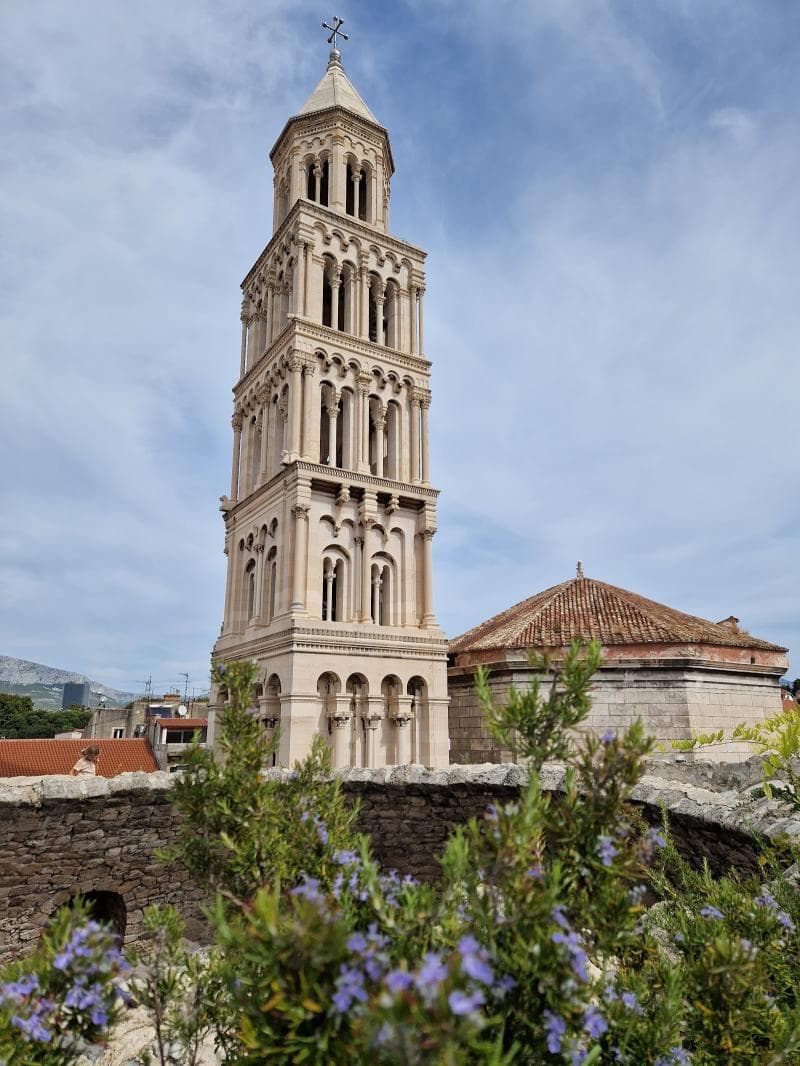
Ascend the Observation Deck of the Cathedral of Saint Domnius in Split, Croatia for breathtaking panoramic views of the city and Adriatic Sea.
Overview
Perched majestically within the ancient walls of Diocletian's Palace in Split, Croatia, the Observation Deck of the Cathedral of Saint Domnius offers a truly unforgettable experience. More commonly known as the Cathedral Bell Tower, this prominent structure is an iconic symbol of the city. Ascending its historic steps rewards visitors with breathtaking, sweeping panoramic views of Split's terracotta rooftops, the shimmering Adriatic Sea, and the dramatic mountainous landscape that embraces this historic coastal city. It provides a unique vantage point to appreciate the intricate layout of the Roman palace and the vibrant life that has flourished within its ancient confines for centuries. It's not just a view; it's a journey through time and a feast for the senses, capturing the essence of Dalmatian beauty.
History & Cultural Background
The history of the Cathedral of Saint Domnius and its bell tower is a fascinating narrative spanning over a millennium. The cathedral itself has an extraordinary origin: it was originally built around 305 AD as the mausoleum for the Roman Emperor Diocletian, who famously persecuted Christians. In a remarkable twist of fate and history, this very mausoleum was transformed into a Christian cathedral in the 7th century, dedicated to Saint Domnius, a bishop of Salona martyred under Diocletian's rule. This makes it one of the oldest Catholic cathedrals in the world still in use in its original structure.
The bell tower, which serves as the observation deck, is a much later addition to the octagonal mausoleum. Its construction began in the mid-13th century in the Romanesque style, but due to its exceptionally long building period, which stretched into the mid-16th century, it incorporates elements of Gothic architecture as well. This blend of styles is a testament to the changing architectural trends over the centuries. The tower stands approximately 57 to 60 meters high, making it the tallest bell tower in Dalmatia and a defining feature of Split's skyline. It underwent extensive reconstruction and partial alteration between 1890 and 1908, a period during which many original Romanesque sculptures were removed or changed to harmonize the different architectural periods.
What Makes It Special
What truly sets the Observation Deck of the Cathedral of Saint Domnius apart is its unique historical context and the unparalleled vistas it provides. It's not merely a high point; it's a living piece of history offering a perspective few places in the world can rival. From its summit, visitors gain a 360-degree panoramic view that encompasses the entire city of Split, the bustling port, the azure expanse of the Adriatic Sea, and the scattered islands beyond. Looking down, one can fully grasp the ingenious design of Diocletian's Palace, observing how its ancient Roman foundations seamlessly merge with medieval and modern urban development. The tower's architectural journey, from Romanesque to Gothic and even hints of Renaissance, makes it a visual chronicle of Dalmatian heritage. Its prominent position within a UNESCO World Heritage Site ensures that every angle tells a story, making the ascent more than just a climb – it's an immersive historical and geographical revelation.
Stories, Fun Facts & Local Details
The bell tower's construction, which spanned over 300 years, makes it one of the 'slowest-built buildings' in Split's history, a stark contrast to Diocletian's entire palace being built in just a decade. This extended construction period allowed for the fascinating integration of Romanesque and Gothic architectural styles, a visible narrative of medieval craftsmanship. Local tradition recognizes two medallions within the mausoleum as portraits of Emperor Diocletian and his wife Prisca, adding a personal touch to the imperial past. The bells, which can be heard echoing through the city in the mornings, are a living part of Split's daily rhythm. The cathedral itself is revered as the oldest Catholic cathedral in the world that remains in use in its original structure, making it a profound symbol of enduring faith and architectural longevity. The iconic wooden doors of the cathedral, crafted by Andrija Buvina in the 13th century, depict 28 scenes from the life of Christ and are considered masterpieces of Romanesque sculpture in Croatia.
Visitor Perspective
Embarking on the climb to the Observation Deck is an adventure in itself. The ascent involves navigating various types of stairs – from broad, ancient stone steps to narrower, sometimes steep and exposed metal staircases. It requires a reasonable level of fitness and a good head for heights, but the reward far outweighs the effort. Along the way, there are often intermediate platforms providing small breaks and early glimpses of the expanding panorama. As you reach the top, the labyrinthine streets of Diocletian's Palace unfold below, transforming into an intricate mosaic of history. The stunning views of the red-tiled roofs, the deep blue of the Adriatic, and the distant islands create a truly memorable visual symphony. To best enjoy the experience and avoid larger crowds, particularly during peak season, it is recommended to visit in the early morning or during the shoulder seasons of spring and autumn. The entire journey offers a deep sense of connection to Split's layered past, allowing a curious traveler to feel the echoes of emperors and centuries of human history from a truly elevated perspective.
Coordinates: 16.4398, 43.5085
View on Google Maps💬 How Travelers Describe This Place
Based on community votes
Beautiful
853Interesting
639Photogenic
569Must See
190Unique
93
Traveler Stories
Discover memorable experiences shared by travelers who have visited this place.
No traveler stories yet.
Be the first traveler to share what made this place memorable.

Tour
By
Spot
Discover amazing places around the world. Your journey starts here.
Explore
© 2026 TourBySpot. All rights reserved.