Observation Angles
Podgorica, Montenegro
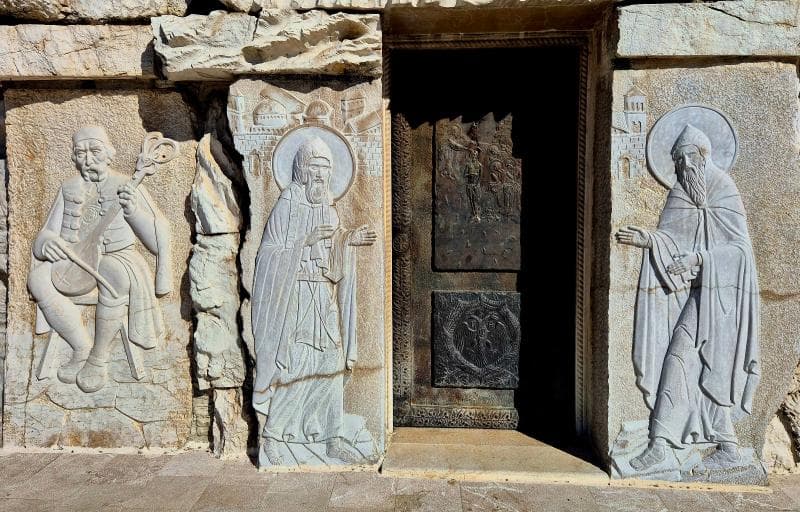
Discover the Cathedral of the Resurrection of Christ in Podgorica, Montenegro. Explore its unique Byzantine architecture and stunning frescoes.
Overview
The Cathedral of the Resurrection of Christ, nestled in the 'New Town' district of Podgorica, Montenegro, stands as a monumental and relatively modern beacon of Orthodox Christianity. Consecrated in 2013 after two decades of meticulous construction, it has rapidly become one of the city's most recognizable landmarks and a significant pilgrimage site. Its impressive scale and unique architectural blend make it a captivating destination for visitors, offering a rich tapestry of spiritual and artistic expression. From its towering spires to its richly adorned interior, the Cathedral invites contemplation from numerous 'observation angles', revealing new facets of its grandeur with every perspective.
History & Cultural Background
The construction of the Cathedral of the Resurrection of Christ commenced in 1993 and was finally completed in 2013, a significant undertaking that spanned twenty years. Its consecration coincided with the 1700th anniversary of the Edict of Milan, a pivotal decree that granted religious freedom to Christians within the Roman Empire, underscoring the Cathedral's role as a symbol of religious liberty and the resurgence of the Orthodox Church in the region. Architect Predrag Ristić designed the cathedral, drawing inspiration from a confluence of historical styles. While fundamentally Serbian-Byzantine, its architecture distinctly incorporates elements reminiscent of the medieval Cathedral of St. Tryphon in Kotor, further blending Romanesque, Italianate, and Byzantine influences. This unique stylistic synthesis creates a visually complex and engaging structure that stands out in Podgorica's urban landscape.
What Makes It Special
The Cathedral's distinctive architectural character is undoubtedly what makes it truly special. It is dominated by two imposing pyramidal towers, each rising 26.7 meters, housing a total of seventeen bells. Among these, an 11-ton behemoth holds the distinction of being the largest bell in the Balkan Peninsula. The central dome reaches an impressive height of 35.5 meters, commanding the city's skyline. The exterior itself offers varied 'observation angles': from a distance, its grand scale and twin towers dominate the panorama, while closer inspection reveals intricate stone carvings and the blend of traditional and unique design. The true marvel, however, lies within. The interior is a breathtaking spectacle of color and gold, where almost every surface is covered in lavish frescoes and intricate mosaics. These artworks, often set against shimmering gold backgrounds, depict biblical stories, saints, and significant events in Orthodox history, creating an immersive and spiritually charged atmosphere. The interplay of light and shadow, the sheer volume of artistic detail, and the spiritual narratives demand multiple 'observation angles' to fully absorb their profound beauty and meaning.
Stories, Fun Facts & Local Details
One of the most intriguing and, at times, controversial aspects of the Cathedral's interior is a particular fresco that has garnered international attention. Nestled among the traditional depictions of saints and biblical scenes, near the altar, is an apocalyptic fresco where figures strongly resembling historical communist leaders—Marshal Tito, Karl Marx, and Friedrich Engels—are depicted suffering in hell. This bold artistic choice, made in a relatively new church, reflects the complex historical and political past of Montenegro and the wider Balkan region, and offers a unique commentary on the era of communist rule. For many, this scene provides a compelling and unexpected 'observation angle' on the intersection of faith, history, and social commentary. Beneath the main sanctuary lies a crypt, serving as the final resting place for Metropolitan Amfilohije Radović, a prominent figure in the Serbian Orthodox Church, adding another layer of spiritual significance and making it a pilgrimage site for many believers.
Visitor Perspective
For any traveler, exploring the Cathedral of the Resurrection of Christ is an experience that engages all senses. Approaching the Cathedral, its striking white stone exterior and golden crosses immediately command attention, hinting at the splendor within. Once inside, the sheer volume of gilded frescoes and mosaics can be overwhelming yet profoundly moving. Take your time to walk around, allowing the rich iconography to unfold from different 'observation angles' – from the expansive view of the nave to the intricate details of individual murals. The unique blend of architectural styles, from its Byzantine domes to its Romanesque archways, invites close inspection. While photography is generally allowed, maintaining a respectful silence is crucial, allowing for personal reflection and appreciation of this sacred space. The Cathedral serves not just as a place of worship but also as a powerful cultural and artistic statement, offering a deep dive into Montenegro's spiritual heritage.
Coordinates: 19.24825, 42.445694
View on Google Maps💬 How Travelers Describe This Place
Based on community votes
Interesting
703Beautiful
521Photogenic
291Must See
157Unique
28
Traveler Stories
Discover memorable experiences shared by travelers who have visited this place.
No traveler stories yet.
Be the first traveler to share what made this place memorable.

Tour
By
Spot
Discover amazing places around the world. Your journey starts here.
Explore
© 2026 TourBySpot. All rights reserved.