Notable Graves
Zagreb, Croatia
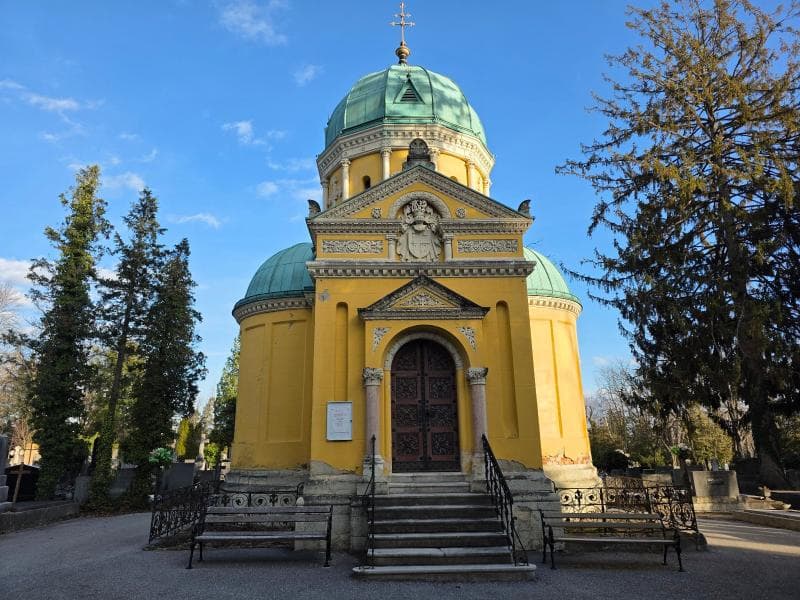
Discover the notable graves at Mirogoj Cemetery in Zagreb, Croatia. Explore this stunning open-air art gallery and national pantheon.
Overview
Mirogoj Cemetery, nestled at the foot of Mount Medvednica in Zagreb, Croatia, transcends the traditional concept of a burial ground. It stands as a profound cultural monument, often described as an open-air art gallery and a serene park. Its monumental architecture and tranquil pathways make it one of Zagreb’s most noteworthy landmarks and, for many, one of the most beautiful cemeteries in Europe. Mirogoj is remarkable for its multi-confessional nature, serving as a final resting place for people of all faiths, including Catholic, Orthodox, Muslim, Jewish, and Protestant, as well as those with no religious affiliation.
Visitors are drawn to Mirogoj not only by its historical significance but also by its architectural grandeur and the palpable sense of peace it offers. It's a place where history, art, and remembrance intertwine, providing a unique experience for those seeking to understand Croatia's rich past and cultural diversity. The cemetery's expansive grounds invite quiet contemplation and exploration, making it a compelling destination for a respectful and insightful visit.
History & Cultural Background
The history of Mirogoj Cemetery dates back to 1876 when it was officially inaugurated on November 6. The land it occupies was previously owned by the linguist Ljudevit Gaj and was purchased by the city in 1872 after his death. The cemetery's distinctive design is the brainchild of German architect Herman Bollé, a prominent figure responsible for much of Zagreb's architectural landscape, including work on the Zagreb Cathedral.
Construction of the iconic arcades, cupolas, and the main church began in 1879, a monumental undertaking that continued for several decades, finally reaching completion in 1929. A pivotal aspect of Mirogoj's establishment was its designation as the first municipal cemetery in Zagreb, meaning it was open to all citizens regardless of their religious beliefs. This foundational principle ensured that Mirogoj became a symbol of unity and religious tolerance, a characteristic reflected in the diverse symbols found on its gravestones, from Christian crosses to Jewish Stars of David and Muslim crescents.
What Makes It Special
Mirogoj Cemetery's allure lies in its unique blend of impressive architecture, profound artistic expression, and its role as a testament to Croatia's multicultural heritage.
- Architectural Masterpiece: Bollé's Neo-Renaissance design, characterized by its long, elegant arcades, majestic pavilions, and distinctive cupolas, creates an atmosphere of timeless grandeur. These architectural elements are often compared to those found in Italian and Central European cemeteries, establishing Mirogoj as a fine example of European Neoclassical architecture.
- Open-Air Art Gallery: Beyond its structural beauty, Mirogoj functions as an extraordinary outdoor museum of funerary art. It hosts numerous sculptures and memorials created by some of Croatia's most esteemed artists, including Ivan Meštrović, Antun Augustinčić, Dušan Džamonja, and Edo Murtić. These works add a layer of artistic depth, transforming a place of mourning into a celebration of human creativity.
- National Pantheon: Mirogoj is revered as Croatia's national pantheon, serving as the final resting place for a multitude of influential Croats. Its significance extends beyond religious boundaries, commemorating individuals who shaped the nation's history, culture, and identity.
Stories, Fun Facts & Local Details
Exploring the 'Notable Graves' section of Mirogoj offers a compelling journey through Croatian history and culture, marked by the legacies of its prominent figures. Among the most visited sites is the tomb of Franjo Tuđman, Croatia's first president, whose monumental black marble grave with gold lettering stands as a powerful symbol of independent Croatia. Another intensely personal pilgrimage for many is to the grave of Dražen Petrović, the legendary NBA basketball player whose tragic early death left a lasting impact on sports fans worldwide.
The cemetery also honors its architect, Herman Bollé, who is interred within the grounds he so beautifully designed. Literary enthusiasts can pay their respects to acclaimed writers such as Ivana Brlić-Mažuranić and Miroslav Krleža, whose contributions to Croatian literature are immense. Other notable interments include famous artists like Edo Murtić and sports icons such as basketball player Krešimir Ćosić. Historically, Mirogoj has also housed significant memorials, including monuments to victims of World War I, World War II, and the Croatian War of Independence, reflecting the nation's tumultuous past.
A poignant time to visit is around All Saints' Day (Dušni dan) on November 1st and 2nd, when the cemetery transforms into a breathtaking spectacle. Thousands of candles are lit, and wreaths of flowers adorn the graves, creating a moving display of remembrance and respect that illuminates the entire complex. It's also worth noting that the cemetery sustained damage during earthquakes in March and December 2020, particularly affecting its historic arcades, a testament to the ongoing preservation efforts needed for this treasured site.
Visitor Perspective
Visiting Mirogoj Cemetery is a uniquely serene experience, often described as a contemplative walk through a beautiful sculpture park. To fully appreciate its grandeur and tranquility, it is recommended to allocate ample time, as it is not a destination to be rushed. Many suggest visiting in the early morning or late afternoon, particularly on weekdays, to experience its peaceful atmosphere with fewer crowds. Respectful behavior is paramount; visitors are encouraged to keep voices low, silence phones, and avoid disturbing those who may be mourning.
The cemetery is easily accessible from Zagreb's city center. Public bus lines, such as the 106, 203, or 226, depart regularly from Kaptol, near the Zagreb Cathedral, and provide direct transport to the cemetery entrance. While walking from the city center is an option, be prepared for an uphill journey. Admission to Mirogoj Cemetery is free, allowing everyone to explore its historic paths and artistic treasures. Prepare for a good amount of walking, as the cemetery is extensive, and wear comfortable shoes to navigate its sprawling grounds effectively.
Coordinates: 15.986, 45.835
View on Google Maps💬 How Travelers Describe This Place
Based on community votes
Must See
491Photogenic
443Beautiful
414Interesting
310Unique
277
Traveler Stories
Discover memorable experiences shared by travelers who have visited this place.
No traveler stories yet.
Be the first traveler to share what made this place memorable.

Tour
By
Spot
Discover amazing places around the world. Your journey starts here.
Explore
© 2026 TourBySpot. All rights reserved.