North Pole Exhibits
Oslo, Norway
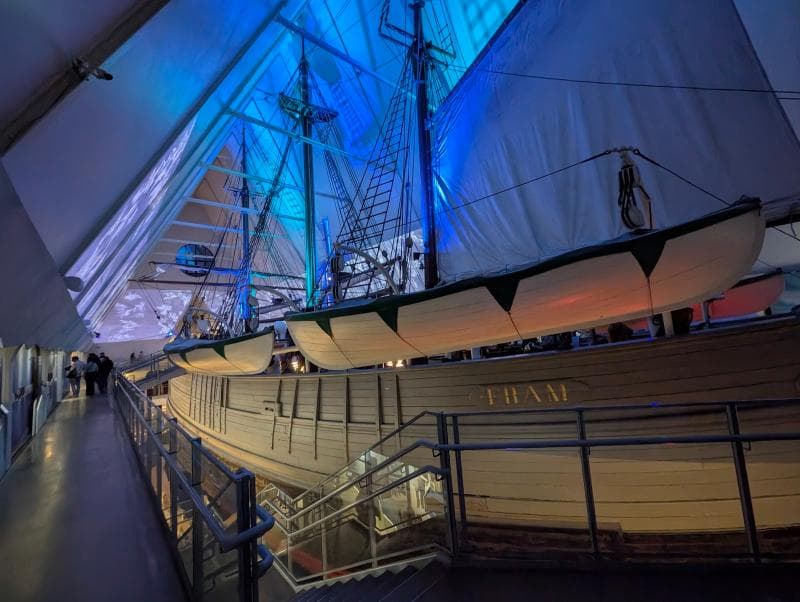
Explore North Pole Exhibits at Oslo's Fram Museum. Discover polar exploration history, step aboard the 'Fram' ship, and experience the 4D flight simulator.
Overview
The Fram Museum, located on Oslo's scenic Bygdøy peninsula, offers an immersive journey into Norway's storied polar exploration history. This renowned institution is home to the formidable polar ship 'Fram' and the pioneering 'Gjøa', bringing to life the triumphs and challenges of Arctic and Antarctic expeditions. The museum's exhibits, particularly those focusing on the Arctic and the quest for the North Pole, expertly blend historical artifacts with engaging, modern experiences, captivating visitors with tales of human endeavor against nature's extremes.
History & Cultural Background
Established in 1936, the Fram Museum stands as a testament to Norway's deep connection with the polar regions, celebrating national heroes like Fridtjof Nansen, Otto Sverdrup, and Roald Amundsen. The iconic ship 'Fram' was custom-built by Colin Archer for Nansen's 1891 North Pole expedition, designed to withstand immense ice pressure. 'Fram' subsequently carried Otto Sverdrup on extensive Arctic charting voyages and Roald Amundsen to the South Pole, cementing its legacy as the strongest wooden ship and record-holder for sailing farthest north and south. The museum also proudly displays the 'Gjøa', the first ship to navigate the Northwest Passage, a remarkable achievement by Amundsen and his crew from 1903-1906. The preservation of 'Fram' and the museum's foundation owe much to Otto Sverdrup's persistent efforts. Recognized for its innovative presentation, the museum received the prestigious THEA Award for Outstanding Achievement in 2020.
What Makes It Special
The Fram Museum distinguishes itself through its remarkably interactive and immersive portrayal of polar history, especially its North Pole-related exhibits. Visitors are invited to step aboard the actual 'Fram', exploring her original cabins, cargo hold, and engine room, gaining a palpable sense of expedition life. The Arctic experience is intensified by an engaging introductory film and a breathtaking 270-degree surround film, which includes a dramatic polar storm simulation. A key attraction is the 'North Pole Flight Simulator', a 4D experience that virtually re-enacts Roald Amundsen's historic 1926 flight over the North Pole, offering a truly unique perspective on this monumental achievement. Complementing these are multi-touch screens, interactive displays, and a 'trapped in ice' chamber, where visitors can feel the cold and hear the sounds of a ship encased in ice, enhancing the sensory and emotional connection to these extreme journeys. The meticulous detailing, featuring life-size mannequins and authentic objects, further transports guests into the past.
Stories, Fun Facts & Local Details
The Fram Museum is rich with captivating narratives and unique insights into polar exploration. The ship 'Fram' itself, reinforced to endure being frozen into Arctic ice, is a testament to extraordinary engineering. An intriguing local legend surrounds Oscar Wisting, a prominent polar figure, who is said to still linger in his old cabin within the museum, having passed away there in 1936 during 'Fram's' setup. Exhibits also reveal the realities of crew life, from medical provisions to the compelling stories of ship doctors. Physical traces of the past, like the seeping tar from 'Fram's' hull, offer a tangible link to its voyages. Beyond the ships, the museum details the pioneering flights of the N24, N25 aircraft, and the airship 'Norge', crucial to early North Pole aerial expeditions. Consistently rated highly, the Fram Museum draws hundreds of thousands of visitors annually, reflecting its compelling presentation of Norwegian polar achievements.
Visitor Perspective
A visit to the Fram Museum promises an enriching experience, typically lasting one to three hours. It caters to a global audience with detailed exhibit explanations available in ten languages, facilitating self-guided exploration. For deeper understanding, guided tours can be pre-arranged. The museum's location on the Bygdøy peninsula, known for its concentration of museums, makes it easily accessible from central Oslo via bus or seasonal ferry, allowing for a comprehensive cultural outing. Its proximity to the Kon-Tiki Museum and Norwegian Maritime Museum encourages combining visits. The Fram Museum is fully wheelchair accessible, ensuring comfort for all guests. Starting with the introductory film is highly recommended to provide essential context for the extraordinary stories of courage and endurance that permeate the entire museum. Stepping onto the deck of 'Fram' offers an unparalleled, personal connection to the intrepid spirit of polar pioneers.
Coordinates: 10.69953, 59.90336
View on Google Maps💬 How Travelers Describe This Place
Based on community votes
Unique
872Beautiful
846Interesting
684Photogenic
363Must See
87
Traveler Stories
Discover memorable experiences shared by travelers who have visited this place.
No traveler stories yet.
Be the first traveler to share what made this place memorable.

Tour
By
Spot
Discover amazing places around the world. Your journey starts here.
Explore
© 2026 TourBySpot. All rights reserved.