North Gate
Hanoi, Vietnam
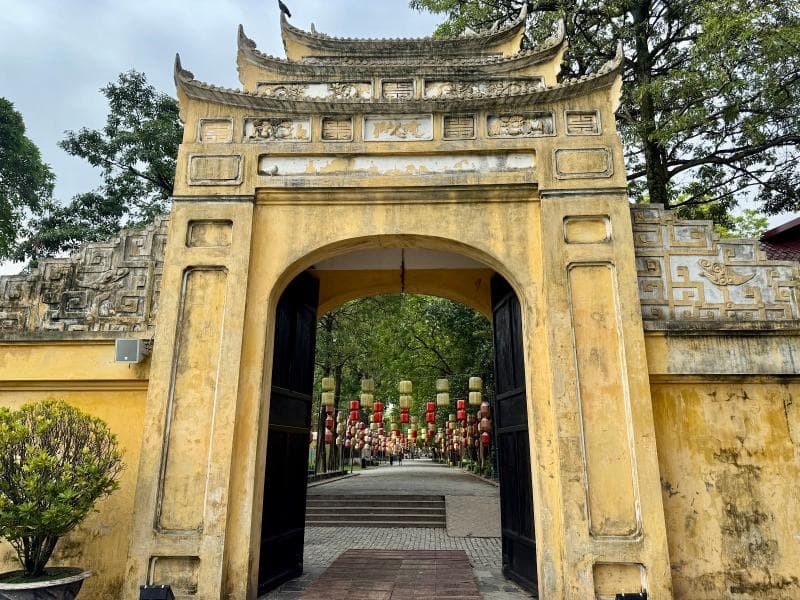
Explore Hanoi's historic North Gate (Cua Bac) at Thang Long Imperial Citadel. Discover its Nguyen Dynasty architecture, cannonball marks from French invasions, and the heroic stories of its defenders.
Overview
Deep within the heart of Hanoi, Vietnam, stands the Thang Long Imperial Citadel, a UNESCO World Heritage site that whispers tales of a thousand years of history. Among its enduring structures is the North Gate, or Cua Bac (Chính Bắc Môn), a powerful and poignant symbol of the city's resilience and rich past. It is situated on Phan Dinh Phung Street and stands as the sole surviving gate from the Nguyen Dynasty's reconstruction of the Hanoi Citadel.
This impressive gate, a vital component of the larger Imperial Citadel complex, serves not only as a physical remnant of a bygone era but also as a cultural touchstone. Visitors to the North Gate are transported to a time when emperors ruled and battles were fought, gaining a tangible connection to Vietnam's continuous struggle for independence and its enduring spirit.
History & Cultural Background
The history of the North Gate is deeply intertwined with the fascinating narrative of the Thang Long Imperial Citadel itself, which served as Vietnam's political and cultural heart for over 13 centuries. While the larger Citadel traces its origins to the 7th century and flourished under the Ly, Tran, and Le dynasties, the current North Gate was constructed in 1805 during the Nguyen Dynasty.
It was built upon the foundations of an earlier gate from the Le Dynasty, illustrating the continuous occupation and strategic importance of this site across different imperial periods. The Nguyen emperors, particularly Gia Long, undertook extensive reconstructions of the old Imperial Citadel, often mimicking European military architecture like the French Vauban style, though most of the original citadel was later demolished by the French.
The North Gate, however, miraculously survived, bearing witness to pivotal moments in Vietnamese history. Most notably, it carries the scars of the French invasions of Hanoi. In 1873 and again in 1882, French forces attacked the citadel. The gate's north face still bears distinct cannonball marks from the 1882 Battle for the Hanoi Citadel, serving as a powerful, visible reminder of the fierce resistance put up by Vietnamese defenders. The watchtower above the gate honors Governor Nguyen Tri Phuong, who fell defending Hanoi in 1873, and Governor Hoang Dieu, who sacrificed himself in 1882 when the citadel was overrun.
Archaeological excavations beneath the North Gate in 1998 uncovered remnants of older citadels at significant depths, including stone and wooden-hammer brick walls from the Le Dynasty. These discoveries provide profound evidence of the site's enduring historical layers and its role as a strategic stronghold throughout Hanoi's long history.
What Makes It Special
The North Gate stands out not just as a historical relic but as a profound testament to Vietnamese heritage. Its distinct architecture showcases a harmonious blend of traditional Vietnamese aesthetics and functional military design. The gate features a robust construction of stone and brick, with a brick arch employing a unique interlocking pattern. Above the arched passageway rises a watchtower gazebo, built with wooden frames in an eight-roof style, allowing imperial troops a panoramic view for defense.
What truly sets it apart is its survival. While much of the Imperial Citadel was dismantled over time, particularly during the French colonial period, the North Gate, along with the Hanoi Flag Tower, remained. It is the only remaining gate of the Hanoi Citadel from the Nguyen Dynasty, making it an invaluable piece of architectural and historical legacy. The etched Chinese characters 'Chính Bắc Môn' (Main Northern Gate) above the arch, adorned with floral motifs, add to its historical charm. Furthermore, the gate serves as a place of reverence, with the watchtower gazebo partly restored to honor the valiant governors Nguyen Tri Phuong and Hoang Dieu, who made the ultimate sacrifice defending Hanoi.
Stories, Fun Facts & Local Details
Perhaps the most striking detail of the North Gate is the visible damage it carries. Look closely, and you'll find two deep indentations on its outer wall – the unmistakable marks left by French cannonballs during the 1882 attack. A French stone plaque further commemorates this event, inscribed with '25 avril 1882: Bombarde de la citadelle par les canonnières 'Surprise' et 'Fanfare,'' detailing the French gunboat assault from the Red River. These physical scars offer a raw, tangible link to a turbulent past and the heroism of those who defended the city.
The stories of governors Nguyen Tri Phuong and Hoang Dieu are central to the gate's cultural significance. Both generals committed suicide after the citadel fell, choosing death over surrender. Their bravery is enshrined within the gate's watchtower, where a shrine now stands, and locals often visit to burn incense and pay their respects. Their names are even given to modern streets beside the ancient citadel, cementing their legacy in Hanoi's urban fabric. Interestingly, after occupying Hanoi, the French army themselves recognized the strategic importance of the North Gate's watchtower and continued to use it as a sentry box. Ancient records also suggest a 20-meter wide moat and a brick bridge once guarded the gate, remnants of which are now beneath modern streets and lawns.
Visitor Perspective
Visiting the North Gate offers a unique opportunity to step back in time and immerse yourself in Hanoi's profound history. As you approach, its imposing structure, built of sturdy stone and brick, immediately conveys its defensive purpose. Observing the cannonball marks on its facade provides a somber yet powerful reminder of the conflicts it endured.
Inside the gate, a visit to the shrine dedicated to Nguyen Tri Phuong and Hoang Dieu allows for a moment of quiet reflection, connecting you to the enduring spirit of Vietnamese patriotism. The architectural details, such as the lotus motifs and the ancient Chinese inscription, offer insights into the artistry and cultural influences of the Nguyen Dynasty. While the Imperial Citadel itself has specific operating hours (typically Tuesday to Sunday, 8:00 AM to 5:00 PM), the North Gate, being on a public street, offers some external viewing opportunities outside these times. Many find it a superb spot for photography, capturing its ancient charm and historical weight. As a component of the larger Thang Long Imperial Citadel, exploring the North Gate provides a crucial piece of the puzzle in understanding Hanoi's thousand-year journey from an imperial capital to a vibrant modern city.
Coordinates: 105.83722, 21.03944
View on Google Maps💬 How Travelers Describe This Place
Based on community votes
Unique
672Photogenic
671Interesting
356Beautiful
225Must See
19
Traveler Stories
Discover memorable experiences shared by travelers who have visited this place.
No traveler stories yet.
Be the first traveler to share what made this place memorable.

Tour
By
Spot
Discover amazing places around the world. Your journey starts here.
Explore
© 2026 TourBySpot. All rights reserved.