North Entrance
Yangon, Myanmar
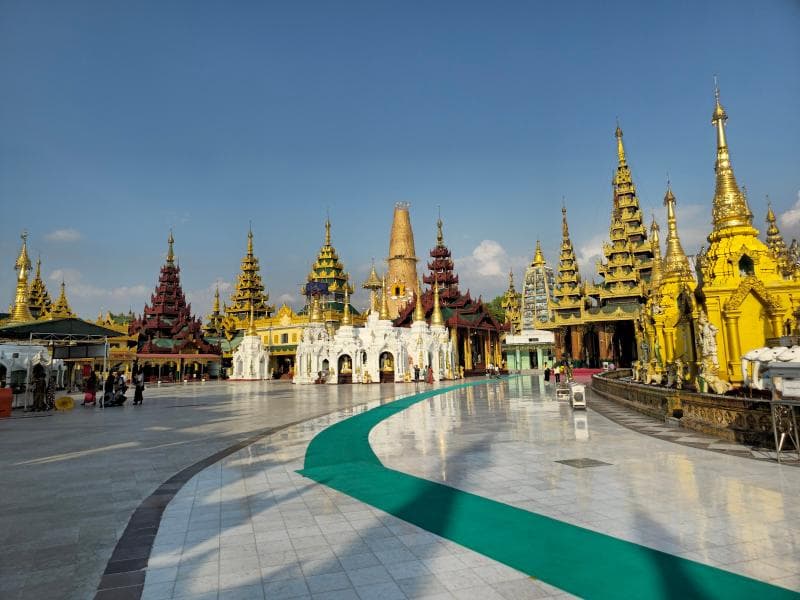
Discover the North Entrance of Shwedagon Pagoda in Yangon, Myanmar. Explore its history, unique crocodile railings, and sacred atmosphere.
Overview
The North Entrance of the majestic Shwedagon Pagoda in Yangon, Myanmar, offers a distinct and spiritually resonant gateway into one of the world's most revered Buddhist sites. While the Shwedagon Pagoda itself stands as a gleaming golden testament to centuries of devotion and architectural prowess, each of its four cardinal entrances possesses its own character and historical layers. The North Entrance provides a pathway steeped in tradition, leading visitors up a series of ancient steps towards the sacred main platform of the pagoda. It is a portal where history, faith, and artistry converge, preparing pilgrims and curious travelers alike for the profound experience that awaits within the golden complex.
History & Cultural Background
The Shwedagon Pagoda's history stretches back over two millennia, with legends asserting its construction some 2,500 years ago, making it potentially the oldest Buddhist stupa globally. While archaeological findings suggest its origins might be between the 6th and 10th centuries BCE, the pagoda's significance as a repository of sacred relics remains undisputed. It is believed to enshrine relics of four previous Buddhas, most notably eight strands of hair from Gautama Buddha himself. Over centuries, the pagoda has been continually rebuilt, enlarged, and embellished by various Mon and Burmese monarchs, each adding to its splendor and spiritual legacy. The North Entrance, with its stairway dating back to approximately 1460, stands as a witness to this enduring history, reflecting the continuous reverence and dedication poured into the pagoda's maintenance and beautification. It represents a tangible link to the pagoda's ancient past, offering a sense of journey and pilgrimage that has been undertaken by countless individuals through generations.
What Makes It Special
Distinguishing the North Entrance are several unique features that offer a glimpse into the pagoda's rich heritage and artistic detail. The covered stairway at the North Entrance, comprising 128 steps, provides a gradual ascent, allowing for contemplation before reaching the main platform. One of the most historically significant elements found here are ancient stone railings, carved in the form of long crocodiles. Historians believe these remarkable railings were crafted around 1460, positioning them among the pagoda's most enduring and original architectural components. These intricate carvings hint at older cosmological beliefs and artistic traditions interwoven with the pagoda's Buddhist identity. Furthermore, tucked away near the northern stairway, visitors can discover the Maha Gandha Bell. This massive and ornately decorated bronze bell adds another layer of cultural richness, its presence underscoring the pagoda's role not just as a visual spectacle but as a vibrant center of sound and ritual.
Stories, Fun Facts & Local Details
As with all entrances to the Shwedagon Pagoda, the North Entrance is guarded by imposing figures of 'Chinthes,' mythical lion-like creatures that stand sentinel, protecting the sacred grounds from evil. These magnificent guardians, often adorned with gold leaf, are a common sight in Myanmar's Buddhist architecture, symbolizing strength and sanctity. For local devotees, each entrance can hold particular significance, and the journey up the steps is often part of a deeply personal spiritual practice. While the southern entrance is often the most used due to its accessibility from the city center, the North Entrance offers a path less traveled by some tourists, providing a potentially quieter and more contemplative experience. The crocodile railings are not merely decorative; they are thought to evoke ancient animistic traditions that predate Buddhism in the region, adding a mystical layer to the spiritual journey. Observing worshippers at the various shrines and planetary posts around the main stupa, reached after ascending any of the entrances, reveals the deeply personal connection individuals have with their birth day and its associated planetary shrine, a practice rooted in traditional Burmese astrology.
Visitor Perspective
Approaching the Shwedagon Pagoda through its North Entrance offers a unique introduction to this sacred complex. Visitors are immediately immersed in the local atmosphere, often encountering vendors selling flowers, incense, and other offerings along the way. As with any entry to the pagoda, cultural etiquette is paramount. Guests are required to remove their shoes and socks at the base of the stairs and dress modestly, ensuring shoulders, midriffs, and knees are covered as a sign of respect. While foreign visitors typically purchase an entrance ticket (payable in cash), the experience of climbing the steps, surrounded by the echoes of prayers and the subtle scent of jasmine, is priceless. The early morning or late afternoon are often recommended times for a visit. At dawn, the pagoda glows softly as the first rays hit its golden surface, while at dusk, the illumination creates a breathtaking spectacle, allowing for reflection and a deeper connection to the spiritual heart of Yangon.
Coordinates: 96.14951, 16.79879
View on Google Maps💬 How Travelers Describe This Place
Based on community votes
Interesting
963Beautiful
897Photogenic
723Must See
481Unique
463
Traveler Stories
Discover memorable experiences shared by travelers who have visited this place.
No traveler stories yet.
Be the first traveler to share what made this place memorable.

Tour
By
Spot
Discover amazing places around the world. Your journey starts here.
Explore
© 2026 TourBySpot. All rights reserved.