Nordic Museum Exterior
Stockholm, Sweden
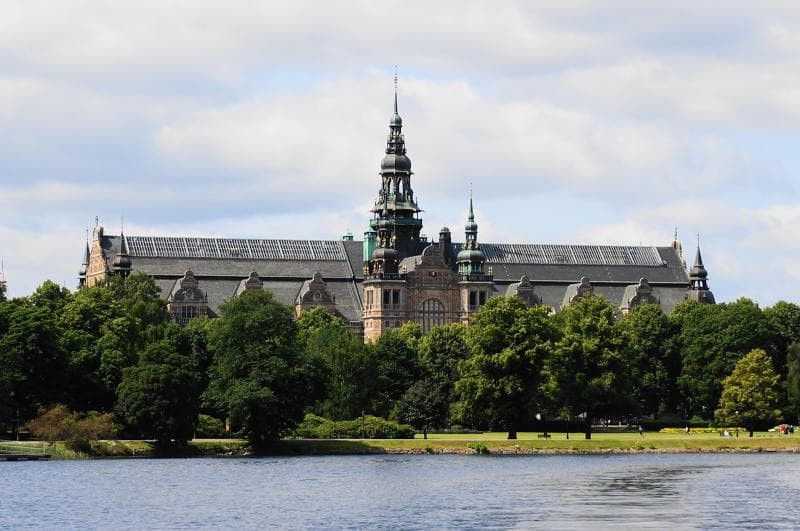
Discover the Nordic Museum's imposing exterior in Djurgården, Stockholm, Sweden. Explore its Dutch-influenced Danish Renaissance architecture, grand scale, and unique historical details.
Overview
The Nordic Museum (Nordiska museet) on Djurgården in Stockholm, Sweden, stands as a magnificent architectural marvel, instantly recognizable against the city's skyline. This grand edifice, dedicated to 500 years of Nordic cultural history, captivates visitors long before they step inside, its imposing exterior hinting at the rich heritage it safeguards. As you approach this iconic building, you're greeted by a structure that evokes a sense of history and national pride, perfectly situated amidst the lush surroundings of Djurgården.
History & Cultural Background
The story of the Nordic Museum's exterior is deeply intertwined with the vision of its founder, Artur Hazelius, and the architectural genius of Isak Gustaf Clason. Hazelius envisioned a 'palace for the people' to house his vast collection of cultural artifacts, a dream that began taking shape with the first groundbreaking in 1888. However, the building project was ambitious and faced financial constraints and changing plot boundaries. It wasn't until 1907, after nearly two decades of construction, that the current structure was largely completed and opened to the public, although it was only about one-third of the size originally planned by Clason. Clason's design draws inspiration from Dutch-influenced Danish Renaissance architecture, notably resembling Frederiksborg Palace, rather than purely Swedish historical styles. The building itself is considered one of Clason's most famous works.
What Makes It Special
From its sheer scale to its intricate details, the Nordic Museum's exterior is a testament to turn-of-the-century craftsmanship and architectural ambition. The grand structure stretches an impressive 153 meters in length, crowned by a golden spire that reaches 81 meters above the ground, making it visible from various parts of Stockholm. The facade features detailed masonry work, arched windows, and decorative gables. High upon its gables, visitors can spot the coats of arms of the Nordic countries, alongside watchful figures of a medieval knight and a 17th-century warrior, symbolically guarding the museum's treasures. The monumental main entrance portal on the eastern side, completed just in time for the 1907 inauguration, showcases classical antique architectural forms. Its columns are adorned with hazel and rowan, resting on six pedestals featuring reliefs by sculptor Carl Eldh, with an inscription by author August Strindberg beneath each. Perched atop the gable of this portal is the Norse god Odin, while below, a female muse figure is depicted receiving gifts from the people, symbolizing the museum's role in preserving cultural heritage.
Stories, Fun Facts & Local Details
One intriguing fact about the Nordic Museum is that its current imposing form was originally intended to be just the entrance hall of a much larger, never-realized museum complex, approximately three times its actual size. The construction faced ongoing challenges, including a consistent lack of funds, which ultimately led to the scaled-down version we see today. Outside the main entrance, a prominent statue of Karl X Gustav, King of Sweden from 1654 to 1660, stands on a granite pedestal designed by Isak Gustaf Clason himself. Although inaugurated in 1917, the statue was not contemporary with the museum's opening, adding another layer of historical context to the site. This architectural masterpiece is not merely a container for history; it is a significant historical object in its own right, preserving the architectural trends and national aspirations of its era.
Visitor Perspective
For a curious traveler, approaching the Nordic Museum's exterior is an experience in itself. Its castle-like appearance, resembling a Nordic Renaissance palace, immediately conveys a sense of grandeur and historical significance. The sheer size and intricate details of the facade invite closer inspection, encouraging visitors to appreciate the craftsmanship of a bygone era. Standing on the monumental entrance steps, one can imagine the grand inauguration ceremony in 1907, complete with flags and music, despite a rainy day. The museum's prominent location on Djurgården, right by the water and near other major attractions like the Vasa Museum, makes it a captivating landmark and an essential stop for anyone exploring Stockholm's rich cultural landscape. Even without stepping inside, the exterior of the Nordic Museum offers a powerful journey through Swedish architectural history and national identity.
Coordinates: 18.094268, 59.329008
View on Google Maps💬 How Travelers Describe This Place
Based on community votes
Interesting
879Photogenic
741Beautiful
482Unique
396Must See
274
Traveler Stories
Discover memorable experiences shared by travelers who have visited this place.
No traveler stories yet.
Be the first traveler to share what made this place memorable.

Tour
By
Spot
Discover amazing places around the world. Your journey starts here.
Explore
© 2026 TourBySpot. All rights reserved.