Nine-Turn Bridge
Shanghai, China
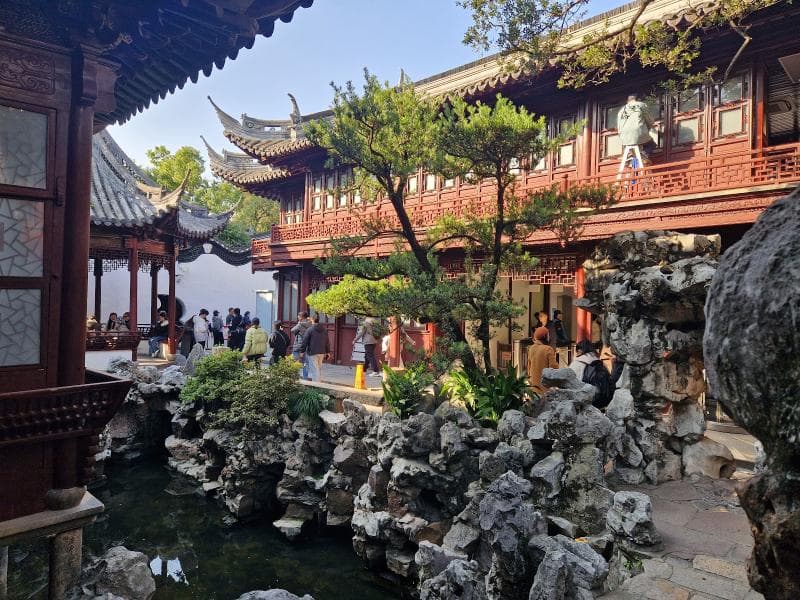
Discover Shanghai's historic Nine-Turn Bridge in Yu Garden, a Ming Dynasty marvel with symbolic turns protecting against evil spirits. Explore its rich history and unique design in China.
Overview
Nestled within the historic Yu Garden in the vibrant heart of Shanghai, China, lies the enchanting Nine-Turn Bridge, also known as Jiuqu Bridge. This iconic pedestrian bridge gracefully spans a tranquil lotus pond, serving as a captivating pathway between the bustling Yuyuan Bazaar and the serene Huxinting Teahouse. Crafted from alternating segments of stone and wood, its distinctive zigzag design with nine sharp angles is an enduring masterpiece of Ming Dynasty architecture, inviting travelers to step into a world where history and tranquility intertwine.
More than just a crossing, the Nine-Turn Bridge is a prelude to the Yu Garden experience, a symbolic threshold that prepares both mind and senses for the classical Chinese landscape within. Its gentle turns offer ever-changing perspectives of the garden's pavilions, water features, and lush greenery, creating a reflective journey for all who traverse its ancient path.
History & Cultural Background
The Nine-Turn Bridge was conceived in the 16th century as an integral part of Yu Garden, a grand private estate built by Pan Yunduan, a high-ranking official, as a peaceful retreat for his aging father. The garden itself, whose name 'Yu' means 'pleasing' or 'comforting', embodies filial piety and a desire to provide a place of solace and delight. The bridge's design draws inspiration from traditional Suzhou garden architecture, where the interplay of water and movement is central to contemplation.
The deliberate inclusion of nine turns holds profound cultural significance in Chinese numerology. Nine, being the highest odd number, symbolizes ultimate completeness, longevity, and attributes associated with heaven and the emperor. Beyond this auspicious symbolism, the zigzag form serves a practical, albeit spiritual, purpose rooted in ancient Chinese belief: evil spirits are thought to only travel in straight lines. Thus, the bridge's numerous bends act as a protective barrier, preventing malevolent forces from entering the garden or the venerable Huxinting Teahouse it leads to.
What Makes It Special
What truly sets the Nine-Turn Bridge apart is its ingenious blend of philosophy, protection, and aesthetic play. Its construction from stone and wood segments is designed to catch and reflect light differently at each angle, creating a subtle illusion of movement even when the pond's surface is still. Each of its nine turns is intentionally composed, offering a unique framed view of the Yu Garden, from elegant pavilions and willow trees to the shimmering water below.
The bridge acts as a flowing 'Eastern Poem', guiding visitors through a curated visual narrative. It provides a unique architectural experience, where every step reveals a new composition of nature and traditional artistry, showcasing the delicate beauty of traditional Chinese landscape design. As a rare survivor of centuries of change, the Nine-Turn Bridge embodies Shanghai's ability to evolve while retaining its profound cultural soul.
Stories, Fun Facts & Local Details
One of the most charming legends associated with the Nine-Turn Bridge is the belief that its zigzag path thwarts evil spirits, which can only move in straight lines. This architectural feature, therefore, serves as a whimsical yet serious guardian for the garden and the Huxinting Teahouse. The teahouse itself, built in 1784, holds the distinction of being Shanghai's oldest surviving teahouse, inviting visitors to pause and enjoy a cup of jasmine or oolong tea in an unchanged, atmospheric setting.
During the Qing Dynasty, the bridge and its surrounding area were a popular venue for evening gatherings. Hundreds of paper lanterns would be lit, casting shimmering reflections across the water and filling the air with a soft, magical glow. Today, visitors can still gaze into the jade-colored water, spotting colorful koi fish swimming beneath the bridge's ancient turns, a delightful detail that connects past and present.
Visitor Perspective
For the curious traveler, crossing the Nine-Turn Bridge is much more than just walking from one side to another; it's an initiation into the tranquil world of Yu Garden. It marks a transition from the clamor of modern Shanghai to the serenity of a classical oasis, a gentle surrender to a slower rhythm. Each turn encourages a pause, allowing visitors to appreciate the intentionally framed vistas of pavilions, water, and surrounding nature.
While crossing, one can admire the reflections of old Shanghai's skyline, clouds, and the Huxinting Teahouse floating like an island. A stop at the Huxinting Teahouse midway offers a chance to refresh and soak in the timeless atmosphere. It's advisable to take your time and watch your footing, as the bridge lacks protective railings and its uneven surface and tight angles require careful attention, especially when wet. Though popular and often bustling with visitors, particularly during peak times, the bridge remains a prime spot for photography, capturing the essence of traditional Chinese garden design.
Coordinates: 121.48741, 31.22872
View on Google Maps💬 How Travelers Describe This Place
Based on community votes
Photogenic
846Must See
564Beautiful
201Unique
121Interesting
87
Traveler Stories
Discover memorable experiences shared by travelers who have visited this place.
No traveler stories yet.
Be the first traveler to share what made this place memorable.

Tour
By
Spot
Discover amazing places around the world. Your journey starts here.
Explore
© 2026 TourBySpot. All rights reserved.