Night Watch Gallery
Amsterdam, Netherlands
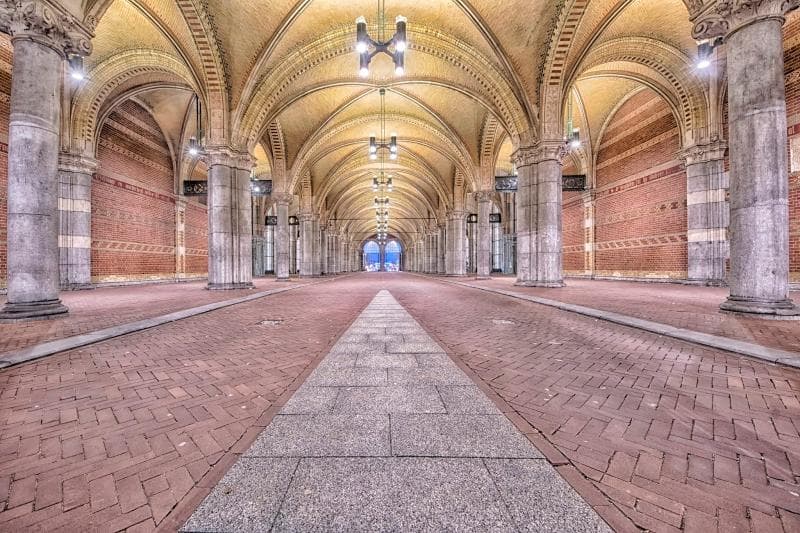
Explore the Night Watch Gallery at the Rijksmuseum in Amsterdam, Netherlands, home to Rembrandt's iconic masterpiece, 'The Night Watch'. Discover its history, artistry, and ongoing conservation.
Overview
Deep within the grand halls of the Rijksmuseum in Amsterdam, Netherlands, lies a specially designed space known as the Night Watch Gallery. This dedicated gallery serves as the permanent home for one of the most iconic and transformative masterpieces of the Dutch Golden Age: Rembrandt van Rijn's 'The Night Watch'. It is not merely a room but a stage meticulously crafted to present this monumental painting, allowing visitors to immerse themselves in its historical and artistic significance. The painting itself is a colossal oil on canvas, measuring approximately 363 cm by 437 cm (about 12 by 14.5 feet) and weighing a substantial 337 kilograms. Its presence defines a visit to the Rijksmuseum, drawing millions of admirers annually who come to witness its dramatic scale and intricate details firsthand.
History & Cultural Background
Rembrandt completed 'The Night Watch' in 1642, a period marking the peak of his career and the flourishing Dutch Golden Age. The painting's formal title is 'Militia Company of District II under the Command of Captain Frans Banninck Cocq', and it was commissioned by a civic guard company from Amsterdam. During the 17th century, civic guards were volunteer militias composed of wealthy merchants, shopkeepers, and local dignitaries whose original purpose was city defense. However, by the time Rembrandt painted this work, the Netherlands had largely secured its independence from Spain, and these militias had evolved into more ceremonial social clubs, reflecting the prosperity and civic pride of Amsterdam. Rembrandt's revolutionary approach to this group portrait departed dramatically from the stiff, formal arrangements typical of the era, injecting movement and narrative into a genre traditionally static.
What Makes It Special
'The Night Watch' stands apart due to Rembrandt's audacious artistic choices. Instead of presenting a uniform line-up of figures, he captured the militia in a moment of dynamic action, as if they are actively stepping forward, preparing to march. This sense of motion is enhanced by his masterful use of chiaroscuro – the dramatic interplay of light and shadow – which illuminates key figures like Captain Frans Banninck Cocq and his lieutenant, Willem van Ruytenburch, while allowing others to recede into the background. This innovative composition transformed a conventional group portrait into a compelling, theatrical scene. Furthermore, the painting's popular title, 'The Night Watch', is a historical misnomer. It actually depicts a daytime scene, but centuries of accumulated dirt and layers of varnish darkened the canvas, leading to the mistaken impression that it portrayed a nocturnal event. The original, lighter tones were only fully revealed after a comprehensive cleaning in the 1940s.
Stories, Fun Facts & Local Details
The history of 'The Night Watch' is as rich and dramatic as the painting itself. Originally, the artwork was even larger, but in 1715, sections were cut from all four sides, most notably from the left, to make it fit between two doors when it was moved to Amsterdam's Town Hall. These missing pieces have never been found. The painting has endured several perilous journeys and incidents; during World War II, it was carefully rolled up and hidden in a cave in Maastricht to protect it from Nazi seizure. It has also been the target of multiple vandalism attempts, surviving knife attacks in 1911, 1975, and 1990, a testament to its enduring magnetism and vulnerability. A fascinating detail within the canvas is the small, luminous girl in a pale yellow dress with a dead chicken tied to her belt. She is believed to be the company's mascot, with the chicken's claw symbolizing the 'Kloveniers' or musketeers, the type of civic guard depicted.
Visitor Perspective
Visiting the Night Watch Gallery is an experience unlike any other in the Rijksmuseum. The gallery was specifically redesigned during the museum's extensive renovation to optimally showcase 'The Night Watch', allowing visitors to appreciate the painting from the distance Rembrandt intended. Since 2019, the painting has been the subject of 'Operation Night Watch', the largest and most ambitious research and restoration project ever undertaken on the masterpiece. This groundbreaking project takes place publicly within a specially constructed glass chamber directly in the gallery, allowing visitors to observe conservators and scientists at work, meticulously analyzing and preserving the painting. This unique transparency offers an extraordinary glimpse into the intricate world of art conservation, making the viewing experience not just an appreciation of art, but also a live lesson in its preservation. The sheer scale and historical weight of 'The Night Watch', combined with the opportunity to witness ongoing conservation efforts, make the Night Watch Gallery a profoundly moving and educational destination for any curious traveler.
Coordinates: 4.885, 52.35986
View on Google Maps💬 How Travelers Describe This Place
Based on community votes
Photogenic
846Must See
564Beautiful
201Unique
121Interesting
87
Traveler Stories
Discover memorable experiences shared by travelers who have visited this place.
No traveler stories yet.
Be the first traveler to share what made this place memorable.

Tour
By
Spot
Discover amazing places around the world. Your journey starts here.
Explore
© 2026 TourBySpot. All rights reserved.