New Wing
Berlin, Germany
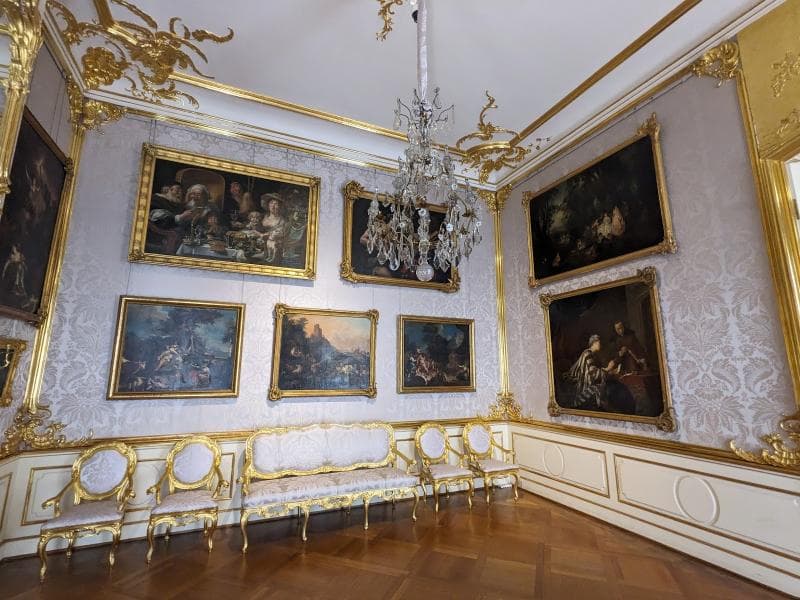
Explore the New Wing of Charlottenburg Palace in Berlin, Germany. Discover Rococo splendor, royal apartments, and 18th-century art within this historic extension.
Overview
The New Wing, or 'Neuer Flügel', of Charlottenburg Palace in Berlin, Germany, stands as a magnificent testament to Prussian royal grandeur and artistic evolution. Commissioned by Frederick the Great in the mid-18th century, this distinct section of the sprawling palace complex was designed not merely as an extension but as a statement of his reign. It houses some of the most exquisite examples of Rococo architecture and interior design in Germany, offering visitors a deep dive into the opulent world of Prussian monarchs. From grand ballrooms to intimate royal apartments, the New Wing encapsulates centuries of history, art, and personal stories of the Hohenzollern dynasty.
History & Cultural Background
The story of the New Wing begins in 1740, when Frederick II, later known as Frederick the Great, ascended to the Prussian throne. Eager to establish his own distinct courtly style, he commissioned Georg Wenzeslaus von Knobelsdorff, a leading architect of the era, to design this significant addition to Charlottenburg Palace. While the original palace was a Baroque masterpiece, Frederick the Great's vision for the New Wing embraced the burgeoning Rococo style, characterized by its lightness, elegance, and intricate ornamentation. This period marked a cultural shift in Prussia, moving towards a more refined and artistic expression, heavily influenced by French aesthetics. The New Wing became Frederick's first independent residence, reflecting his personal taste for art and intellectual pursuits. Subsequent generations of Prussian royalty, including Frederick William II and Queen Luise, also left their mark, adapting and furnishing parts of the wing in the Neo-Classical style, further layering its rich historical tapestry. Despite suffering severe damage during World War II, a meticulous reconstruction effort ensured that the New Wing's splendor was largely restored, preserving its cultural significance for future generations.
What Makes It Special
What truly sets the New Wing apart is its extraordinary collection of Rococo interiors and priceless art. Visitors are immediately struck by the sheer opulence of its grand festival halls. The White Hall, once a magnificent dining room, exudes a stately elegance, while the Golden Gallery dazzles with its vibrant green stucco marble and intricate gilded Rococo decorations. These spaces were designed to impress, hosting lavish balls and state banquets. Beyond these public spectacles, the King's Apartments offer a more intimate glimpse into royal life, showcasing Frederick the Great's personal style. The New Wing is also a treasure trove for art lovers, housing an impressive collection of 18th-century French paintings, including masterpieces like Antoine Watteau's 'Embarkation to Cythera' and 'The Shop Sign of Gersaint'. Additionally, the vestibule features a collection of classical sculptures by prominent Berlin sculptors, reflecting the era's appreciation for antique models. The blend of architectural grandeur, fine arts, and historical authenticity makes the New Wing a unique cultural landmark.
Stories, Fun Facts & Local Details
One intriguing aspect of the New Wing is how it reveals the changing tastes of Prussian monarchs. While Frederick the Great favored the exuberant Rococo, his successors introduced Neo-Classical elements. For instance, Frederick William II created more 'modest' (by royal standards) yet elegant winter chambers on the upper floor, contrasting with the Rococo extravagance below. Queen Luise, a beloved figure in Prussian history, held a particular fondness for the New Wing, making it one of her preferred places within the palace complex. The inclusion of the 'Chinese Room', with its delicate chinoiserie, highlights the fascination with East Asian art and culture that swept across Europe during the 18th century, adding an exotic flair to the predominantly European aesthetic. Even the careful reconstruction after WWII has its own story, symbolizing Berlin's resilience and commitment to preserving its heritage. The meticulous restoration aimed to bring back the original grandeur, making each detail, from the filigree stucco to the reconstructed ceiling paintings, a testament to enduring craftsmanship.
Visitor Perspective
Stepping into the New Wing is like stepping back in time to an era of unparalleled luxury and artistic achievement. The sheer scale and intricate detail of the rooms can be awe-inspiring. Walking through the Golden Gallery, one can almost hear the echoes of grand celebrations, envisioning courtiers in elaborate attire. The flow from one room to another, often following the Baroque 'enfilade' principle where doors align to create a long vista, creates a sense of continuous discovery. Take your time to appreciate the subtle differences in decorative styles, from the flamboyant Rococo of Frederick the Great's era to the more restrained Neo-Classicism introduced by later residents. The careful arrangement of art, from monumental sculptures in the vestibule to intimate French paintings in the royal apartments, invites contemplation and offers a comprehensive view of Prussian artistic patronage. It's a journey through art, history, and the personal lives of royalty, offering a truly immersive cultural experience.
Coordinates: 13.2957, 52.5209
View on Google Maps💬 How Travelers Describe This Place
Based on community votes
Photogenic
794Must See
636Unique
466Interesting
155Beautiful
134
Traveler Stories
Discover memorable experiences shared by travelers who have visited this place.
No traveler stories yet.
Be the first traveler to share what made this place memorable.

Tour
By
Spot
Discover amazing places around the world. Your journey starts here.
Explore
© 2026 TourBySpot. All rights reserved.