New Town Hall
Munich, Germany
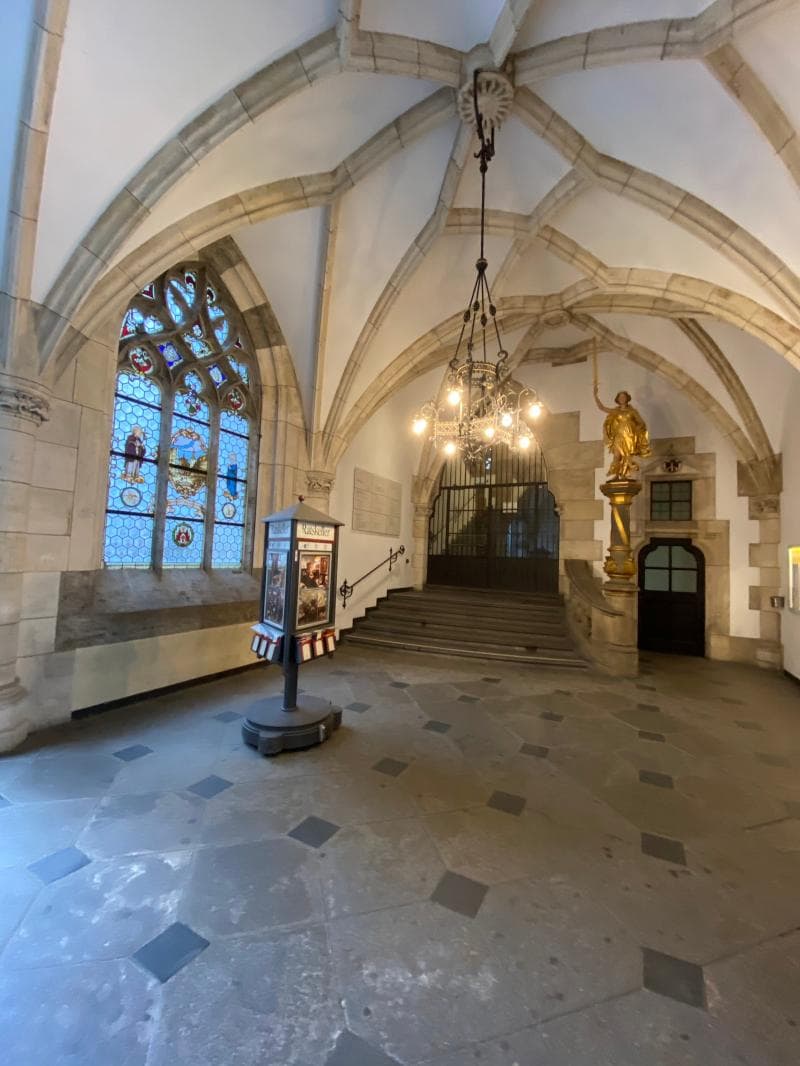
Explore Munich's iconic New Town Hall in Marienplatz, Germany. Discover its neo-Gothic architecture, historical Glockenspiel, and rich cultural heritage.
Overview
Dominating the northern side of Munich's historic Marienplatz, the Neues Rathaus, or New Town Hall, stands as a breathtaking example of neo-Gothic architecture. This impressive edifice is not just a visual spectacle but also the heart of Munich's civic administration, housing the Lord Mayor, the City Council, and various city offices. Its towering façade and intricate details draw visitors from across the globe, eager to witness its grandeur and, most famously, the captivating spectacle of its Glockenspiel. More than a government building, the New Town Hall embodies the spirit and history of Munich, making it an unmissable landmark for any traveler.
History & Cultural Background
The construction of the New Town Hall was a monumental undertaking, driven by the city's growing administrative needs which had outgrown the older building. Begun in 1867 and completed in stages until 1909, the design was envisioned by the then 25-year-old architect Georg von Hauberrisser. He opted for a distinctive neo-Gothic style, a deliberate choice to create an architectural statement that contrasted with the royal buildings in Munich and recalled the city's civic high season during the Gothic period. The building sprawls across an area of 9,159 square meters, boasting 400 rooms. Despite suffering minor damage during air raids in 1944, the New Town Hall was carefully rebuilt and restored, preserving its original image, including the neo-Gothic ornaments crowning its roof. Its enduring presence in Marienplatz underscores its significance as a symbol of Munich's past and present.
What Makes It Special
The New Town Hall is an architectural marvel distinguished by its elaborate neo-Gothic facade. This nearly 100-meter-long front is adorned with a rich tapestry of figures, including the city's founder, Henry the Lion, various rulers from the Wittelsbach dynasty, and other historical and mythical characters. A mighty dragon, symbolizing the threat of the plague, grips the stonework at the corner of Weinstraße, while the ‘Münchner Kindl’ (Munich Child), the city's emblem, stands proudly at the very top. The building's iconic 85-meter tower, completed in 1909, houses the world-famous Glockenspiel, a carillon with 43 bells and 32 life-sized figures. Inside, the Juristische Bibliothek (Law Library) is a hidden gem, often described as one of the city's most beautiful libraries with its gilded spiral staircases and Art Nouveau style.
Stories, Fun Facts & Local Details
The Glockenspiel is undeniably the highlight for many visitors, coming alive daily to narrate two significant stories from Munich's history. The upper tier re-enacts the 1568 marriage of Duke Wilhelm V to Renate of Lorraine, featuring a jousting tournament where a Bavarian knight triumphs over his Lorraine counterpart. Below, the ‘Schäfflertanz’ (Coopers' Dance) unfolds, commemorating the barrel makers who danced through the streets in 1517 to lift the spirits of the populace after a devastating plague. This dance traditionally occurs every seven years. The ‘Münchner Kindl’ figure, a young woman representing the city, waves during the Oktoberfest parade and other official events. Beyond its historical narratives, the New Town Hall's balcony is renowned as the stage for FC Bayern's championship celebrations, turning Marienplatz into a vibrant party zone. In the basement, visitors can discover the traditional Ratskeller restaurant, offering Bavarian fare.
Visitor Perspective
Experiencing the New Town Hall offers various opportunities for travelers. The Glockenspiel performs daily at 11 a.m. and 12 p.m., with an additional 5 p.m. show from March to October. There's also a shorter performance at 9 p.m. sending the Münchner Kindl to bed. For a breathtaking panoramic view of Munich's Old Town, visitors can take a lift up to the viewing platform in the tower. Guided tours of the New Town Hall are available, offering insights into its history, architecture, and often including a visit to the magnificent Law Library. When visiting Marienplatz, a popular local tradition is to meet friends at the Fischbrunnen (Fish Fountain) located directly in front of the New Town Hall. This iconic building provides a rich blend of history, culture, and entertainment for curious travelers.
Coordinates: 11.5754, 48.13714
View on Google Maps💬 How Travelers Describe This Place
Based on community votes
Interesting
995Must See
989Unique
603Beautiful
581Photogenic
388
Traveler Stories
Discover memorable experiences shared by travelers who have visited this place.
No traveler stories yet.
Be the first traveler to share what made this place memorable.

Tour
By
Spot
Discover amazing places around the world. Your journey starts here.
Explore
© 2026 TourBySpot. All rights reserved.