Neue Residenz
Salzburg, Austria
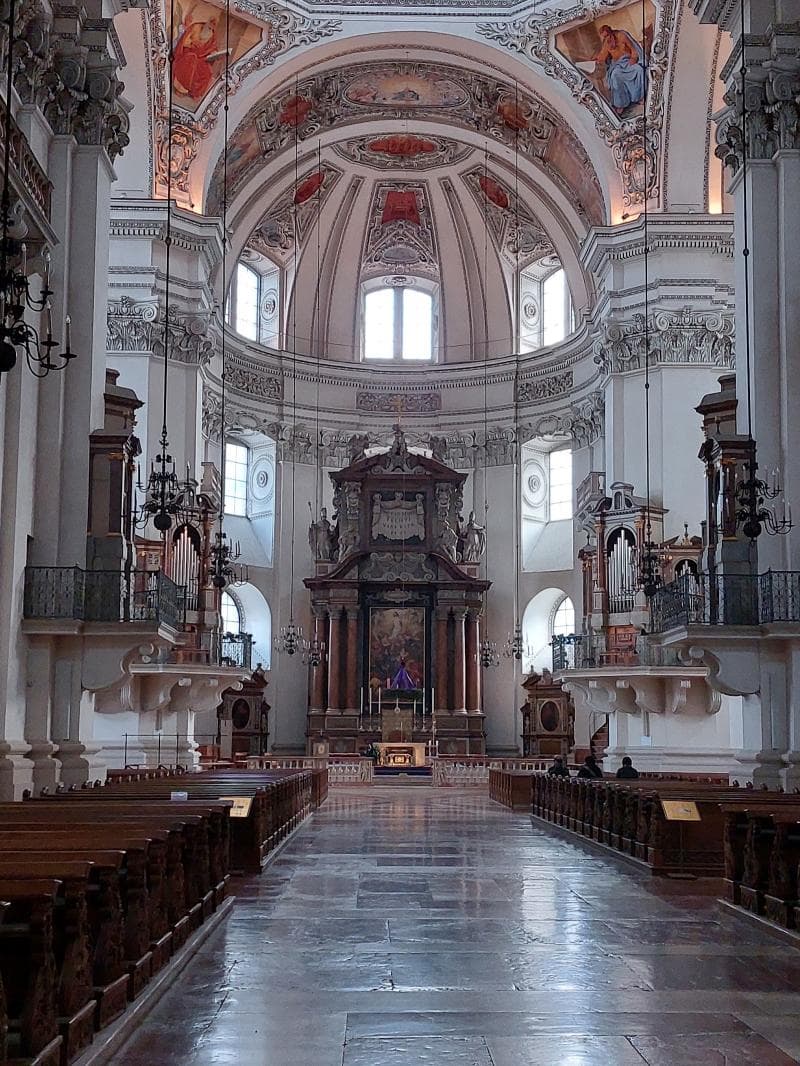
Explore the Neue Residenz in Salzburg, Austria, a historic palace now home to the Salzburg Museum and famous Glockenspiel. Discover its rich history and cultural significance.
Overview
Nestled in the heart of Salzburg, Austria, the Neue Residenz, or New Residence, stands as a testament to centuries of rich history and architectural evolution. Situated prominently on Residenzplatz, it forms a significant part of the city's UNESCO World Heritage ensemble, bordering other iconic spaces like Mozartplatz and Kaigasse. This imposing structure, once a grand palace for powerful prince-archbishops, now serves as a vibrant cultural hub, housing the award-winning Salzburg Museum, the captivating Glockenspiel, and the Salzburger Heimatwerk. Though currently undergoing extensive renovation until approximately autumn 2027, its historical significance and future offerings promise an enriching experience for any curious traveler.
History & Cultural Background
The story of the Neue Residenz begins in 1588 when Prince-Archbishop Wolf Dietrich von Raitenau initiated its construction. He envisioned a magnificent new residence and guesthouse, commissioning the demolition of preceding buildings to make way for his grand design. However, by 1605, he decided to retain the Old Residenz as his primary abode, making the Neue Residenz essentially an 'overflow' palace. The construction of this baroque masterpiece stretched over more than a century, with successive prince-archbishops leaving their architectural mark.
Notable additions include the main building's tower, completed by Wolf Dietrich himself, and the Kaigasse wing, finished by his successor, Archbishop Markus Sittikus. Archbishop Max Gandolph von Kuenburg expanded the south and southwest wing in 1674, primarily to house the court library. Later, Archbishop Johann Ernst Thun added the distinctive arcades and heightened the tower to accommodate the famous carillon, or Glockenspiel.
What Makes It Special
Beyond its architectural grandeur, the Neue Residenz is celebrated for several unique elements. Its richly stuccoed staircase, modeled after Italian Renaissance palaces, hints at the opulence within. The building contains splendid state rooms on the second floor, including the Tugendsaal (Virtue Hall), Gloriensaal, Ständesaal (Estates Hall), Feldherrensaal (Commanders' Hall), and the Bischofssaal, all speaking to the luxurious lifestyle of its former ecclesiastical occupants.
The tower's Glockenspiel is arguably its most enchanting feature. This carillon, comprising 35 bells crafted in Antwerp in 1696, chimes three times daily. While a court clockmaker eventually set the bells in 1702, its slight imprecision has become a charming characteristic, adding to its unique local flavor.
Today, the Neue Residenz serves as the main location for the Salzburg Museum, an institution that beautifully weaves together the art, culture, and history of the city and region from prehistoric times to the present. Its innovative displays and multimedia installations have earned it numerous accolades.
Stories, Fun Facts & Local Details
One fascinating aspect of the Glockenspiel is its sometimes-unpredictable timing. Despite the efforts of its original clockmaker, Jeremias Sauter, the bells have always possessed a charming lack of perfect precision. This 'imperfection' has become part of its character, beloved by locals and visitors alike. If you listen closely after the Glockenspiel's performance, you might even hear the 'Salzburger Stier' (Salzburg Bull) from the Hohensalzburg Fortress responding.
The Salzburg Museum, now housed within, has unearthed incredible archaeological finds during renovations, including well-preserved Roman ruins with intact paintings, offering a tangible link to Salzburg's ancient past. The museum's underground Panorama Passage even connects to the Panorama Museum, showcasing these archaeological discoveries, city models, and historical data, tracing Salzburg's development from Roman times.
Visitor Perspective
As of November 2023, the Neue Residenz is undergoing a major general renovation and expansion project. This means that the building, including the Salzburg Museum and its various collections, is currently closed to visitors until approximately autumn 2027. While this temporary closure means you cannot enter the museum or access the state rooms right now, the exterior can still be admired from Residenzplatz, offering a magnificent view of its historic facade and the tower housing the Glockenspiel.
When it reopens, the Neue Residenz will present an even more enhanced cultural experience, featuring expanded spaces for workshops, event formats, and a new Belvedere Kunsthalle (art gallery), along with a publicly accessible green oasis in the southern courtyard. The collaboration between the Salzburg Museum and the Belvedere Salzburg promises a unique cultural offering in the heart of the World Heritage site. Visitors will once again be able to immerse themselves in Salzburg's rich history, art, and culture, with many areas being fully accessible.
Coordinates: 13.04399, 47.79941
View on Google Maps💬 How Travelers Describe This Place
Based on community votes
Interesting
443Must See
414Unique
310Beautiful
277Photogenic
233
Traveler Stories
Discover memorable experiences shared by travelers who have visited this place.
No traveler stories yet.
Be the first traveler to share what made this place memorable.

Tour
By
Spot
Discover amazing places around the world. Your journey starts here.
Explore
© 2026 TourBySpot. All rights reserved.