Nerudova Street
Prague, Czech Republic
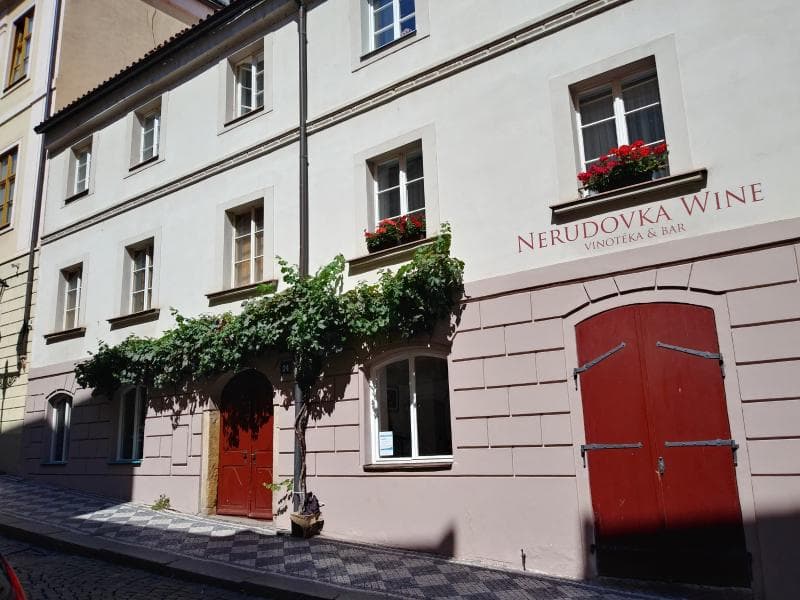
Explore Nerudova Street in Prague, Czech Republic, a historic and picturesque street known for unique house signs, Baroque architecture, and Jan Neruda's legacy.
Overview
Nestled within Prague's picturesque Malá Strana, Nerudova Street stands as a timeless cobblestone artery, a journey through centuries of Czech history and architectural splendor. It serves as a vital link, gracefully ascending from Malostranské náměstí (Lesser Town Square) towards the majestic Prague Castle. As a prominent segment of the historic Royal Route, once trodden by Bohemian kings on their coronation procession, Nerudova offers more than just a path; it is a living exhibition of Baroque and Renaissance grandeur, distinguished by its unique house signs and deep literary connections. Despite its steep incline, the street's vibrant atmosphere, rich details, and captivating views make it an essential and rewarding experience for any curious traveler to the Czech capital.
History & Cultural Background
The origins of Nerudova Street can be traced back to the 14th century, although some parts existed even earlier. Over time, its name evolved, initially known as Ostruhová Street, a possible corruption of the German 'Sparrengasse,' referring to the wooden beams ('Sparre') once laid to aid horses on its steep ascent. Its profound historical significance lies in its role as part of the Royal Route, the ceremonial path taken by Bohemian monarchs on their way to be crowned at St. Vitus Cathedral in Prague Castle.
A devastating fire in Malá Strana in 1541 profoundly reshaped the street's appearance. Many original Gothic structures were destroyed, though their sturdy Gothic cellars often remained, serving as foundations for the new buildings that arose. This rebuilding phase, spanning the Renaissance and particularly the Baroque eras, imbued Nerudova with its characteristic architectural blend of opulent facades and intricate details. The street received its current name in 1895, honoring Jan Neruda, the renowned Czech poet, journalist, and writer. Neruda lived for several years 'At the Two Suns' (No. 47) on this very street, immortalizing its unique character and residents in his celebrated work, 'Tales of the Lesser Quarter.'
What Makes It Special
What truly sets Nerudova Street apart are its captivating house signs. Before the introduction of house numbers in the 18th century, these artistic emblems – depicting animals, symbols, or tools – served as the primary means of identifying buildings. Nerudova Street boasts an exceptional collection of these signs, each telling a story of the former inhabitants or their trades. As you ascend, look for 'At the Two Suns,' where Jan Neruda resided; 'At the Three Little Fiddles,' once home to a family of violin makers; 'At the Golden Horseshoe;' 'At the Red Eagle;' 'At the Golden Key;' 'At the Green Lobster;' and 'At the White Swan.'
The street is also an architectural marvel, showcasing a stunning array of Baroque palaces that speak to the aristocratic wealth that once graced this prestigious route. Notable examples include the Thun-Hohenstein Palace (No. 20), adorned with sculptures by Matthias Bernard Braun and now housing the Italian Embassy, and the Morzin Palace (No. 5), with its dramatic facade featuring two Moorish figures supporting a balcony, a work by Maximilian Brokoff, now home to the Romanian Embassy. The Bretfeld Palace (No. 33) is also significant, having hosted Wolfgang Amadeus Mozart. These grand residences, often built upon earlier Gothic foundations, present a remarkable blend of styles, creating an open-air museum of Prague's rich building history.
The literary legacy of Jan Neruda is deeply interwoven with the street's identity. His 'Tales of the Lesser Quarter' vividly captured the spirit of this neighborhood, its people, and its unique customs, making the street a pilgrimage site for literary enthusiasts. Interestingly, the celebrated Chilean poet Pablo Neruda later adopted his pen name in homage to Jan Neruda, adding another layer of international recognition to this historic street.
Stories, Fun Facts & Local Details
Beyond its grand facades, Nerudova Street is filled with fascinating tales. The house 'At the Three Little Fiddles' (No. 12) is said to still echo with the faint sounds of violins played by the generations of instrument makers who once lived there. Another intriguing detail is the Morzin Palace, often referred to as 'the House at Moors,' where two figures representing 'Day' and 'Night' by Brokoff are prominent. The famous Baroque architect Jan Blažej Santini Aichel also lived on Nerudova Street, contributing to its stunning design.
Walking up Nerudova, it is easy to imagine a time when horse-drawn carriages struggled up its steep incline, necessitating the wooden beams that gave it an earlier name. Today, the street maintains its bustling charm, housing numerous quaint shops, art galleries, traditional Czech restaurants, and cozy cafes where visitors can pause and soak in the atmosphere.
Visitor Perspective
Experiencing Nerudova Street is a quintessential part of any Prague visit. While the ascent can be quite steep, particularly if heading towards Prague Castle, the effort is amply rewarded with breathtaking views back over Malá Strana and the city beyond. Comfortable shoes are highly recommended to navigate its historic cobblestones. To fully appreciate its charm and architectural nuances, remember to look up; many of the intricate house signs and decorative elements are situated above eye level.
For a more tranquil experience, consider visiting in the mornings or late afternoons when crowds are thinner. Whether you choose to walk up from Malostranské náměstí or descend from Prague Castle, Nerudova Street offers a captivating journey through time, allowing you to connect with the city's rich past and vibrant present. It truly serves as a living, breathing museum, brimming with stories waiting to be discovered around every corner.
Coordinates: 14.400371, 50.088628
View on Google Maps💬 How Travelers Describe This Place
Based on community votes
Unique
915Photogenic
873Beautiful
123Must See
74Interesting
53
Traveler Stories
Discover memorable experiences shared by travelers who have visited this place.
No traveler stories yet.
Be the first traveler to share what made this place memorable.

Tour
By
Spot
Discover amazing places around the world. Your journey starts here.
Explore
© 2026 TourBySpot. All rights reserved.