Neptune Fountain
Vienna, Austria
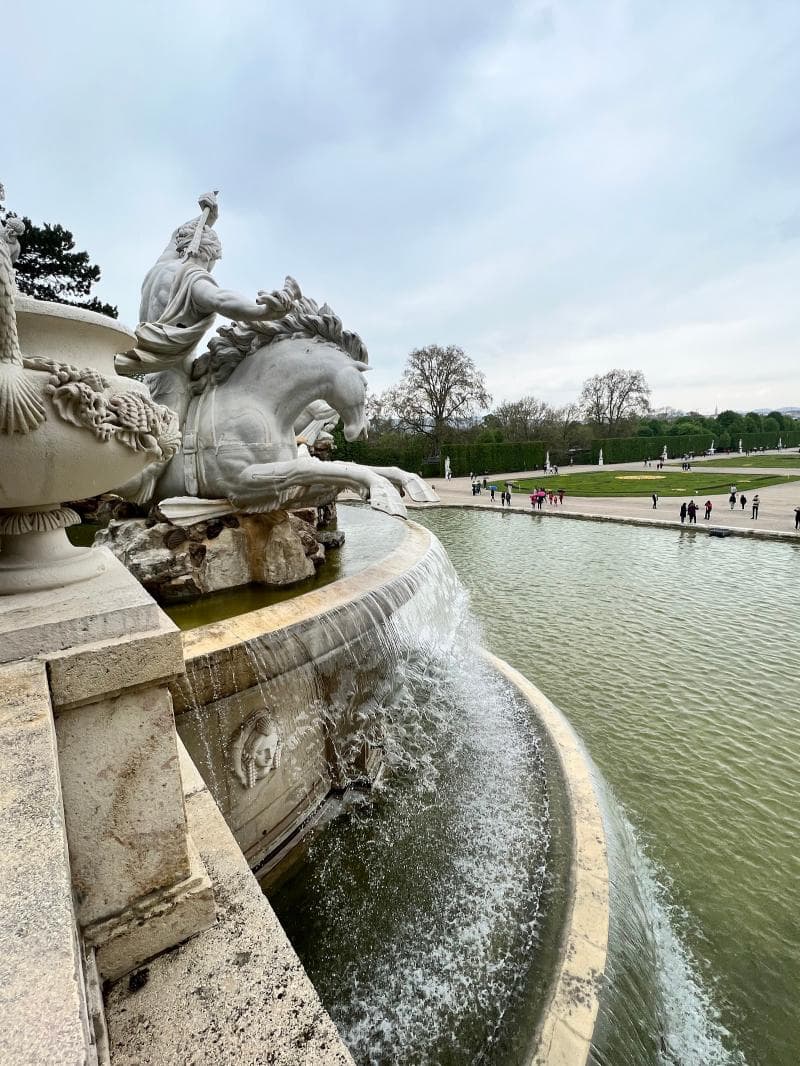
Discover the majestic Neptune Fountain at Schönbrunn Palace in Vienna, Austria. Explore its Baroque artistry, rich mythology, and imperial history.
Overview
Nestled within the sprawling, magnificent gardens of Schönbrunn Palace in Vienna, Austria, lies the impressive Neptune Fountain, a masterwork of Baroque artistry and engineering. Positioned grandly at the foot of the Gloriette hill and serving as the visual culmination of the Great Parterre, this monumental fountain is a highlight for any visitor to the imperial grounds. It is a striking water feature with truly imperial dimensions, embodying the grandeur and artistic ambition of the Habsburg dynasty. Designed as an integral part of the palace's vast park, the Neptune Fountain stands as a testament to an era when art and nature were meticulously crafted to reflect power and prestige.
This captivating aquatic tableau offers more than just aesthetic beauty; it invites contemplation of classical mythology and the symbolic narratives woven into its stone. The fountain is a free-to-view attraction within the expansive Schönbrunn park, allowing visitors to wander through centuries of history and art without a ticket. Operating typically from spring through mid-autumn, with its waters flowing daily, the Neptune Fountain provides a serene yet powerful focal point in one of Europe's most remarkable Baroque landscapes.
History & Cultural Background
The Neptune Fountain's origins trace back to the ambitious vision of Empress Maria Theresa, who commissioned its construction in the 1770s as part of her comprehensive modernization and redesign of the Schönbrunn gardens. Work commenced in 1776 with the excavation of the vast basin and was completed four years later, in 1780, shortly before the Empress's passing. The overall design is widely attributed to the esteemed court architect Johann Ferdinand Hetzendorf von Hohenberg, while the intricate sculptural group, carved from fine Sterzing marble, was masterfully executed by Wilhelm Beyer (also known as Johann Wilhelm Beyer).
Culturally, the fountain reflects the prevailing artistic trends of the late 18th century, drawing heavily from Roman mythology. For the Habsburg court, the imagery of Neptune asserting dominion over the seas was far more than decorative; it was a potent symbol of imperial authority. It served to reinforce the idea that the monarch controlled the destiny of their nation, aligning the Habsburgs with powerful classical figures. This deliberate symbolic weight underscores the fountain's role not just as a garden ornament, but as a grand statement of power and legitimacy.
What Makes It Special
The Neptune Fountain is distinguished by its dramatic scale and the narrative depth of its sculptural composition. Unlike many other fountains, it is designed with 'imperial dimensions' to create a monumental impression, leaving no doubt about the importance of its royal patrons. At its core, the fountain features the commanding figure of Neptune, the Roman god of the sea, poised in a shell-shaped chariot, trident in hand. He presides over a rocky grotto from which water cascades into the vast basin below.
What truly captivates is the dynamic interaction among the figures. To Neptune's right, the sea goddess Thetis kneels, imploring his favor for the perilous voyage of her son, the legendary hero Achilles, as he sets off for the Trojan War. A nymph attends Neptune on his left, completing the divine scene. Frolicking at the grotto's base are the Tritons, mythical half-man, half-fish creatures, restraining powerful hippocampi (sea-horses) that appear ready to draw Neptune's chariot across the waves. This frozen moment of divine negotiation, power, and destiny, rendered in exquisite marble, makes the Neptune Fountain an enduring masterpiece of Baroque sculpture and a powerful emblem of Habsburg might.
Stories, Fun Facts & Local Details
While the Neptune Fountain itself doesn't host many specific 'fun facts' beyond its grand mythology, its placement within Schönbrunn Park offers intriguing local details. The design of the fountain, visually closing the Great Parterre and forming a transition to the Gloriette hill, is a brilliant example of Baroque landscape architecture's ability to create dramatic vistas. It was conceived to be the crowning element of the Great Parterre, anchoring the perspective from the palace.
A lesser-known detail is that the retaining wall of the fountain curves back into the slope of the hill, creating a seamless integration with the natural landscape. This wall is adorned with a balustrade crowned with vases, adding to its decorative richness. The fountain's portrayal of Neptune driving across the seas was a metaphor often used in 16th to 18th-century art to symbolize monarchs controlling the fate of their nations, a subtle nod to the imperial ambitions of the Habsburgs.
Visitor Perspective
For visitors, the Neptune Fountain is a breathtaking spectacle and an essential part of the Schönbrunn experience. When approaching from the palace, it draws the eye towards the distant Gloriette, forming an impressive visual axis. The sheer scale and intricate details of the marble sculptures demand a moment of appreciative pause. The fountain typically operates with water flowing between 10 am and 4 pm from April to mid-October, offering the full, dynamic visual effect.
Beyond its immediate beauty, the fountain is strategically located for an even more rewarding experience. Paths flanking the fountain lead up the hill. Following these, you can discover a small cave-like opening behind the fountain, offering a magnificent, framed view of the palace and the meticulously manicured gardens below. This unique perspective allows for truly memorable photographs and a deeper appreciation of the entire Schönbrunn complex. Visiting in the early morning, when the park opens, can offer a more tranquil experience, allowing for people-free photos before the crowds arrive.
Coordinates: 16.31139, 48.183875
View on Google Maps💬 How Travelers Describe This Place
Based on community votes
Beautiful
965Photogenic
743Unique
629Must See
184Interesting
176
Traveler Stories
Discover memorable experiences shared by travelers who have visited this place.
No traveler stories yet.
Be the first traveler to share what made this place memorable.

Tour
By
Spot
Discover amazing places around the world. Your journey starts here.
Explore
© 2026 TourBySpot. All rights reserved.