Neptune Fountain
Lviv, Ukraine
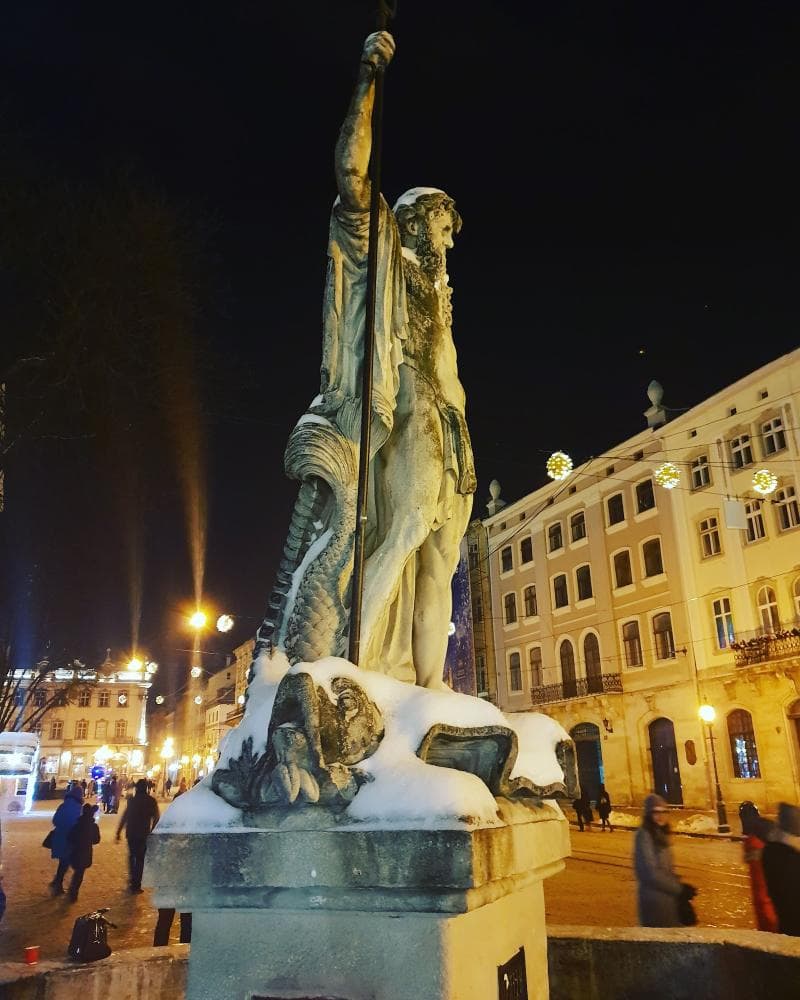
Discover the Neptune Fountain, a historic landmark in Lviv's Market Square, Ukraine. Explore its classical beauty, rich history, and cultural significance.
Overview
In the heart of Lviv, Ukraine, where cobblestone streets meet historic architecture, lies Market Square, a UNESCO World Heritage site that has served as the city's vibrant nucleus for centuries. At its four corners stand elegant fountains, each adorned with a classical statue depicting a figure from Greek or Roman mythology. Among these, the Neptune Fountain, gracing the square's southwestern corner, captivates visitors with its stoic presence and rich history. It is one of a quartet of mythological figures, alongside Diana, Amphitrite, and Adonis, that define the aesthetic and cultural landscape of this historic marketplace.
History & Cultural Background
The origins of the Market Square fountains trace back to a time when access to clean water was a luxury. As early as 1407, Lviv established its first plumbing system, with water supplied from outside the city. Over the centuries, several wells and water reservoirs were constructed in the square, catering primarily to the city's wealthier residents. The specific site of the current Neptune Fountain was once home to a well dating back to 1697, which was already adorned with a wooden statue of the sea god.
The four neoclassical fountains seen today, including the Neptune Fountain, were formally established in 1793 or between 1810 and 1814, integrating some of the older well structures. They are widely attributed to the renowned Lviv sculptor of Austrian origin, Hartman Witwer (1774-1825), and are considered among his finest works. The choice of mythological figures – Neptune and Amphitrite representing water, and Diana and Adonis embodying the earth – reflects an allegorical interpretation of nature and classical artistic trends of the era. A city council resolution in 1815 already noted these sculptures, specifically forbidding their damage during the traditional Ukrainian 'Jordan' holiday, a testament to their early recognition and cultural value.
What Makes It Special
The Neptune Fountain's charm lies not only in its artistic execution but also in its integration into the daily life of Lviv. Crafted from limestone, the statue depicts Neptune, the Roman god of the sea, often recognized by his powerful trident and the dolphin at his feet. Witwer's artistry imbues the figure with a sense of classical grandeur, reflecting the architectural styles that have shaped Lviv's Market Square from Renaissance to Classicism. The fountain is more than just a static monument; it is a living part of the city's narrative, a point of reference, and a silent observer of centuries of history unfolding in the square. Its strategic placement at one of the square's corners makes it a natural focal point and a beloved landmark.
Stories, Fun Facts & Local Details
The Neptune Fountain holds a special place in the hearts of Lviv residents. Historically, the area around the fountain, like the other three, served as an important source of water, albeit one that evolved from more rudimentary wells. A quirky detail often noticed by visitors is the dolphin that accompanies Neptune, a common motif in depictions of the sea god. Local traditions sometimes see the statues, including Neptune, dressed in festive embroidered shirts during holidays, adding a touch of Ukrainian cultural flair to the ancient figures.
During challenging times, such as recent conflicts, the city has taken extraordinary measures to protect its invaluable cultural heritage, including the Neptune Fountain. The statue was meticulously wrapped in protective materials and scaffolding to shield it from potential damage, a poignant illustration of the community's deep respect and commitment to preserving its historical treasures. This act highlights not just the artistic value of the fountain but its profound significance as a symbol of Lviv's enduring spirit.
Visitor Perspective
For any traveler exploring Lviv's Market Square, the Neptune Fountain is an essential stop. It is not merely a sight to behold but an invitation to connect with the city's past and present. Standing by the fountain, one can imagine the bustling markets of centuries past, the declarations made from the nearby Town Hall, and the generations of Lviv residents who have gathered here. It serves as a popular meeting point and a perfect spot for reflection amidst the lively atmosphere of the square, surrounded by diverse architectural styles ranging from Renaissance to Modernism. The fountain's presence adds to the timeless charm of Market Square, offering a serene counterpoint to the vibrant activity, and inviting visitors to delve deeper into the layers of history that Lviv so gracefully presents.
Coordinates: 24.0311, 49.84142
View on Google Maps💬 How Travelers Describe This Place
Based on community votes
Photogenic
680Must See
514Interesting
432Unique
316Beautiful
196
Traveler Stories
Discover memorable experiences shared by travelers who have visited this place.
No traveler stories yet.
Be the first traveler to share what made this place memorable.

Tour
By
Spot
Discover amazing places around the world. Your journey starts here.
Explore
© 2026 TourBySpot. All rights reserved.