NEMO Science Museum
Amsterdam, Netherlands
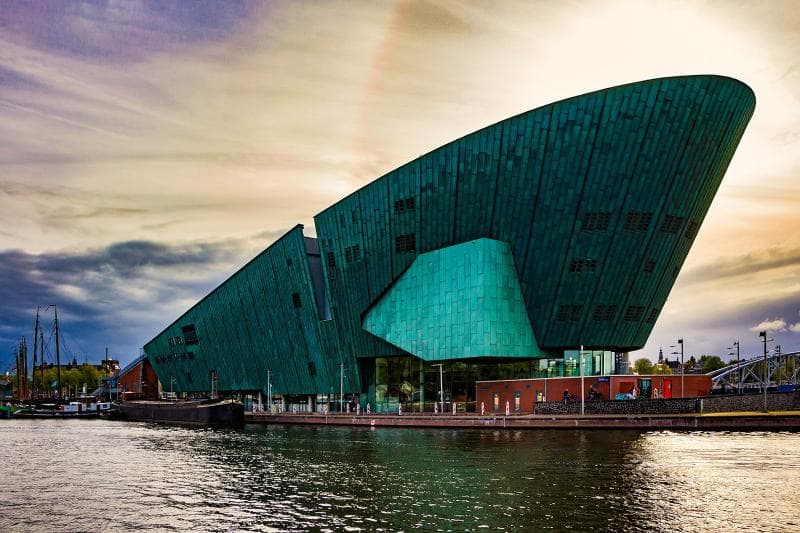
Discover NEMO Science Museum in Amsterdam, Netherlands. Explore five floors of interactive science exhibits and enjoy panoramic city views from its unique rooftop.
Overview
Perched prominently above Amsterdam's Oosterdok, the NEMO Science Museum is an unmissable landmark, instantly recognizable by its distinctive copper-green, ship-like architecture. Designed by the acclaimed Italian architect Renzo Piano, this five-story marvel is not merely a building but a beacon of discovery, dedicated to making science and technology accessible and engaging for all ages. As the largest science center in the Netherlands, NEMO draws hundreds of thousands of visitors annually, offering a vibrant, hands-on journey through the wonders of the everyday world.
Inside, the museum is a realm of interactive exhibits spanning physics, chemistry, biology, and human perception. Unlike traditional museums, NEMO encourages active participation, inviting visitors to experiment, build, and explore scientific principles firsthand. Beyond its engaging interior, NEMO boasts a spectacular sloping rooftop terrace, which functions as a public piazza offering unparalleled panoramic views of Amsterdam's historic cityscape and the bustling IJ harbor. This accessible outdoor space features its own interactive exhibits, further blurring the lines between learning and play.
History & Cultural Background
The institution behind the contemporary NEMO Science Museum traces its roots back to 1923, when artist Herman Heijenbrock founded the 'Museum van den Arbeid' (Museum of Labor) on the Rozengracht in Amsterdam. Heijenbrock's vision was to inspire Dutch youth with the marvels of industry and technology, showcasing his extensive collection of industrial art and objects.
Over the decades, the museum evolved, undergoing several name changes and shifts in focus. In 1954, it became the 'Nederlands Instituut voor Nijverheid en Techniek' (NINT), continuing its mission to excite children about careers in industry and technology. The most significant transformation occurred in 1997 when the museum moved to its current iconic building, designed by Renzo Piano, and was briefly known as 'NewMetropolis'. The name NEMO was adopted in 2000, and it officially became NEMO Science Museum in 2016, firmly establishing its identity as a leading science center committed to interactive learning.
What Makes It Special
NEMO's exceptional appeal stems from a confluence of groundbreaking architecture and an unwavering commitment to interactive education. Renzo Piano's design is a masterpiece, resembling a massive ship's hull emerging from the water, clad in pre-patinated copper that evolves in color with time. This unique structure was ingeniously built directly over the entrance of the IJ-tunnel, a challenging feat of engineering that makes the building itself an exhibit of innovative design.
The museum's five floors are a playground for the curious mind, filled with hands-on displays that illuminate complex scientific concepts. Visitors can explore chain reactions, conduct chemistry experiments in a lab, test their senses, and delve into the human mind. The spirit of 'do-it-yourself' science is paramount here, fostering genuine engagement rather than passive observation.
Perhaps NEMO's most celebrated feature, apart from its interior exhibits, is its sprawling, publicly accessible rooftop terrace. Perched 22 to 28 meters above water level, this urban piazza offers a breathtaking 360-degree panorama of Amsterdam, from the historic canal belt to the modern Eastern Docklands. The rooftop also hosts 'Energetica', an outdoor exhibition demonstrating sustainable energy sources like wind and solar power, making it a unique blend of relaxation, stunning views, and continuous learning. Its free access makes it a popular spot for both tourists and locals.
Stories, Fun Facts & Local Details
The architectural ingenuity of NEMO is a story in itself. Renzo Piano conceived the building's dramatic, curved shape to mirror the subterranean IJ-tunnel it sits upon, making it appear as if it rises from the water like a ship embarking on a journey of discovery. Inside, Piano deliberately designed the spaces with neutral grey walls and minimal windows, referring to it as 'the noble factory,' to ensure visitors' concentration remained solely on the captivating exhibits, undisturbed by external distractions.
A fun fact for visitors is that the copper cladding of NEMO's exterior gradually oxidizes, transforming its initial bright metallic sheen into the iconic green hue seen today, symbolizing the museum's organic connection to its environment and the passage of time. The rooftop piazza is not just a viewing platform; it's considered the Netherlands' only large, sloped public square, a truly distinctive urban space.
NEMO's interactive spirit means visitors might find themselves enveloped in a giant soap bubble, generating electricity, or unraveling optical illusions, turning abstract scientific theories into memorable, tangible experiences. The museum is renowned for its practical approach, ensuring that learning is intertwined with amusement. This hands-on philosophy extends to the rooftop, where the 'Energetica' exhibition allows for playful interaction with natural elements, making scientific exploration a seamless part of the outdoor experience.
Visitor Perspective
For those planning a visit, NEMO Science Museum is conveniently located at Oosterdok 2, a pleasant 10-minute walk from Amsterdam Centraal Station, making it easily accessible for travelers. Most visitors allocate between two to four hours to fully immerse themselves in the museum's extensive offerings.
The museum generally operates Tuesday through Sunday from 10:00 to 17:30, with extended Monday openings during school holidays and specific periods, so checking the official website for current hours is always advisable. Admission is free for children under four, and the museum is included with the I amsterdam City Card, which can be purchased on-site. Booking timed-entry tickets in advance is recommended, especially during peak seasons, to ensure a smooth visit.
NEMO is designed with accessibility in mind, featuring elevators and facilities for visitors with disabilities, and strollers are welcome. Beyond the exhibits, the museum offers several cafeterias for refreshments and a gift shop filled with science-themed souvenirs. To make the most of your visit, consider arriving early in the morning, particularly on weekdays, to avoid school groups and larger crowds, allowing for a more relaxed and engaging exploration of this dynamic scientific wonderland.
Coordinates: 4.91235, 52.3740806
View on Google Maps💬 How Travelers Describe This Place
Based on community votes
Beautiful
545Must See
343Interesting
211Photogenic
74Unique
20
Traveler Stories
Discover memorable experiences shared by travelers who have visited this place.
No traveler stories yet.
Be the first traveler to share what made this place memorable.
Things to see at NEMO Science Museum


Tour
By
Spot
Discover amazing places around the world. Your journey starts here.
Explore
© 2026 TourBySpot. All rights reserved.