Chain Reactions
Amsterdam, Netherlands
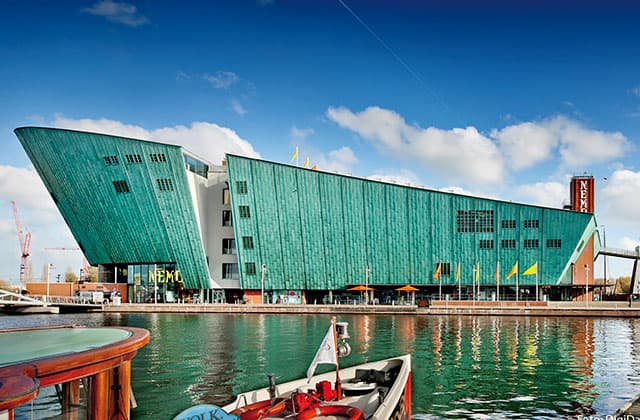
Explore 'Chain Reactions' at NEMO Science Museum in Amsterdam, Netherlands. Discover interactive physics, potential & kinetic energy in this captivating exhibit.
Overview
Deep within the vibrant NEMO Science Museum in Amsterdam, Netherlands, lies an exhibit that captivates visitors with its ingenious display of physics in action: 'Chain Reactions'. This fascinating sub-spot invites guests of all ages to observe and understand the intricate dance of cause and effect, transforming seemingly simple actions into a grand, interconnected sequence. It is a brilliant example of how science can be both educational and immensely entertaining, showcasing the principles of potential and kinetic energy through an elaborate, interactive setup. The 'Chain Reactions' exhibit is a testament to NEMO's mission of making science accessible and engaging, providing a memorable, hands-on experience that demystifies the wonders of the physical world.
The NEMO Science Museum itself is an iconic landmark, housed in a striking green, ship-like building designed by Renzo Piano, which seems to rise directly from the Oosterdok harbor. It stands as the largest science museum in the Netherlands, a beacon of curiosity in the heart of Amsterdam, attracting hundreds of thousands of visitors annually.
History & Cultural Background
The NEMO Science Museum boasts a rich history, tracing its origins back to 1923 when it was established as the Museum van den Arbeid, or Museum of Labor, in Amsterdam. Over the decades, its focus evolved, becoming the Nederlands Instituut voor Nijverheid en Techniek (Dutch Institute for Labor and Technology) in 1954, before transforming into the interactive science center we know today. Its current distinctive building, an architectural marvel by Renzo Piano, opened its doors in 1997, marking a new era for the institution.
NEMO's cultural significance lies in its dedication to promoting scientific literacy and curiosity across all generations. It moves beyond traditional museum displays by offering a deeply interactive environment where visitors are encouraged to experiment and discover for themselves. The 'Chain Reactions' exhibit embodies this philosophy perfectly, drawing on the universal human fascination with sequential events and the fundamental laws that govern them. While the concept of a chain reaction is as old as the observation of falling dominoes, its artistic and scientific application in such a grand, interactive scale highlights a modern cultural appreciation for hands-on learning and experiential engagement.
What Makes It Special
The 'Chain Reactions' exhibit at NEMO stands out as a colossal, living demonstration of fundamental physics, often referred to as a Rube Goldberg machine. What makes it truly special is its incredible interactivity and the sheer scale of the setup. Visitors witness a complex sequence of events, where one simple action triggers a cascade of subsequent actions using an array of everyday objects. Imagine an office chair rolling, dominoes toppling, balloons popping, and catapults launching – all part of an elaborate, interconnected system.
This exhibit is a masterclass in demonstrating potential and kinetic energy, action and reaction, and cause and effect in a tangible and unforgettable way. It transforms abstract scientific concepts into an observable, dynamic spectacle. Unlike static displays, 'Chain Reactions' is a performance that unfolds, drawing spectators into the mechanics of each transition. The anticipation of what will happen next, coupled with the satisfying conclusion of the chain, creates a captivating experience for both young minds and seasoned scientists. It embodies NEMO's commitment to making science exciting and understandable by showing, rather than just telling.
Stories, Fun Facts & Local Details
The 'Chain Reactions' exhibit at NEMO is more than just a scientific demonstration; it's a storytelling machine. Each component, from a rolling ball to a falling weight, contributes a 'chapter' to the unfolding narrative of energy transfer. Visitors often marvel at the ingenious ways everyday items are repurposed to perform scientific feats. For instance, the exhibit might feature a mannequin playing tennis as part of the sequence, or a series of pipes guiding marbles in an unexpected direction, highlighting creativity alongside scientific principles.
A fun fact is that the 'Chain Reactions' is not just a static installation; it often involves daily demonstrations by NEMO staff, who initiate the sequence, explaining the principles at play and engaging the audience. This live aspect adds a layer of excitement, making each viewing a unique experience. Observing the meticulous timing and the diverse materials used in the chain reaction can inspire visitors to think about the scientific possibilities inherent in their own surroundings. It embodies the museum's spirit of continuous discovery, where learning is an active, joyful pursuit.
Visitor Perspective
From a visitor's perspective, 'Chain Reactions' is an absolute highlight of the NEMO Science Museum experience. It's an exhibit that immediately grabs attention, drawing crowds eager to witness the intricate interplay of objects. The sheer scale and complexity, combined with the clear demonstration of physics, make it a deeply satisfying and educational moment. Children are particularly enthralled, often gasping and cheering as each step of the reaction unfolds, internalizing concepts like momentum and gravity through direct observation.
Adults, too, find themselves captivated, appreciating the clever engineering and the artistry behind such a large-scale Rube Goldberg machine. It evokes a sense of childlike wonder and provides a fantastic opportunity for families to learn together. The daily demonstrations ensure that the exhibit is always dynamic and engaging. It's a place where questions are sparked, curiosity is rewarded, and the fundamental laws of the universe are brought to life in the most playful and memorable way possible. Many leave with a renewed appreciation for the science that underpins the world around them, often inspired to try creating their own chain reactions at home.
Coordinates: 4.912274125351456, 52.37418160490012
View on Google Maps💬 How Travelers Describe This Place
Based on community votes
Interesting
915Must See
211Unique
123Beautiful
74Photogenic
53
Traveler Stories
Discover memorable experiences shared by travelers who have visited this place.
No traveler stories yet.
Be the first traveler to share what made this place memorable.

Tour
By
Spot
Discover amazing places around the world. Your journey starts here.
Explore
© 2026 TourBySpot. All rights reserved.