Nelson Monument
Edinburgh, United Kingdom
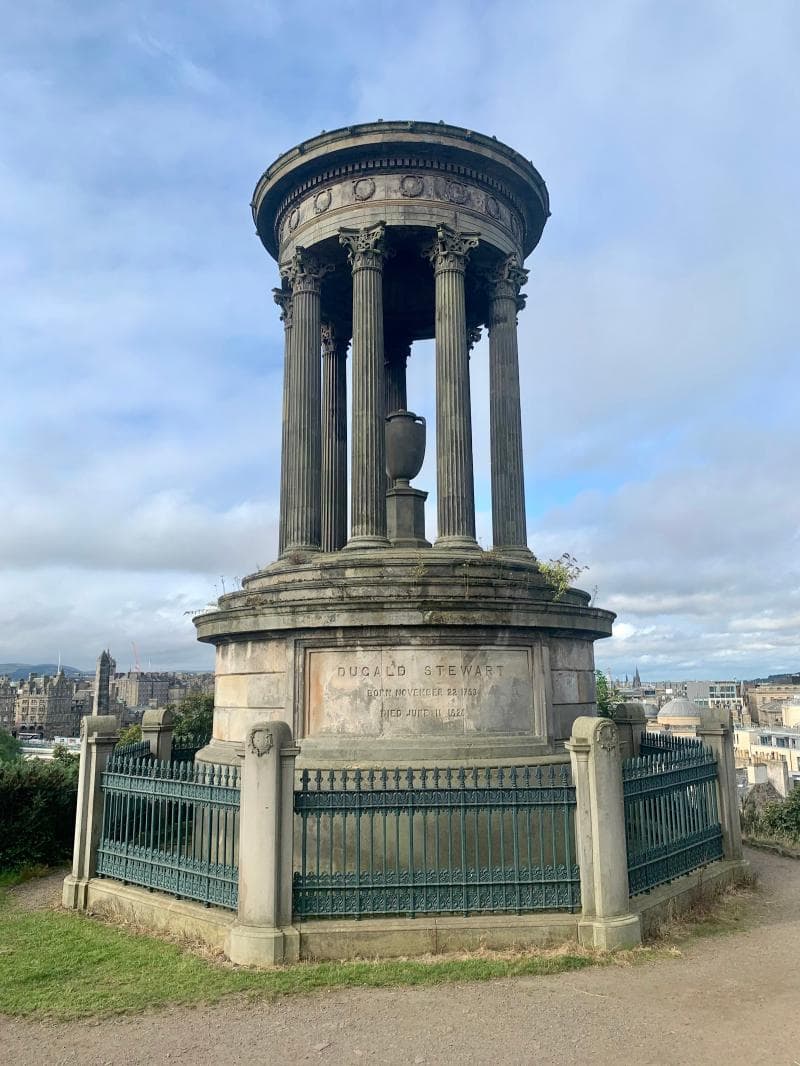
Discover Edinburgh's Nelson Monument on Calton Hill, United Kingdom. Explore its unique 'upturned telescope' design, rich naval history, and panoramic city views.
Overview
Perched majestically atop Calton Hill, a prominent landmark within Edinburgh, United Kingdom, stands the historic Nelson Monument. This iconic tower, easily recognizable by its distinctive 'upturned telescope' design, offers a profound glimpse into Scotland's naval history and provides some of the most breathtaking panoramic views of the city and its surrounding landscapes. More than just a static memorial, it served a vital practical function for over a century, contributing significantly to maritime navigation. A visit to this Grade A listed building is an invitation to explore a piece of living history, where tales of heroism, innovation, and strategic importance converge against the stunning backdrop of Edinburgh's skyline.
History & Cultural Background
The Nelson Monument was conceived in the wake of the Battle of Trafalgar in 1805, a decisive naval victory for Britain where Vice Admiral Horatio Nelson tragically lost his life. The citizens of Edinburgh, moved by Nelson's bravery and sacrifice, launched a public subscription to fund a memorial. The original design by Alexander Nasmyth, a pagoda-like structure, proved too costly. Instead, Robert Burn's ingenious design, evoking Nelson's own telescope, was adopted, and construction commenced in 1807.
Building work continued until 1815, with Thomas Bonnar completing the castellated base between 1814 and 1816, giving the monument its unique, fortified appearance. Initially, the monument's elevated position made it useful for naval signalling. However, its most enduring functional role began in 1852 when a mechanical time ball was installed atop the tower. This innovation, championed by Professor Charles Piazzi Smyth, Scotland's Astronomer Royal, was crucial for ships in the Firth of Forth to accurately set their chronometers before embarking on long voyages, enabling precise longitude calculations at sea. The time ball was later synchronized with Edinburgh Castle's famous One O'Clock Gun, providing both a visual and audible time signal.
The monument underwent significant restoration in 2009, ensuring its preservation for future generations.
What Makes It Special
The Nelson Monument's unique appeal lies not only in its architectural distinctiveness but also in its dual historical purpose. Its design, consciously crafted to resemble an upturned telescope, is a poignant symbol of Nelson's profession and his visionary leadership. But beyond its commemorative role, the monument became a cornerstone of early navigation. The daily drop of its time ball, precisely at one o'clock, was a critical public service, aiding countless ships and contributing to Edinburgh's reputation as a hub of scientific advancement.
Standing 32 meters (105 feet) tall, the monument offers unparalleled 360-degree views from its public viewing platform. From this vantage point, visitors can survey Edinburgh Castle, Arthur's Seat, the Royal Mile, the expansive Firth of Forth, and even the distant hills of Fife and the Pentland Hills on a clear day.
Inside its base, the monument houses museum displays that delve deeper into its history, Nelson's life, and the fascinating story of Charles Piazzi Smyth and the time ball's operation, providing rich historical context for this remarkable structure.
Stories, Fun Facts & Local Details
- The Time Ball Connection: The time ball, installed in 1853, would rise before 1:00 PM and drop precisely at 1:00 PM, a signal that was once manually triggered by an operator watching the puff of smoke from the One O'Clock Gun at Edinburgh Castle. This intricate system was a marvel of its time, showcasing the ingenuity applied to solve practical maritime challenges.
- 'England Expects': Every year on Trafalgar Day, October 21st, signal flags are flown from the monument, spelling out Nelson's legendary message: 'England expects that every man will do his duty.' This tradition continues to honor his memory and the valor of the Royal Navy.
- Architectural Evolution: While Robert Burn is credited with the final design, the initial, more elaborate pagoda-like concept by Alexander Nasmyth highlights the ambition and civic pride that fuelled the monument's creation, even if financial realities led to a different, equally symbolic, outcome.
- A View for Sailors: Before the monument's construction, an earlier mast stood on Calton Hill to send signals to ships, underscoring the site's long-standing importance for naval communication and observation.
Visitor Perspective
Reaching the viewing gallery of the Nelson Monument involves climbing 143 spiral steps, a rewarding endeavor for those seeking an unforgettable vista. While the ascent requires a reasonable level of fitness, the panoramic scenes across Edinburgh, the Firth of Forth, and beyond are well worth the effort.
Visitors can explore the museum exhibits located at the monument's base, which often feature fascinating insights into its history, Nelson's legacy, and the pioneering work of individuals like Charles Piazzi Smyth. While entry to the ground floor museum is typically free, donations are appreciated. There is a fee to climb the tower to access the elevated platform.
It's important to note that due to the historic nature of the building, the monument is accessible by steps only and does not have a lift or ramp, making it unsuitable for wheelchair users.
The Nelson Monument stands as a testament to history, engineering, and national pride, offering both a cultural education and an inspiring visual experience from its unique perch on Calton Hill. Its story intertwines with Edinburgh's maritime past, making it a compelling destination for any curious traveler.
Coordinates: -3.1825, 55.954444
View on Google Maps💬 How Travelers Describe This Place
Based on community votes
Interesting
639Photogenic
526Beautiful
421Unique
366Must See
212
Traveler Stories
Discover memorable experiences shared by travelers who have visited this place.
No traveler stories yet.
Be the first traveler to share what made this place memorable.

Tour
By
Spot
Discover amazing places around the world. Your journey starts here.
Explore
© 2026 TourBySpot. All rights reserved.