Nearby Park
Lucerne, Switzerland
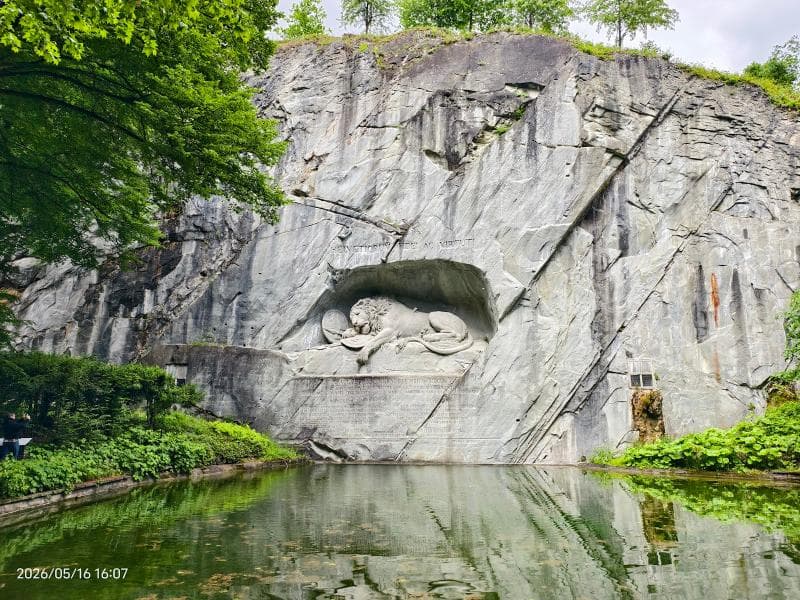
Discover the profound Lion Monument in Lucerne, Switzerland, nestled within a tranquil park setting. A tribute to Swiss Guards' sacrifice.
Overview
Nestled within the vibrant city of Lucerne, Switzerland, the Lion Monument, or Löwendenkmal, is not merely a sculpture but a poignant centerpiece of a peaceful, park-like setting often referred to by visitors as 'Nearby Park'. This serene environment offers a contemplative space that perfectly complements the monument's profound historical significance. Carved directly into a natural sandstone cliff face, the colossal depiction of a dying lion is a breathtaking sight, eternally resting above a tranquil pond and surrounded by lush greenery and mature trees. The thoughtful landscaping and natural elements create an atmosphere of quiet reflection, inviting visitors to pause and absorb the weighty emotions conveyed by the artwork. Just a stone's throw away, and integral to the broader natural experience of this area, lies the fascinating Glacier Garden (Gletschergarten), further enriching the visit with geological wonders and historical exhibits.
History & Cultural Background
The Lion Monument was conceived as a powerful memorial to the Swiss Guards who tragically lost their lives on August 10, 1792, during the French Revolution. On that fateful day, approximately 1,000 Swiss Guards were defending King Louis XVI's Tuileries Palace in Paris when revolutionaries stormed the residence, leading to the virtual annihilation of the loyal guards. The initiative for this enduring tribute came from Carl Pfyffer von Altishofen, a Swiss Guards officer who was on leave in Lucerne at the time of the massacre. He commissioned the renowned Danish sculptor Bertel Thorvaldsen to design the monument, which was then masterfully hewn into the sandstone cliff between 1820 and 1821 by stonemason Lukas Ahorn. The chosen location, originally a sandstone quarry, provided the perfect natural canvas for this monumental work, allowing the sculpture to emerge organically from the landscape.
What Makes It Special
What truly sets 'Nearby Park' and its centerpiece apart is the profound emotional impact derived from the powerful fusion of art, history, and nature. The Lion Monument itself is often lauded as 'the most mournful and moving piece of stone in the world,' a sentiment famously expressed by American author Mark Twain. This description captures the essence of the experience: a moment of deep solemnity amidst a scene of natural beauty. The serene environment, with its reflective pond, gently rustling trees, and the dramatic rock grotto, amplifies the monument's message of sacrifice and loyalty. The monument is not displayed on a typical pedestal but is carved directly into the living rock, integrating it seamlessly into its surroundings and enhancing its raw, emotive power. This unique presentation allows the monument to transcend a mere historical marker, becoming a timeless testament to human courage and loss within a remarkably peaceful setting.
Stories, Fun Facts & Local Details
The intricate details of the Lion Monument are rich with symbolism. The dying lion is depicted with a broken spear still lodged in its back, clutching a shield bearing the fleur-de-lis of the French monarchy, while another shield, emblazoned with the coat of arms of Switzerland, lies beside it. This vividly portrays the guards' unwavering loyalty to the French king and their ultimate sacrifice. Below the sculpture, the Latin inscription 'Helvetiorum Fidei ac Virtuti' translates to 'To the loyalty and bravery of the Swiss,' honoring the valor of those who fell. Roman numerals etched into the rock further detail the tragedy, indicating that DCCLX (760) guards died and CCCL (350) survived. Beyond the monument itself, the surrounding park, which visitors encounter as 'Nearby Park,' has its own story. It was once an active sandstone quarry, and the discovery of glacial potholes in 1872 led to the establishment of the adjacent Glacier Garden, revealing millions of years of geological history, including evidence of a subtropical past. The garden features unique geological formations, a historic mirror labyrinth, and panoramic views from an observation tower, all contributing to the site's appeal.
Visitor Perspective
Visiting 'Nearby Park' and the Lion Monument is an experience that resonates deeply with many. It offers a rare opportunity for quiet contemplation and reflection away from the bustle of the city center. The peaceful ambiance, enhanced by the gentle sounds of water from the pond and the rustling leaves of the surrounding trees, encourages visitors to slow down and immerse themselves in the monument's historical narrative. The site is freely accessible 24 hours a day, allowing for serene visits during less crowded times, such as early mornings or evenings, when the play of light and shadow further dramatizes the sculpture. Informational panels in multiple languages provide context, ensuring that the profound story behind the dying lion is understood by all who seek to learn. Whether you are a history enthusiast, a nature lover, or simply a curious traveler, the powerful combination of artistic mastery, historical weight, and natural beauty in this Lucerne park creates a truly unforgettable and moving encounter.
Coordinates: 8.31056, 47.05833
View on Google Maps💬 How Travelers Describe This Place
Based on community votes
Must See
836Beautiful
797Photogenic
695Interesting
396Unique
286
Traveler Stories
Discover memorable experiences shared by travelers who have visited this place.
No traveler stories yet.
Be the first traveler to share what made this place memorable.

Tour
By
Spot
Discover amazing places around the world. Your journey starts here.
Explore
© 2026 TourBySpot. All rights reserved.