Nearby French Quarter
Hanoi, Vietnam
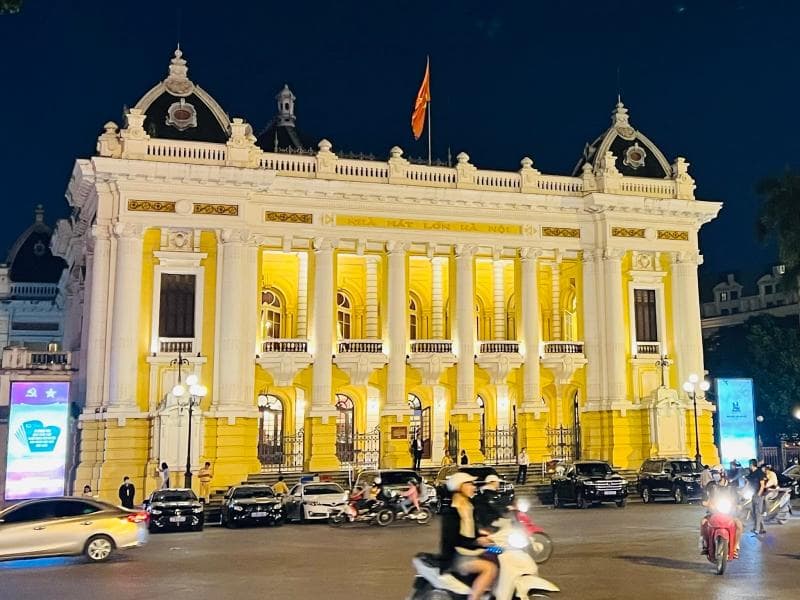
Explore Hanoi's French Quarter, a district of colonial charm surrounding the Hanoi Opera House, rich in history, architecture, and cultural blend in Vietnam.
Overview
Nestled in the vibrant heart of Hanoi, Vietnam, the area 'Nearby French Quarter' refers to the charming and historically rich district surrounding the iconic Hanoi Opera House. This captivating neighborhood, often simply called the French Quarter, offers a striking contrast to the bustling Old Quarter with its wide, tree-lined boulevards and magnificent colonial-era architecture. It's a tranquil yet elegant space where European grandeur seamlessly merges with Vietnamese charm, creating a unique atmosphere for exploration and cultural immersion. The Hanoi Opera House stands as a prominent centerpiece within this district, its majestic facade a testament to the area's rich history and enduring appeal.
History & Cultural Background
The French Quarter in Hanoi was meticulously developed during the late 19th and early 20th centuries, a period when Vietnam was under French colonial rule. Unlike the organic, narrow streets of the traditional Vietnamese Old Quarter, this district was a planned urban expansion, designed to serve as an administrative and residential hub for French officials and military personnel. The construction aimed to replicate the elegant boulevards and architectural styles of Paris, symbolizing French imperial power and influence in Indochina. Key structures like the Hanoi Opera House, built between 1901 and 1911, epitomize this era, reflecting the classical Beaux-Arts architectural style inspired by the Palais Garnier in Paris. After Vietnam gained independence in 1945, the Opera House, in particular, transcended its colonial origins to become a vital stage for significant political and cultural events, including the first National Assembly session, symbolizing Vietnam's newfound self-determination.
What Makes It Special
What truly sets the French Quarter apart is its distinctive blend of European elegance and Vietnamese character. The district is characterized by its grand avenues, lush greenery, and a collection of meticulously preserved colonial buildings featuring neoclassical facades, arched windows, ornate detailing, and charming wrought-iron balconies. These architectural elements, often painted in warm butter-yellow hues with red roofs, evoke a sense of 'little Paris' within the Vietnamese capital. Beyond the Hanoi Opera House, other significant landmarks include St. Joseph's Cathedral, which resembles Notre-Dame de Paris, and the Vietnam National Museum of History, housed in a beautiful Indochinese-style building. The area is less chaotic than the Old Quarter, offering a more serene ambiance that invites leisurely strolls and a deeper appreciation of its historical and aesthetic treasures.
Stories, Fun Facts & Local Details
The Hanoi Opera House, a jewel of the French Quarter, was not merely an entertainment venue; it was initially an exclusive space for the European elite and wealthy Vietnamese to enjoy Western arts. Its design, closely mirroring the famed Palais Garnier, showcases impressive features such as sweeping staircases, marble flooring, and intricate chandeliers, albeit on a more modest scale adapted for the local climate. A fascinating detail within the French Quarter is the prevalence of yellow-painted buildings. This choice of color often reflects a colonial-era aesthetic, creating a cohesive and visually appealing streetscape that distinguishes the area. The district also holds significant historical memory, having witnessed revolutionary meetings and political gatherings that shaped Vietnam's destiny. Today, local delights like Trang Tien ice cream and numerous quaint cafes offer a taste of contemporary Hanoian life amidst this historical backdrop.
Visitor Perspective
For the curious traveler, the French Quarter presents an elegant and contemplative side of Hanoi. Walking through its wide boulevards, one can feel transported to another era, enjoying the sophisticated calm that contrasts with the energetic buzz of other parts of the city. It's an ideal destination for those who appreciate architectural beauty, historical narratives, and a more relaxed pace. Visitors can admire the exterior grandeur of the Opera House, which is stunning at any time but particularly captivating in the soft light of morning or late afternoon. Exploring the surrounding streets reveals a tapestry of cultural institutions, embassies, and charming cafes, perfect for people-watching or enjoying a traditional Vietnamese coffee. The area encourages slow exploration, allowing travelers to absorb the unique cultural exchange that has unfolded here over more than a century. It's a place where history whispers from every ornate facade and tree-lined path, offering a memorable and enriching experience.
Coordinates: 105.85783, 21.02419
View on Google Maps💬 How Travelers Describe This Place
Based on community votes
Must See
921Unique
831Photogenic
433Beautiful
232Interesting
211
Traveler Stories
Discover memorable experiences shared by travelers who have visited this place.
No traveler stories yet.
Be the first traveler to share what made this place memorable.

Tour
By
Spot
Discover amazing places around the world. Your journey starts here.
Explore
© 2026 TourBySpot. All rights reserved.