Nave Interior
Geneva, Switzerland
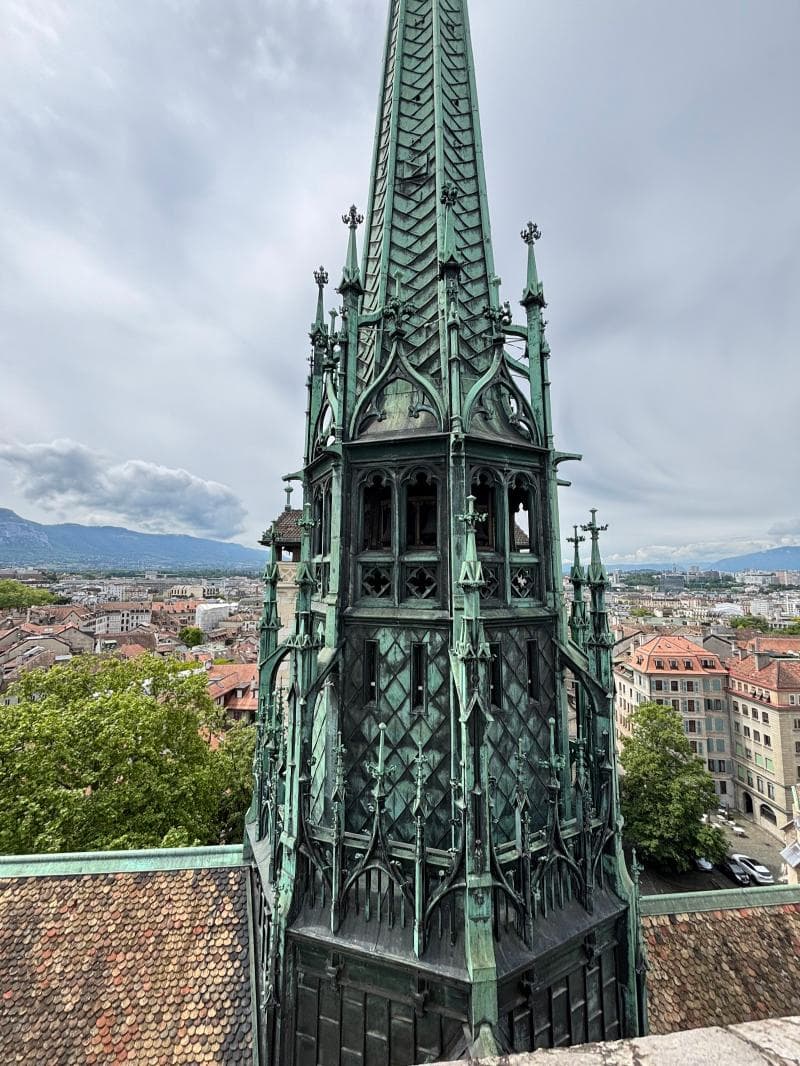
Explore the Nave Interior of St. Pierre Cathedral in Geneva, Switzerland. Discover its rich history, Reformation impact, and unique architectural blend.
Overview
The Nave Interior of St. Pierre Cathedral in Geneva, Switzerland, offers a compelling journey through centuries of architectural evolution and religious transformation. Perched majestically on the highest point of Geneva's Old Town, the cathedral itself is a remarkable blend of Romanesque, Gothic, and Neoclassical styles. The nave, serving as the main body of the church where the congregation gathers, reflects this rich tapestry of history, though its current appearance is profoundly shaped by the Protestant Reformation. Entering this space, travelers are immediately struck by its austere yet powerful presence, a testament to Geneva's pivotal role in shaping European religious thought. It stands as a silent witness to a past where grand spiritual movements unfolded within its very walls.
History & Cultural Background
Construction of St. Pierre Cathedral began around 1160, evolving from early Christian structures on the site that date back to the 4th century. The initial main structure was built in the Romanesque style, characterized by robust walls and rounded arches. Over the 13th century, Gothic elements were introduced, including pointed arches and vaulted ceilings, giving the building a subtler look despite its Romanesque foundation. The most dramatic shift in the cathedral's cultural identity, and consequently its interior, occurred in 1535. With the advent of the Protestant Reformation, Geneva embraced Calvinism, and the cathedral became its central hub. John Calvin himself preached here for 23 years, transforming the Catholic cathedral into a Protestant place of worship. This period led to the 'irrevocable destruction' of much of the interior's elaborate Catholic decoration, such as altars, statues, and paintings, in line with Calvinist principles of simplicity and focus on the spoken word. Fortunately, some features like stained glass windows (though many were later restored), elaborately carved capitals, and the choir and pulpit were preserved.
What Makes It Special
The Nave Interior of St. Pierre Cathedral is uniquely defined by its stark simplicity, a deliberate consequence of the Reformation. Unlike many ornate European cathedrals, its beauty lies in its unadorned, spacious, and rather plain interior. This austere atmosphere was intended to direct worshippers' focus toward scripture and sermon rather than visual distractions. The blending of architectural styles, from the Romanesque foundations to Gothic additions, is evident in the nave's structure, offering a historical lesson in stone. Visitors can observe the repetition of columns and the stone construction that characterize this ancient space. A particularly notable feature within the nave is the 'Calvin Chair,' an austere but eye-catching item next to the pulpit, believed to have been used by John Calvin himself. The surviving Romanesque capitals, adorned with unique carvings, provide a glimpse into the cathedral's pre-Reformation splendor.
Stories, Fun Facts & Local Details
The most enduring story associated with the nave is undoubtedly its connection to John Calvin. From this very space, he delivered sermons that profoundly influenced not just Geneva, but the entire course of the Protestant Reformation across Europe. It's said he once decreed that Genevans attend 17 services per week, with heavy fines for absenteeism – a testament to the rigorous religious life he sought to instill. Beneath the cathedral floor, accessible from outside the main nave, lies one of Switzerland's largest archaeological sites, revealing remnants of earlier churches, Roman mosaics, and even a 1st-century BC Celtic tomb, showcasing layers of history beneath your feet. In a remarkable modern event signifying ecumenical rapprochement, the first Catholic Mass in nearly 500 years was celebrated within the cathedral in March 2022, after Catholic worship was banned in 1535. This momentous occasion underscored the cathedral's enduring significance as a symbol of Geneva's Christian heritage.
Visitor Perspective
Stepping into the Nave Interior of St. Pierre Cathedral is to step into a space that commands reverence through its very history. The high vaulted ceilings and slender columns contribute to an atmosphere of solemnity. While largely unadorned, the nave's spaciousness and the natural light filtering through offer a powerful sense of peace and reflection. Visitors can freely enter the nave and soak in the historical ambiance. The contrast between the stripped-down nave and the more ornate, restored Chapel of the Maccabees (a side chapel accessible from the cathedral) is particularly striking, showcasing different eras and artistic approaches. Exploring the nave provides a profound appreciation for the architectural continuity and the dramatic religious shifts that have shaped this iconic Genevan landmark. It's a place where history resonates, offering a tangible connection to the intellectual and spiritual currents that once flowed powerfully through its ancient stones.
Coordinates: 6.14861, 46.20111
View on Google Maps💬 How Travelers Describe This Place
Based on community votes
Beautiful
921Interesting
831Unique
232Photogenic
211Must See
147
Traveler Stories
Discover memorable experiences shared by travelers who have visited this place.
No traveler stories yet.
Be the first traveler to share what made this place memorable.

Tour
By
Spot
Discover amazing places around the world. Your journey starts here.
Explore
© 2026 TourBySpot. All rights reserved.