Nave Interior
Innsbruck, Austria
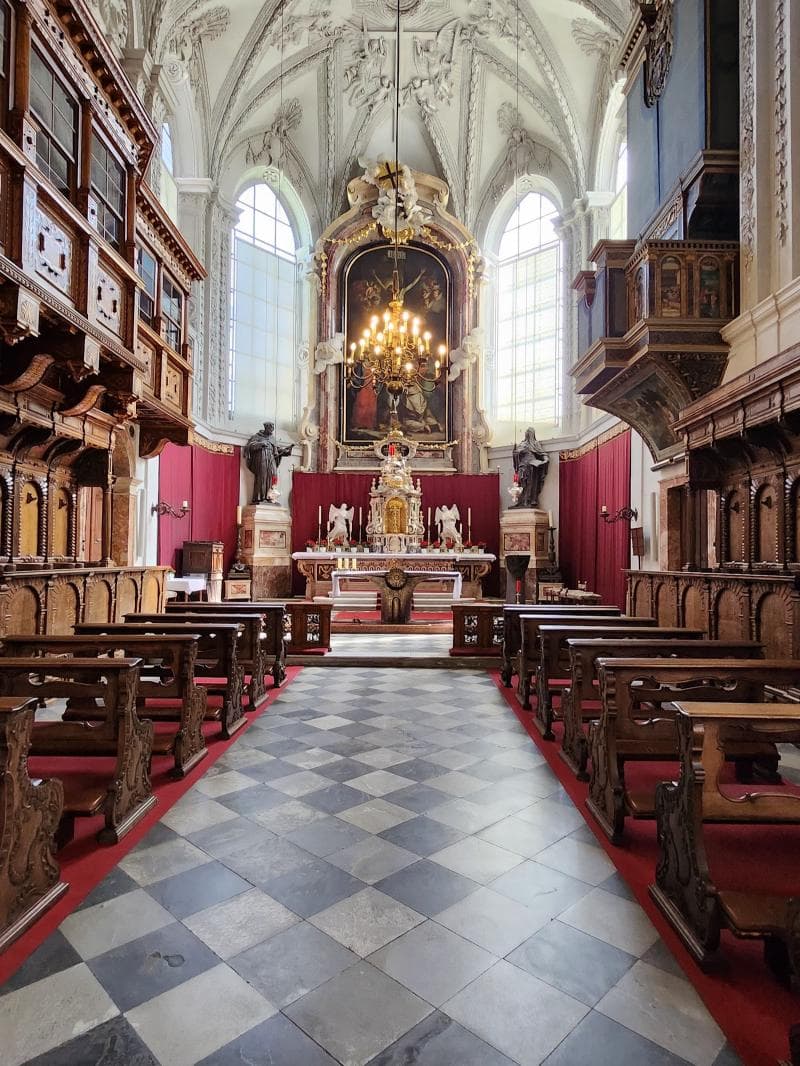
Explore the majestic Nave Interior of Hofkirche Innsbruck, Austria, home to Emperor Maximilian I's cenotaph and 28 bronze 'Schwarzmander' statues.
Overview
Stepping into the Nave Interior of Hofkirche Innsbruck, located in the heart of Innsbruck, Austria, is an immediate journey back to the grandeur of the Habsburg Empire. This Gothic court church, often referred to as the 'Schwarzmanderkirche' or 'Black Men Church', is renowned primarily for its central feature: the magnificent, yet empty, cenotaph of Emperor Maximilian I. The spacious nave, with its three aisles and high vaulted ceilings, provides a solemn and impressive setting for this grand imperial monument. Visitors are drawn into a world where art, history, and legend intertwine, making it one of Tyrol's most significant cultural treasures.
Beyond the imposing tomb, the nave also hosts other notable artistic and historical elements, including a remarkably preserved Renaissance organ and the final resting place of Tyrol's national hero, Andreas Hofer. The architecture itself, a harmonious blend of German late Gothic and early Renaissance styles, contributes to the profound atmosphere, inviting contemplation and admiration for the craftsmanship of centuries past.
History & Cultural Background
The Hofkirche was commissioned by Emperor Ferdinand I, Maximilian I's grandson, and constructed between 1553 and 1563 as a memorial church for his grandfather. Maximilian I, who died in 1519, had meticulously planned his elaborate tomb during his lifetime, envisioning 40 larger-than-life bronze figures to guard his eternal rest. Although his actual remains lie elsewhere in Wiener Neustadt, the Hofkirche was built to house this magnificent cenotaph, creating the largest imperial tomb in Europe. The construction of the tomb alone took over 80 years to complete, reflecting the immense artistic ambition of the era.
Culturally, the church represents a pivotal moment in European art, bringing together artists of the German Renaissance, including contributions from Albrecht Dürer and Peter Vischer the Elder. The design showcases Maximilian's desire to assert the power and legacy of the Habsburg dynasty, surrounding his symbolic resting place with real and legendary ancestors. Later, in 1823, the nave gained additional historical significance when the remains of Andreas Hofer, the leader of the Tyrolean Rebellion against Napoleonic forces, were interred here, solidifying the church's role as a monument to Tyrolean identity.
What Makes It Special
The unquestionable highlight of the Hofkirche's nave is Emperor Maximilian I's cenotaph, a black marble masterpiece surrounded by 28 bronze figures known as the 'Schwarzmander'. These 'Black Men' (and women) depict Maximilian's ancestors, relatives, and heroes, such as King Arthur of England, providing a striking visual narrative of his lineage and aspirations. Each statue is a testament to High Renaissance sculpture, with intricate details showcasing period attire and weaponry.
Complementing these statues are 24 exquisitely carved marble reliefs on the sides of the cenotaph, illustrating key events and accomplishments from Maximilian's life. These include scenes like his marriage to Mary of Burgundy and his coronation. Another jewel within the nave is the Ebert organ, a Renaissance masterpiece from 1560, considered one of the oldest playable and most valuable organs globally. Its sound continues to fill the church during concerts, connecting contemporary visitors to the musical traditions of the past.
Stories, Fun Facts & Local Details
A fun fact about the 'Schwarzmander' is that while commonly translated as 'Black Men', the collection includes several women, such as his two wives, Mary of Burgundy and Bianca Maria Sforza. Maximilian originally planned for 40 figures, but only 28 were completed, adding a touch of unfinished ambition to his grand vision. The choice of figures, ranging from historical rulers to legendary heroes, was a deliberate move by Maximilian to establish a powerful and ancient lineage for the Habsburgs, even including figures like King Arthur.
During World War II, the valuable bronze statues were carefully removed and stored in a brewery's rock cellar to protect them from damage, a testament to their enduring cultural value. The Hofkirche also serves as a poignant reminder of Austrian identity through the tomb of Andreas Hofer. His story, deeply embedded in Tyrolean lore, speaks to the region's spirit of resistance and patriotism. The church, despite its seemingly modest exterior compared to the neighboring Hofburg, reveals an extraordinary artistic richness within, embodying a 'Gesamtkunstwerk' – a total work of art.
Visitor Perspective
Upon entering the Hofkirche, often through the adjacent Tyrolean Folk Art Museum, visitors are immediately struck by the imposing scale and the historical depth of the nave. The arrangement of the 'Schwarzmander' statues around Maximilian's cenotaph creates a profound sense of awe and reverence, making it easy to spend considerable time admiring the intricate details of each figure and relief. The dim lighting often enhances the contemplative atmosphere, allowing the bronze figures to cast long, dramatic shadows that deepen the sense of history.
Taking time to walk around the entire cenotaph and examine the marble reliefs offers a visual biography of Emperor Maximilian I, revealing his life's triumphs and alliances. The presence of the historic Ebert organ, visible in the gallery, reminds visitors of the church's continued role in cultural life, even centuries later. For those seeking a deeper understanding, a multimedia experience detailing Maximilian's life is also available, providing an immersive historical context. The Hofkirche's nave is not merely a collection of artifacts; it is a meticulously crafted historical narrative, offering a unique and memorable encounter with Austria's imperial past.
Coordinates: 11.3953, 47.2683
View on Google Maps💬 How Travelers Describe This Place
Based on community votes
Photogenic
836Interesting
620Beautiful
594Must See
166Unique
83
Traveler Stories
Discover memorable experiences shared by travelers who have visited this place.
No traveler stories yet.
Be the first traveler to share what made this place memorable.

Tour
By
Spot
Discover amazing places around the world. Your journey starts here.
Explore
© 2026 TourBySpot. All rights reserved.