Nave Interior
Zurich, Switzerland
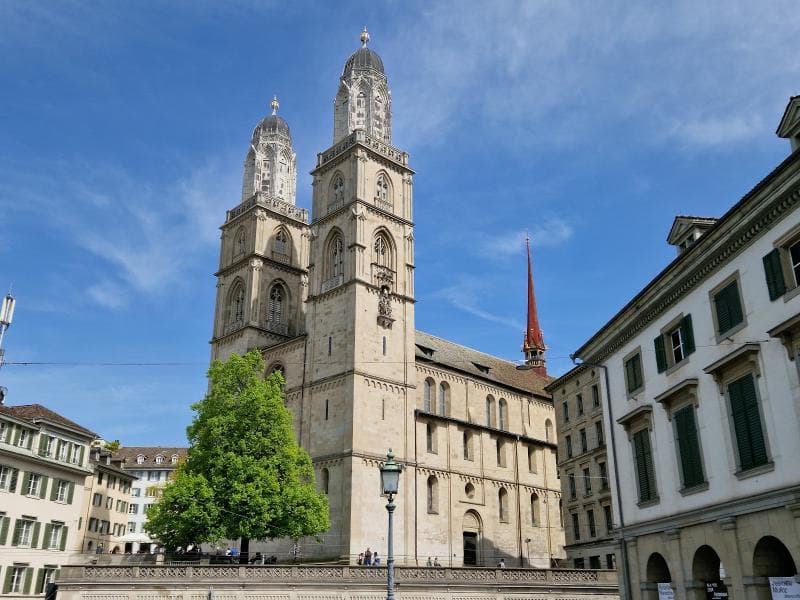
Explore the Nave Interior of Grossmünster in Zurich, Switzerland, a historic Protestant church steeped in Reformation history and featuring stunning stained-glass art.
Overview
Step inside Grossmünster, a landmark Romanesque church nestled in the heart of Zurich, Switzerland, and you'll discover a nave that tells a profound story of faith, reform, and artistic expression. This iconic Protestant church, with its distinctive twin towers often affectionately called the 'salt and pepper shakers', stands majestically on the banks of the Limmat River, an enduring symbol of the city's rich history and cultural identity. The interior, known as the Nave Interior, offers a unique blend of Romanesque grandeur and Reformed simplicity, inviting contemplation and historical exploration.
As you enter, the sheer scale of the Romanesque stonework immediately impresses, characterized by thick piers and rounded arches. While many European cathedrals are adorned with elaborate decorations, the Grossmünster's nave embraces a deliberate austerity, a direct legacy of the Swiss Reformation. This simplicity, however, highlights the masterful artistry of its significant features, including modern stained-glass windows and ancient architectural details.
History & Cultural Background
The history of Grossmünster begins with a legend, said to be founded by Charlemagne himself. According to tradition, his horse knelt on the burial site of Zurich's patron saints, Felix and Regula, inspiring him to establish a monastery here. Construction of the current Romanesque structure commenced around 1100 CE, with most of it completed by 1230 CE.
However, the church's most pivotal role in history unfolded in the 16th century, when it became the cradle of the Swiss Reformation. From 1519, Huldrych Zwingli, a charismatic theologian, began preaching from Grossmünster's pulpit, initiating a movement that would transform not only Zurich but also the religious landscape of Switzerland and beyond. The Reformation's emphasis on direct worship and the removal of 'excessive ornamentation' led to significant changes within the church's interior. In 1524, the organ and religious statuary were removed, walls were whitewashed, and stained-glass windows were taken out, creating the characteristically austere yet powerful space seen today.
What Makes It Special
Despite its Reformed simplicity, the Nave Interior of Grossmünster is far from uninteresting; it is a captivating space where historical layers and contemporary artistry converge. One of the most striking features is the series of stained-glass windows. The choir windows, dating from 1933, are the work of the renowned Swiss artist Augusto Giacometti, filling the altar area with warm, vibrant colors and a subtle interplay of light.
Adding a modern counterpoint, the nave features seven contemporary stained-glass windows designed by German artist Sigmar Polke, installed in 2009. These unique windows are crafted from thinly sliced agate stones, creating jewel-like surfaces that dramatically interact with natural light, alongside five figurative glass windows. This blend of ancient Romanesque architecture with early 20th-century and 21st-century art creates a truly distinctive atmosphere. The bronze doors, depicting scenes from biblical history, are another artistic highlight, created by Otto Münch.
Beneath the main church lies Switzerland's largest Romanesque crypt, dating back to the 12th century. This ancient space houses a Romanesque statue of Charlemagne, a nod to the church's legendary founder and a tangible link to its distant past. The intricately carved Romanesque capitals throughout the nave and cloister also offer fascinating details for those with a keen eye for architectural history.
Stories, Fun Facts & Local Details
The Grossmünster is steeped in stories that bring its past to life. The legend of Charlemagne's horse kneeling to reveal the saints' graves is a foundational myth for the church and the city, intertwining spiritual and civic identity. The twin towers, instantly recognizable, have earned the affectionate local nickname of 'salt and pepper shakers' due to their unique domed helmets, rebuilt after a fire in 1763.
For those seeking a panoramic vista of Zurich, a climb of 187 steps from the nave up the Karlsturm (Charlemagne Tower) rewards visitors with breathtaking views over the Old Town, the Limmat River, Lake Zurich, and even the distant Alps on clear days. While the main church entrance is free, a small fee applies for the tower ascent, though it's often included with a Zurich Card.
The church is not merely a museum; it remains an active Swiss Reformed congregation, regularly hosting services, organ concerts, and cultural events. The acoustics within the nave are excellent, making any musical performance a memorable experience. Keep an eye on their official schedule for special events.
Visitor Perspective
A visit to the Nave Interior of Grossmünster offers a journey through centuries of history and art, all within a serene, contemplative environment. Most visitors find that 1 to 2 hours is sufficient to explore the main parts of the cathedral, including its impressive nave, crypt, and various artistic installations.
As you wander through the space, take time to absorb the deliberate simplicity that defines its character. The absence of overwhelming ornamentation allows the architectural lines, the play of light through the modern stained glass, and the echoes of history to truly resonate. It's recommended to wear comfortable shoes, especially if you plan to ascend the Karlsturm for the city views. The Grossmünster provides a profound connection to Zurich's past and its enduring spiritual heritage, making it an essential stop for any curious traveler. Note that renovations are planned for 2026-2027, which may affect access to certain areas.
Coordinates: 8.54399, 47.37014
View on Google Maps💬 How Travelers Describe This Place
Based on community votes
Interesting
953Beautiful
695Photogenic
658Must See
396Unique
22
Traveler Stories
Discover memorable experiences shared by travelers who have visited this place.
No traveler stories yet.
Be the first traveler to share what made this place memorable.

Tour
By
Spot
Discover amazing places around the world. Your journey starts here.
Explore
© 2026 TourBySpot. All rights reserved.