Natural History Displays
Lyon, France
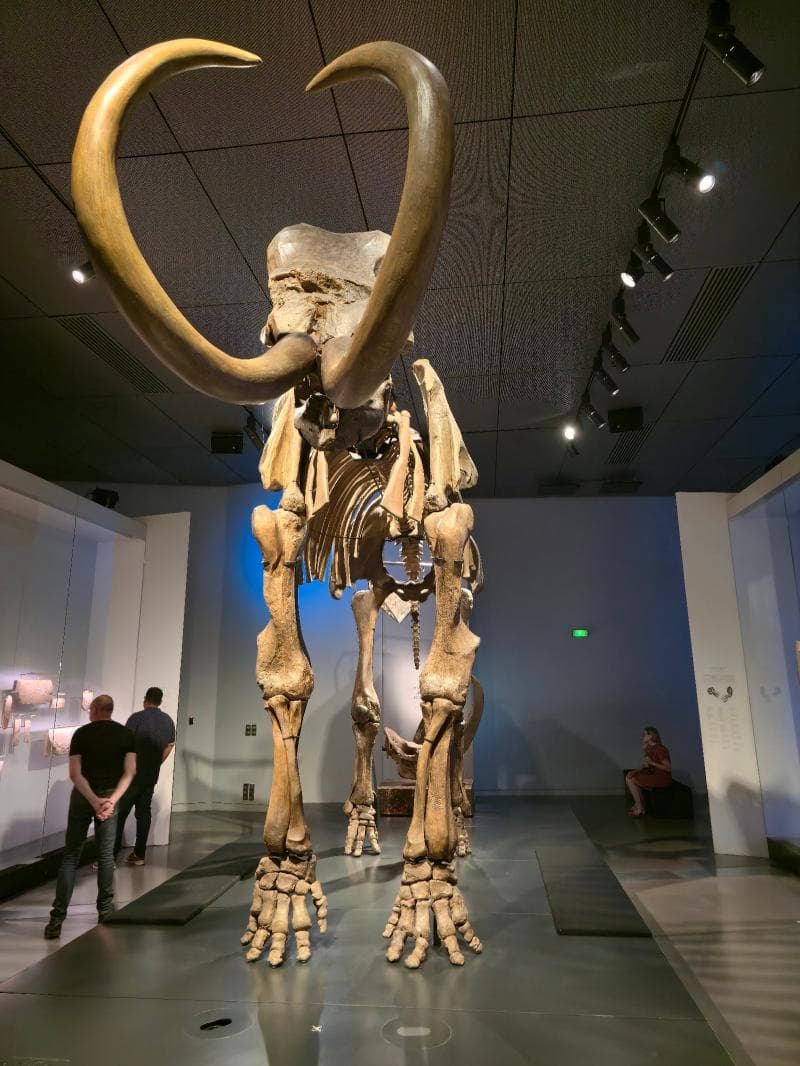
Explore the Natural History Displays at Musée des Confluences in Lyon, France, featuring ancient fossils, diverse species, and the origins of life.
Overview
Nestled at the confluence of the Rhône and Saône rivers in Lyon, France, the Musée des Confluences is a striking architectural marvel that serves as a bridge between scientific disciplines and cultural narratives. While the museum itself is a holistic exploration of humanity and the natural world, its core 'Natural History Displays' are primarily found within two of its four permanent exhibitions: 'Origins – Stories of the World' and 'Species – the Web of Life'. These dedicated spaces offer a profound journey into the origins of the universe, the evolution of life, and humanity's intricate place within the vast web of biodiversity.
The museum, inaugurated in 2014, houses an extraordinary collection of over 2.2 million objects, ranging from paleontological finds and mineralogical wonders to zoological specimens and entomological treasures. These displays invite visitors of all ages to engage with fundamental questions about our existence and the natural forces that have shaped our planet. It's a place where ancient fossils meet modern scientific inquiry, all presented within a breathtaking deconstructivist building designed by Austrian firm Coop Himmelb(l)au.
History & Cultural Background
The Musée des Confluences proudly carries forward the legacy of Lyon's former Musée d'histoire naturelle – Guimet, inheriting its rich and diverse collections. The original Guimet Museum had amassed objects across centuries, starting from the 16th, making the Musée des Confluences a modern 'cabinet of curiosities' for the 21st century. This extensive heritage laid the groundwork for the museum's ambitious interdisciplinary approach, merging natural sciences with anthropology, ethnology, and societal studies. The vision was to create a cultural institution that not only showcased scientific artifacts but also intertwined them with broader narratives of human culture and civilization.
The location itself, at the geographical confluence of two major rivers, symbolically reflects the museum's mission to converge diverse fields of knowledge. This blend of historical collections, innovative presentation, and a profound intellectual framework allows the natural history displays to be seen not in isolation, but as integral parts of a larger human story.
What Makes It Special
What truly sets the natural history displays at the Musée des Confluences apart is their compelling narrative and the sheer diversity of their collections. Visitors can marvel at the skeleton of a 155-million-year-old Camarasaurus, a giant mammoth skeleton discovered near Lyon, and touch a 630 kg meteorite. The 'Species – the Web of Life' exhibition features intricate displays of different stuffed birds and a striking 'tree of life' sculpture, vividly illustrating the planet's massive biodiversity and our place within it. It's not merely a static display of specimens; it's a dynamic exploration of evolution, extinction, and the interconnectedness of all living things.
The museum's commitment to presenting complex scientific concepts in an accessible and engaging manner, often integrating them with cultural artifacts, creates a uniquely enriching experience. For instance, the 'Origins' room juxtaposes reconstructions of early humans with representations of ancient deities, offering a balanced perspective that incorporates both scientific and cultural understandings of existence.
Stories, Fun Facts & Local Details
One fascinating aspect of the Musée des Confluences is its willingness to challenge traditional museum conventions. Visitors are sometimes invited to touch certain objects, fostering a more direct and tactile engagement with the exhibits. The collection itself holds numerous captivating stories; for example, the mammoth of Choulans, a local discovery from 1859, grounds the global narrative of prehistoric life in Lyon's own geological past.
The museum's deconstructivist architecture, with its 'Crystal' and 'Cloud' sections, is a local landmark. The Crystal, a transparent space of steel and glass, creates a bright entrance, while the 'Cloud' houses the exhibitions in more enclosed, spaceship-like galleries. This bold design choice makes the building an exhibit in itself, reflecting the institution's forward-thinking approach to presenting knowledge. It's a place where the building itself contributes to the wonder of discovery.
Visitor Perspective
For a curious traveler, the natural history displays at the Musée des Confluences offer an immersive and thought-provoking experience. The extensive collections are thoughtfully curated, making complex topics like evolution and biodiversity understandable and captivating for both adults and children. The interactive elements and the clear narrative flow ensure that a visit is not just about observing but about actively learning and reflecting. Whether you are intrigued by dinosaurs, ancient fossils, or the vast diversity of species, these displays provide a comprehensive and engaging look at the natural world. Many visitors describe it as a 'must-see' in Lyon, often highlighting the architectural beauty and the depth of the collections as memorable aspects of their visit.
Allow ample time to explore, as the breadth of the collections and the depth of the narratives can easily fill several hours. The museum's ability to present scientific rigor with a sense of wonder truly makes the natural history sections a highlight of any trip to Lyon.
Coordinates: 4.81799, 45.73263
View on Google Maps💬 How Travelers Describe This Place
Based on community votes
Interesting
869Must See
445Beautiful
416Photogenic
309Unique
33
Traveler Stories
Discover memorable experiences shared by travelers who have visited this place.
No traveler stories yet.
Be the first traveler to share what made this place memorable.

Tour
By
Spot
Discover amazing places around the world. Your journey starts here.
Explore
© 2026 TourBySpot. All rights reserved.