National Museum Of Bosnia And Herzegovina
Sarajevo, Bosnia and Herzegovina
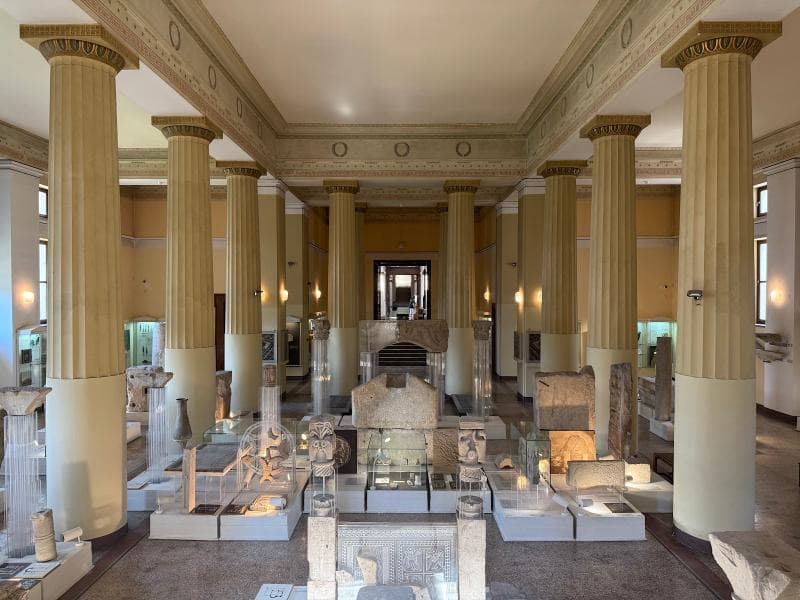
Explore the National Museum of Bosnia and Herzegovina in Sarajevo, home to the ancient Sarajevo Haggadah and diverse cultural/natural collections.
Overview
The National Museum of Bosnia and Herzegovina, known locally as Zemaljski Muzej, stands as the oldest and largest museum institution in the country, a true cultural beacon in Sarajevo, the capital. Established in 1888, with its conceptual roots tracing back to 1850, the museum moved into its current, purpose-built complex in 1913. This architectural marvel, designed by Czech architect Karel Pařík, features four symmetric pavilions elegantly arranged around a central botanical garden.
The museum serves as a comprehensive repository of Bosnia and Herzegovina's rich heritage, encompassing extensive departments of Archaeology, Ethnology, Natural History, and a significant Library. It is dedicated to collecting, studying, preserving, and exhibiting the nation's cultural and natural wealth, providing a profound insight into the diverse layers of its history and environment.
History & Cultural Background
The genesis of the National Museum of Bosnia and Herzegovina began with an idea in the mid-19th century, during the Ottoman rule. However, its official founding came in 1888, under the Austro-Hungarian administration. This period saw a heightened interest in scientific exploration and cultural preservation across the Balkans, and the museum's establishment was partly motivated by a desire to prevent cultural monuments from being removed from the region.
The impressive Neo-Renaissance building, completed in 1913, was designed by Karel Pařík, a prominent Czech architect responsible for numerous significant buildings in Sarajevo. Notably, this complex was the first structure in the former Yugoslavia specifically designed to house museum collections. Over the decades, the museum faced immense challenges, including severe damage during the Bosnian War (1992-1995) and a period of closure between 2012 and 2015 due to funding disagreements. Despite these trials, the institution has consistently reopened, demonstrating its unwavering commitment to its vital educational and scientific mission.
What Makes It Special
One of the museum's most extraordinary treasures is the Sarajevo Haggadah, a priceless 14th-century illuminated Sephardic Jewish manuscript from Barcelona. Recognized by UNESCO and inscribed on its Memory of the World Register in 2017, it is celebrated as one of the world's most beautiful and valuable Hebrew illuminated manuscripts. Its survival through various conflicts, including World War II and the Siege of Sarajevo, is a testament to its profound cultural significance and the dedication of those who safeguarded it.
Beyond its famous manuscript, the museum boasts a unique architectural layout. The four main pavilions—dedicated to Archaeology, Ethnology, Natural History, and the Library—surround a serene central Botanical Garden. Established in 1913 under botanist Karlo Maly, this garden is home to over 2,000 plant species, including valuable endemic flora. It also features a striking outdoor collection of *stećci*, unique medieval Bosnian tombstones, offering a tangible link to the region's ancient past.
The archaeological department presents artifacts spanning from prehistoric times, including the internationally significant Butmir Neolithic culture, through Roman and medieval periods. The ethnology department vividly portrays traditional Bosnian life through authentic costumes and reconstructed urban house interiors. Meanwhile, the natural history section showcases the country's diverse flora, fauna, and geological wonders, reflecting Bosnia and Herzegovina's rich natural heritage.
Stories, Fun Facts & Local Details
The very existence of the National Museum of Bosnia and Herzegovina embodies a story of national pride and resilience. Its founding during the Austro-Hungarian era was, in part, a strategic move to secure and study the region's cultural assets, preventing them from being lost or exploited.
The Sarajevo Haggadah carries its own compelling narrative of survival. During World War II, it was daringly hidden from the Nazis by the museum's chief librarian. Decades later, during the Siege of Sarajevo in the 1990s, it was once again protected, secreted away in an underground bank vault, a 'silent witness to history' that survived turbulent times.
The museum's botanical garden is not merely a collection of plants; it is an open-air exhibition of Bosnia and Herzegovina's natural splendor, featuring geological foundations and diverse plant communities, including local endemic species. Wandering through this tranquil space, surrounded by *stećci*, feels like stepping back in time, connecting directly with the ancient landscape and cultures of the region.
Visitor Perspective
Conveniently located in central Sarajevo on Zmaja od Bosne Street, the National Museum is easily accessible by public transport, with tram stops nearby, and is also within walking distance of many city center landmarks. Visitors typically allocate at least two to three hours to explore its main halls and significant exhibits, though history and archaeology enthusiasts might find themselves captivated for half a day or more.
Exhibits are generally labeled in both Bosnian and English, making the rich historical and cultural narratives accessible to international visitors. For those eager to see the famed Sarajevo Haggadah, it is crucial to note that special viewing arrangements, often requiring advance booking, are necessary due to its delicate nature and immense value. While exploring, comfortable shoes are recommended as there is a fair amount of walking involved. The serene botanical garden provides a perfect interlude, offering a peaceful space for reflection and photography amidst your exploration of Bosnia and Herzegovina's profound heritage.
Coordinates: 18.4026, 43.855
View on Google Maps💬 How Travelers Describe This Place
Based on community votes
Photogenic
915Beautiful
211Interesting
123Unique
74Must See
20
Traveler Stories
Discover memorable experiences shared by travelers who have visited this place.
No traveler stories yet.
Be the first traveler to share what made this place memorable.
Things to see at National Museum Of Bosnia And Herzegovina



Tour
By
Spot
Discover amazing places around the world. Your journey starts here.
Explore
© 2026 TourBySpot. All rights reserved.