Austro-Hungarian Architecture
Sarajevo, Bosnia and Herzegovina
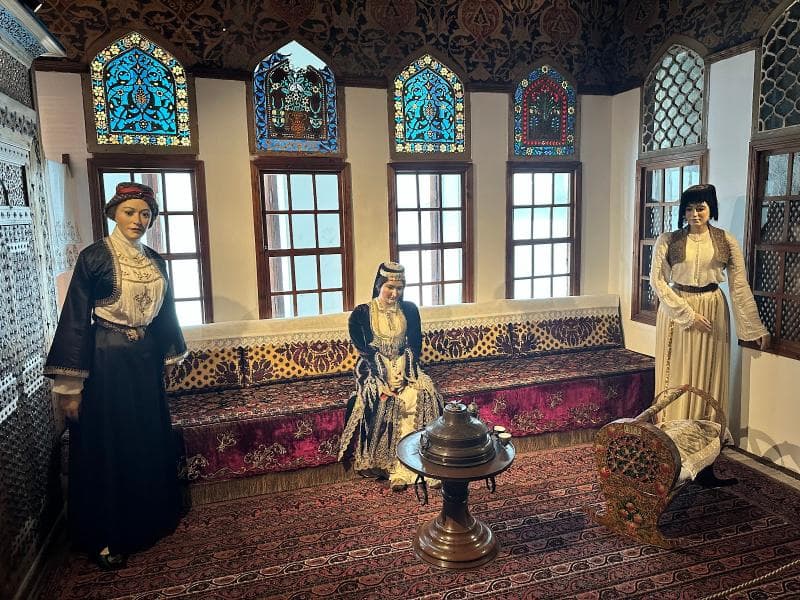
Explore the majestic Austro-Hungarian architecture of the National Museum of Bosnia and Herzegovina in Sarajevo, a Neo-Renaissance masterpiece.
Overview
The National Museum of Bosnia and Herzegovina, known locally as Zemaljski muzej Bosne i Hercegovine, stands as a grand testament to the nation's rich history and the enduring legacy of Austro-Hungarian rule in Sarajevo. This architectural masterpiece, completed in 1913, is not merely a building but a carefully designed complex comprising four symmetrical pavilions, all encircling a serene botanical garden. It was the first purpose-built museum complex in the former Yugoslavia, signifying a new era for cultural institutions in the region. Designed by the prominent Czech architect Karel Pařík, the museum's Neo-Renaissance style with classical elements reflects the grandeur and ambition of the Austro-Hungarian period in Sarajevo. Today, it continues to be the country's most significant cultural and scientific institution, housing vast collections spanning archaeology, ethnology, and natural history.
History & Cultural Background
The concept for a national museum in Bosnia and Herzegovina emerged as early as 1850, during the final decades of Ottoman rule. However, it was only after the Austro-Hungarian Empire occupied Bosnia and Herzegovina in 1878 that the idea gained significant momentum, leading to its official establishment in 1888. The Austro-Hungarian administration brought with it new political and social goals, including a strong emphasis on scientific research and institutional development. The construction of the current museum building began in 1909 and concluded in 1913, making it a pivotal project during this transformative period. The architect, Karel Pařík, played a crucial role in shaping Sarajevo's urban landscape during the Habsburg era, designing approximately seventy buildings across the city. The museum's opening in 1913 was more than just a cultural event; it was a 'consolidating gesture' following Austria-Hungary's formal annexation of Bosnia and Herzegovina in 1908, asserting imperial presence and cultural patronage.
What Makes It Special
The Austro-Hungarian architectural style of the National Museum of Bosnia and Herzegovina is particularly special due to its unique blend of ambition and intellectual foresight. Unlike many European museums housed in converted palaces, this complex was specifically conceived and built for its purpose, showcasing an innovative approach to museum design. Its design vocabulary echoes the civic buildings of Vienna's famous Ringstrasse, compressed into a harmonious four-in-one structure for Sarajevo. The Neo-Renaissance facade, characterized by its fine ornaments, carved details, and spacious windows, presents a balanced fusion of classical and local architectural elements. The interior continues this theme with grand halls, high ceilings, and elaborate details, creating an ideal environment for displaying precious artifacts. Furthermore, the central botanical garden, established in 1913, is home to over 2,000 plant species, including endemic ones, offering a unique natural complement to the historical and cultural exhibits.
Stories, Fun Facts & Local Details
Sarajevo, during the Austro-Hungarian period, became a 'test-ground' for innovations that were sometimes rolled out even before they reached Vienna, highlighting the empire's strategic interest in the city. While the National Museum itself embodies the Neo-Renaissance style, the broader Austro-Hungarian influence in Sarajevo also saw the emergence of eclectic styles, including Pseudo-Moorish architecture, blending Eastern and Western aesthetics. Karel Pařík, the museum's architect, left an indelible mark on Sarajevo, with the museum often considered his most significant design. The museum's collections are incredibly diverse, from Neolithic pottery and Roman mosaics to medieval tombstones known as stećci displayed in the botanical garden. Perhaps its most famous treasure is the Sarajevo Haggadah, an illuminated manuscript from around 1350, considered the oldest Sephardic Jewish document globally and valued at an estimated $700 million, a true testament to the region's rich tapestry of cultures and histories.
Visitor Perspective
For a curious traveler, stepping into the National Museum of Bosnia and Herzegovina is an immersion into the soul of Sarajevo's Austro-Hungarian past. The building itself is a primary exhibit, inviting contemplation on the period's architectural grandeur and its impact on the city's identity. Walking through its four distinct pavilions, dedicated to archaeology, ethnology, natural history, and the extensive library, visitors can trace the historical and cultural evolution of Bosnia and Herzegovina. The serene botanical garden at the heart of the complex offers a peaceful interlude, a living collection that complements the museum's indoor treasures. Despite suffering damage during the Bosnian War and facing temporary closures, the museum has been painstakingly restored and reopened, a symbol of resilience and enduring cultural value. It stands as a vital portal to understanding the complexities and beauty of a nation at the crossroads of empires.
Coordinates: 18.4025, 43.8545
View on Google Maps💬 How Travelers Describe This Place
Based on community votes
Unique
623Photogenic
545Interesting
343Beautiful
302Must See
88
Traveler Stories
Discover memorable experiences shared by travelers who have visited this place.
No traveler stories yet.
Be the first traveler to share what made this place memorable.

Tour
By
Spot
Discover amazing places around the world. Your journey starts here.
Explore
© 2026 TourBySpot. All rights reserved.