National Monument
Edinburgh, United Kingdom
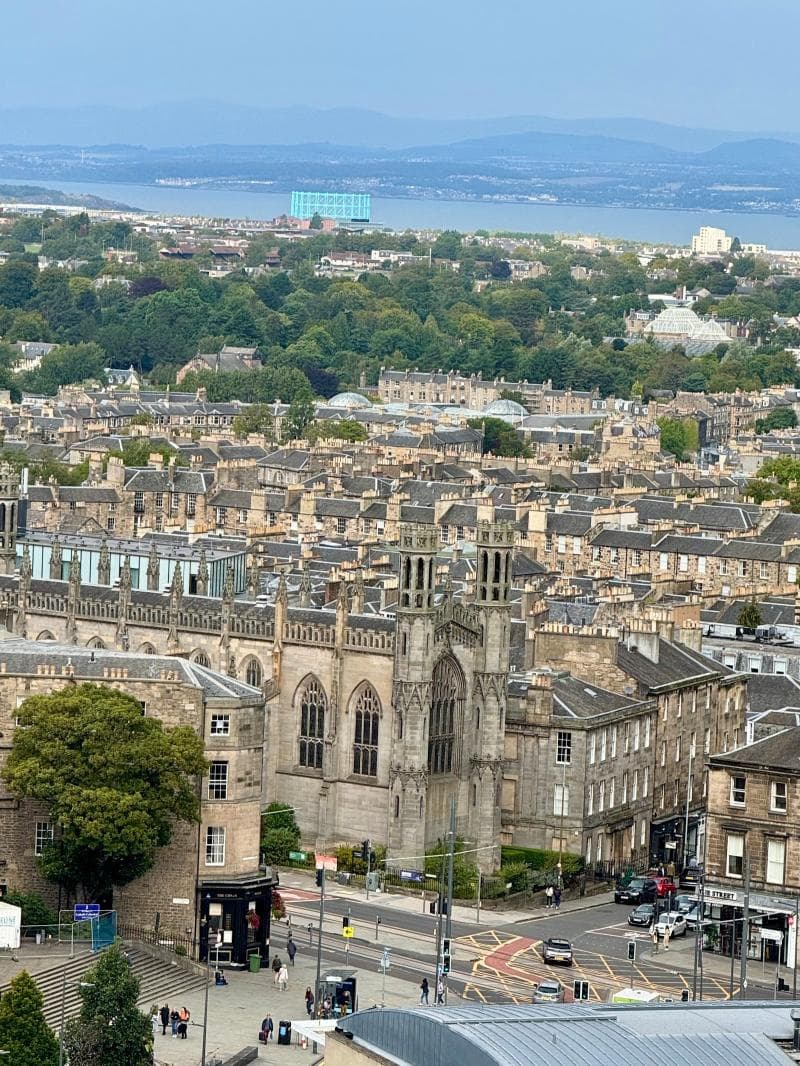
Explore Edinburgh's National Monument on Calton Hill, an unfinished Parthenon replica honoring Napoleonic War soldiers in the United Kingdom.
Overview
Perched majestically atop Calton Hill in Edinburgh, United Kingdom, stands the National Monument, an iconic and enigmatic structure that forms a significant part of the city's celebrated skyline. This striking neoclassical edifice, though incomplete, serves as a poignant national memorial to the Scottish soldiers and sailors who bravely fought and died in the Napoleonic Wars between 1803 and 1815. Designed to emulate the grandeur of the Parthenon in Athens, its twelve commanding columns are a testament to an ambitious vision that, quite literally, ran out of steam. Today, it offers not only a glimpse into Scotland's past but also some of the most breathtaking panoramic views of Edinburgh, encompassing landmarks like Edinburgh Castle, Arthur's Seat, and the Firth of Forth.
History & Cultural Background
The concept of a national monument to commemorate Scotland's fallen heroes from the Napoleonic Wars was first proposed by the Highland Society of Scotland as early as 1816. The decision to construct a distinct Scottish monument, rather than contributing to a single British memorial in London, held significant cultural and political weight, highlighting Scotland's desire to express its unique national identity within the wider British Empire. Architects Charles Robert Cockerell and William Henry Playfair, two eminent figures of the early nineteenth century, were entrusted with its design, drawing direct inspiration from the ancient Parthenon. The foundation stone was ceremoniously laid on August 27, 1822, during King George IV's visit to Edinburgh, marking the official beginning of this grand undertaking. Construction commenced in 1826 with an estimated cost of £42,000, a substantial sum for the era. However, despite public appeals and the backing of influential figures like Sir Walter Scott, fundraising efforts fell significantly short, securing only around £16,000 to £20,000. By 1829, just three years after construction began, funds were exhausted, and work ceased abruptly, leaving the monument in its perpetually unfinished state.
What Makes It Special
Despite its incompleteness, the National Monument holds a unique allure and profound significance. Its architectural style, with its imposing Doric columns crafted from polished Craigleith ashlar, is a cornerstone of Edinburgh's reputation as the 'Athens of the North'. This nickname, coined in the early 19th century, reflects the city's intellectual prowess during the Scottish Enlightenment and its embrace of neoclassical architecture, deliberately echoing the classical grandeur of ancient Greece. The monument's prominent position on Calton Hill, often likened to Edinburgh's own Acropolis, reinforces this connection. The very fact of its unfinished nature has, paradoxically, contributed to its charm and distinct identity. It is a monument that tells a story of aspiration, financial challenge, and enduring national pride. Many proposals to complete it surfaced over the years, including ideas for a memorial to Queen Victoria or even a new Scottish Parliament building, but none ever came to fruition. Today, its powerful silhouette against the Edinburgh sky makes it an enduring symbol of the city itself.
Stories, Fun Facts & Local Details
The National Monument has garnered several colourful nicknames over the centuries due to its abandoned state. Locally, it has been referred to as 'National Disgrace', 'Edinburgh's Folly', 'Scotland's Folly', and even 'Scotland's Pride and Poverty'. These names, while seemingly critical, also reflect a certain affectionate acknowledgment of its peculiar history and its ingrained status within the city's character. The massive lintels that were meant to top the columns were so large they required 70 men and 12 horses to transport them to Calton Hill, a feat of engineering in itself for the time. There is also local folklore suggesting that Glasgow was willing to contribute funds to complete the monument, but Edinburgh's pride prevented them from accepting assistance from their rival city. While perhaps apocryphal, such stories highlight the deep-seated identity and friendly rivalry between Scotland's two largest cities. Today, the monument remains just as it was when the scaffolding came down in 1829, a powerful and beloved feature of Edinburgh's landscape.
Visitor Perspective
Visiting the National Monument on Calton Hill is an essential Edinburgh experience, offering more than just a historical encounter. The ascent to the top of Calton Hill is a relatively easy walk, accessible from Regent Road, and it rewards visitors with unparalleled views. From this vantage point, one can survey the entire city – from the historic Old Town and the bustling New Town to the distant waters of the Firth of Forth. The National Monument, open year-round with free admission, provides a serene space for contemplation, allowing one to imagine the full glory of the intended Parthenon replica. Many visitors enjoy simply sitting on its steps, soaking in the atmosphere and the expansive scenery. The changing light throughout the day, particularly at sunset, casts a magical glow over the monument and the city below, creating spectacular photographic opportunities. It is a place that invites reflection on history, architectural ambition, and the enduring spirit of Scotland, making it a truly memorable stop for any curious traveller.
Coordinates: -3.1819062, 55.9547653
View on Google Maps💬 How Travelers Describe This Place
Based on community votes
Unique
961Interesting
695Photogenic
605Must See
404Beautiful
336
Traveler Stories
Discover memorable experiences shared by travelers who have visited this place.
No traveler stories yet.
Be the first traveler to share what made this place memorable.

Tour
By
Spot
Discover amazing places around the world. Your journey starts here.
Explore
© 2026 TourBySpot. All rights reserved.