National Day Parade Route
Bucharest, Romania
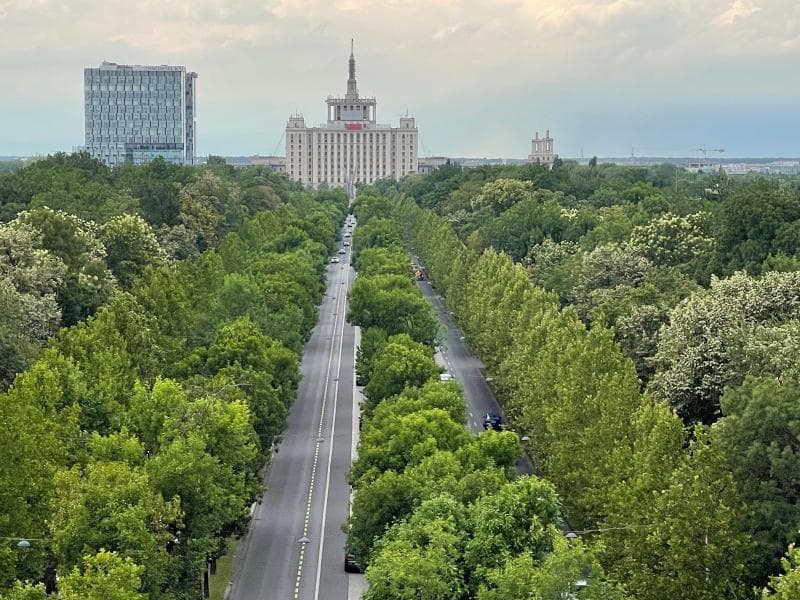
Explore the Arcul de Triumf, Bucharest, Romania – the iconic focal point of the National Day Parade route, symbolizing national unity and history.
Overview
The Arcul de Triumf, Bucharest’s majestic Triumphal Arch, stands proudly in the northern part of the city, serving as a powerful symbol of Romania's national identity and historical triumphs. More than just a monument, it is the revered focal point of the annual National Day Parade, transforming the surrounding area into a vibrant stage for one of the country's most significant celebrations. While not a 'route' in the conventional sense of a path within a building, the 'National Day Parade Route' specifically refers to the grand spectacle that unfolds around and beneath this iconic arch every December 1st. This is where thousands gather to witness a display of military might, national unity, and fervent patriotism.
Constructed from resilient Deva granite and standing 27 meters tall, the Arcul de Triumf was designed by Romanian architect Petre Antonescu and completed in its current form in 1936. It commemorates Romania's hard-won victory in World War I and the subsequent unification of its historical provinces into modern Romania. On National Day, the Arch becomes the heart of Bucharest, hosting a large-scale military parade featuring Romanian and allied troops, military vehicles, and aircraft. The event is a profound expression of collective memory and national pride, drawing throngs of spectators eager to partake in the festive atmosphere.
History & Cultural Background
The Arcul de Triumf boasts a fascinating history, mirroring Romania's journey to sovereignty and unity. The first iteration was a temporary wooden arch hastily erected in 1878 to celebrate Romania's newly gained independence from Ottoman rule, allowing victorious troops to march beneath it. A second, more elaborate wooden arch followed in 1922, commemorating the Great Union of 1918 and the sacrifices of Romanian soldiers in World War I. However, the temporary nature of these structures led to their eventual replacement.
The decision to build a permanent stone monument arose in the late 1920s, driven by a desire to monumentalize Bucharest and solidify Romanian national identity. Architect Petre Antonescu designed the current Arcul de Triumf, which was inaugurated on December 1, 1936. Its design, while inspired by the Arc de Triomphe in Paris, incorporates distinctively Romanian sculptural elements by prominent artists like Ion Jalea and Dimitrie Paciurea, depicting key moments in national history and symbols of unification. The Arch thus serves not only as a victory monument but also as a permanent memorial, honoring those who died while celebrating the territorial unification that nearly doubled the country's size.
What Makes It Special
The Arcul de Triumf's unique charm lies in its profound symbolic resonance and its role as the centerpiece for Romania's most important annual celebration. It is a tangible link to the nation's past, embodying the struggles and triumphs that forged modern Romania. The Arch is special because it is not merely a static monument but an active participant in national life, particularly on December 1st, National Day. This day commemorates the unification of Transylvania with Romania in 1918, a pivotal moment in Romanian history.
On this occasion, the Arcul de Triumf becomes the stage for a spectacular military parade, attracting thousands of Romanian citizens and international guests. Over 2,900 Romanian servicemembers and specialists, alongside foreign troops from NATO and allied nations, march beneath the Arch, accompanied by a display of military vehicles and aircraft. This grand event transforms the surrounding square into a vibrant tableau of national pride and unity, creating an atmosphere charged with emotion and collective memory.
Stories, Fun Facts & Local Details
A fascinating aspect of the Arcul de Triumf is that the public can typically climb its 286 steps to the top platform only once a year, on National Day (December 1st). From this elevated vantage point, visitors are treated to panoramic views of the parade unfolding below, as well as vistas over Herăstrău Park (officially King Michael I Park) and the elegant northern districts of Bucharest. It's a truly unique perspective on a deeply patriotic event, often requiring queuing in cold weather but offering an unforgettable experience.
The Arch's interior also houses a small museum, accessible on these special occasions, which includes photographs detailing its various transformations from temporary wooden structures to the permanent granite edifice seen today. Beyond the official ceremonies, the National Day festivities often include public exhibitions of military equipment in the Arcul de Triumf Square, allowing families and enthusiasts a closer look at the country's defense capabilities. The area around the Arch, including Șoseaua Kiseleff, becomes a hub of activity, reflecting the festive and commemorative spirit of the day.
Visitor Perspective
Visiting the Arcul de Triumf offers a compelling experience for any traveler interested in Romanian history and culture. While the Arch itself is visible year-round and makes for striking photographs, especially at sunrise or when illuminated at night, a visit on December 1st is truly unparalleled. Although crowds are significant and the weather can be chilly, witnessing the National Day Parade from this vantage point provides an immersive cultural experience unlike any other. It's a chance to see Romania's vibrant national spirit firsthand, as the nation commemorates a pivotal moment in its history with grandeur and pride.
For those unable to visit on National Day, the Arch remains an important landmark, easily accessible from central Bucharest and situated near the sprawling King Michael I Park. Combining a visit to the Arcul de Triumf with a stroll through the park or a trip to the nearby Village Museum offers a pleasant way to spend a day exploring northern Bucharest. The monumental scale of the Arch, its detailed sculptures, and the surrounding elegant neighborhood provide a serene yet historically significant setting, making it a worthwhile stop for anyone exploring Romania's capital.
Coordinates: 26.0781, 44.4672
View on Google Maps💬 How Travelers Describe This Place
Based on community votes
Must See
995Unique
839Beautiful
388Interesting
289Photogenic
141
Traveler Stories
Discover memorable experiences shared by travelers who have visited this place.
No traveler stories yet.
Be the first traveler to share what made this place memorable.

Tour
By
Spot
Discover amazing places around the world. Your journey starts here.
Explore
© 2026 TourBySpot. All rights reserved.