Museum Of Broken Relationships
Zagreb, Croatia
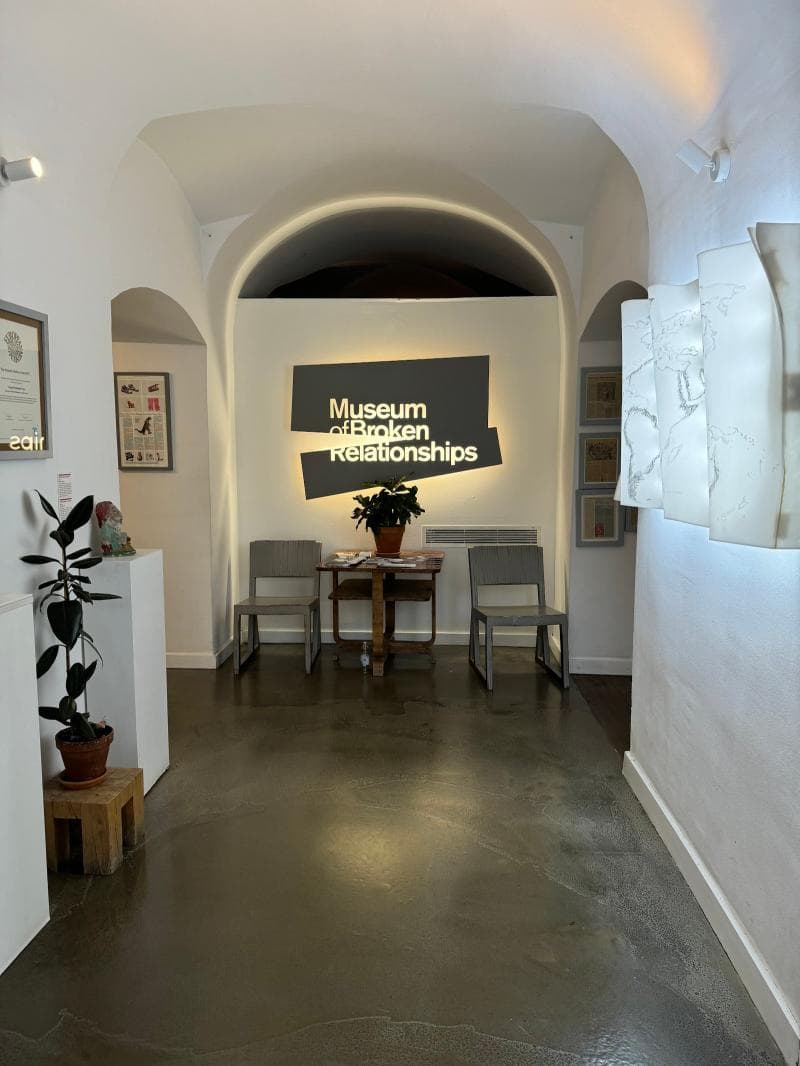
Explore Zagreb's unique Museum of Broken Relationships, a collection of objects and stories from failed connections worldwide. A moving and reflective experience in Croatia's capital.
Overview
The Museum of Broken Relationships in Zagreb, Croatia, offers a uniquely poignant and often humorous exploration of the universal human experience of heartbreak and loss. Nestled in the historic Upper Town, this award-winning institution stands as a testament to the emotional narratives that define our lives. It showcases a collection of donated objects, each a relic from a failed relationship, accompanied by its donor's personal story.
Far from a somber display, the museum provides a cathartic and reflective journey, inviting visitors to connect with the myriad ways people cope with the end of romantic, familial, or even platonic connections. The items range from the seemingly mundane to the deeply symbolic, transforming ordinary objects into powerful storytellers. The museum respects the audience's capacity for understanding wider historical and social issues inherent to different cultures and identities, while providing a personal catharsis for donors.
History & Cultural Background
The Museum of Broken Relationships originated from the personal breakup of two Zagreb-based artists, Olinka Vištica, a film producer, and Dražen Grubišić, a sculptor, in 2003. After their four-year relationship ended, they joked about creating a museum to house their leftover personal items. This idea evolved into a serious project three years later. They began by asking friends to donate objects from their own breakups, and the collection was first publicly exhibited in 2006.
Initially a traveling exhibition that toured extensively, the concept gained global recognition, gathering new items from the public in every city it visited. Recognizing its profound impact and popularity, Vištica and Grubišić made a private investment to establish a permanent location in Zagreb's Upper Town in 2010, making it the city's first privately owned museum. In 2011, the museum received the prestigious Kenneth Hudson Award for Europe's most innovative museum, acknowledging its unique concept and its ability to engage audiences through intimate, personal histories.
What Makes It Special
What sets the Museum of Broken Relationships apart is its profound simplicity and universal appeal. It is not about grand historical events or priceless artworks, but about the deeply personal and often messy experience of human connection and its dissolution. Each exhibit is a common object—a garden gnome, a stuffed bunny, an axe—imbued with immense emotional weight through the accompanying anonymous narrative provided by the donor.
The museum challenges traditional notions of what a museum should be, transforming it into a 'metaphorical space' and a 'public archive' of failed relationships. It offers a unique opportunity for individuals to process their own experiences by contributing to a collective emotional history, or simply to find solidarity in the shared human experience of heartache. The exhibits allow for a sense of catharsis, not just for the donors but also for the visitors, who often find reflections of their own lives within the stories presented.
Stories, Fun Facts & Local Details
The collection, which has grown to approximately 3,500 objects from around the world, features items that range from heartbreakingly sad to surprisingly humorous. For instance, one exhibit is a wind-up toy rabbit that 'was supposed to travel the world but never got further than Iran', donated by the founders themselves. Another memorable item is a garden gnome that flew through the air on the day a 20-year marriage ended. There's also a stiletto heel representing a memorable clandestine encounter and a letter from first loves parting ways on the brink of the war in Sarajevo.
The museum is located in the beautiful baroque Kulmer Palace, right in Zagreb's charming Upper Town, near attractions like Lotrščak Tower and St. Mark's Church. This picturesque setting adds to the reflective atmosphere. The idea is that societies often provide rituals for beginnings (marriages) and endings (funerals), but lack a formal recognition for the demise of relationships, despite their profound emotional impact. The museum fills this gap, offering a ritualistic space for acknowledging and letting go.
Visitor Perspective
A visit to the Museum of Broken Relationships is often described as an emotional rollercoaster. As you wander through the all-white rooms, reading the diverse and deeply personal stories alongside the objects, you might find yourself reflecting on your own past experiences. The museum's ability to present intensely personal grief in a way that feels strangely universal, funny, and deeply human is a key part of its appeal.
The captions for each exhibit are provided in both Croatian and English, with translations available in multiple other languages through booklets, ensuring accessibility for a global audience. The experience is about more than just viewing items; it's about connecting with the raw emotions and resilience of others. Visitors often leave with a sense of shared humanity and a renewed appreciation for the complexities of relationships, both past and present. The museum's gift shop even offers unique souvenirs designed to help visitors 'deal with love/break-up/move-on issues in a fun, ironic or comforting way'.
Coordinates: 15.97339, 45.814862
View on Google Maps💬 How Travelers Describe This Place
Based on community votes
Photogenic
683Beautiful
536Must See
489Unique
251Interesting
88
Traveler Stories
Discover memorable experiences shared by travelers who have visited this place.
No traveler stories yet.
Be the first traveler to share what made this place memorable.
Things to see at Museum Of Broken Relationships



Tour
By
Spot
Discover amazing places around the world. Your journey starts here.
Explore
© 2026 TourBySpot. All rights reserved.