Museum Exhibits
Baku, Azerbaijan
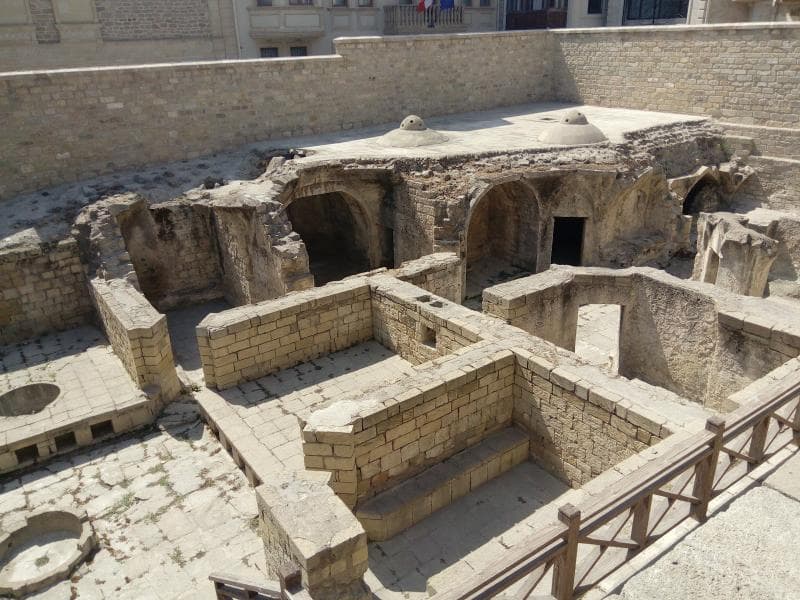
Explore the Museum Exhibits at the Palace of the Shirvanshahs in Baku, Azerbaijan, a UNESCO site showcasing medieval history, art, and culture.
Overview
Deep within the ancient walls of Icherisheher, Baku's Old City, stands the magnificent Palace of the Shirvanshahs, a 15th-century architectural marvel that served as the seat of power for the Shirvanshah dynasty. Today, this UNESCO World Heritage site functions as a comprehensive museum, inviting visitors to step back in time and explore centuries of Azerbaijani history and culture. The 'Museum Exhibits' within the palace complex offer a captivating journey through its many chambers and structures, each revealing distinct facets of life under the Shirvanshahs. Visitors can discover a rich array of artifacts, including intricate ornamental pieces, significant archaeological discoveries, exquisite ceramic ware, diverse artworks, traditional clothing, and various domestic items that paint a vivid picture of the past. Modern digital technologies are also thoughtfully integrated, bringing historical scenes and elements, such as the once-glorious royal throne and the palace's original dome decorations, to life for a truly immersive experience.
History & Cultural Background
The Palace of the Shirvanshahs was primarily constructed in the 15th century during the reign of Shirvanshah Khalilullah I, following the relocation of the Shirvanshah state's capital from Shamakhi to Baku after a devastating earthquake. The Shirvanshahs, a dynasty with roots stretching from the 6th to the 16th centuries, were among the longest-ruling in the Islamic world. This palace complex emerged not only as a political and cultural epicenter but also as a powerful symbol of their authority and grandeur. The entire complex, built from durable local limestone, encompasses several key structures: the main two-story residential building, the elegant Divankhana (reception hall), the royal mausoleum, a palace mosque, a palace bathhouse, the mausoleum of the Sufi scholar Seyid Yahya Bakuvi, and the Eastern Portal, famously known as Murad's Gate. Over its long history, the palace endured various conflicts and periods of damage, including an 18th-century Russian naval bombardment, leading to subsequent renovations that sometimes altered its original features. In 1964, recognizing its profound historical significance, the Shirvanshahs' Palace complex was officially declared a museum reserve.
What Makes It Special
What truly sets the Museum Exhibits of the Palace of the Shirvanshahs apart is their unique ability to blend authentic historical architecture with innovative modern interpretation. The complex itself is an outstanding example of Shirvan-Absheron architectural style, characterized by its intricate stone masonry, majestic domes, and gracefully arched doorways. Visitors are treated to an immersive display that goes beyond mere static artifacts. The use of digital technology within the rooms allows for stunning recreations of the palace's past splendor, including animated medieval miniatures, visualizations of the king's throne, and the intricate glazed tile decorations that once adorned the dome. Furthermore, the exhibits include rare treasures such as the Bayil Stone Friezes, unique archaeological finds rescued from the depths of the Caspian Sea and now proudly displayed within the palace museum. The Divankhana, with its ornate ceilings and detailed tilework, stands as a testament to the aesthetic sophistication of the era. The various mausoleums, particularly the Shirvanshahs' family tomb and Seyid Yahya Bakuvi's octagonal mausoleum, offer poignant insights into the spiritual and funerary customs of the dynasty.
Stories, Fun Facts & Local Details
The Palace of the Shirvanshahs is rich with fascinating stories and historical tidbits. Legend suggests that the site where the palace now stands was once a sacred worship ground and the resting place of a Sufi saint, with some ancient wells within the complex believed to possess healing properties. The mausoleum of Seyid Yahya Bakuvi, a renowned Sufi philosopher, astronomer, and mathematician, is affectionately known by locals as the 'Dervish's Tomb,' reflecting the reverence for this scholar whose works now grace libraries and museums worldwide. The residential building of the palace originally boasted 52 rooms; the lower floor, with its narrow windows, served for servants and storage, while the upper floor, featuring wider windows, was reserved for the royal family and their close associates. A poignant inscription on the portal of the Shirvanshahs' Family Tomb reveals that it was commissioned by Shirvanshah Khalilullah I in 1435-1436 CE for his mother and his young, deceased son, adding a deeply personal layer to the historical monument. Interestingly, many precious artifacts and treasures from the palace were, over centuries of conquest and conflict, transported to other lands, with some ultimately finding their way to the Topkapı Palace in Istanbul. The Eastern Portal, also known as Murad's Gate, is a curious addition, having been constructed in the 16th century, significantly later than most other structures in the complex.
Visitor Perspective
A visit to the Museum Exhibits of the Palace of the Shirvanshahs offers an unparalleled opportunity for curious travelers to immerse themselves in Azerbaijan's medieval past. As you wander through the preserved rooms, courtyards, and various structures like the burial vaults and reception halls, you gain a tangible connection to the Shirvanshah dynasty. The sheer volume of artifacts, from everyday items to regal regalia, provides a comprehensive understanding of the palace's significance and the cultural heritage it represents. Many visitors find that engaging a local guide significantly enriches the experience, offering deeper historical context and revealing subtle nuances often missed otherwise. It is recommended to allocate at least 1.5 to 2 hours to fully explore the complex and its various displays. From certain vantage points within the palace grounds, you can even catch a unique view of Baku's modern skyline, with the iconic Flame Towers rising majestically, creating a striking contrast between ancient and contemporary Azerbaijan. While exploring, visitors are kindly requested to respect the historical integrity of the artifacts by refraining from touching exhibits, and flash photography is prohibited within the palace interiors.
Coordinates: 49.83343, 40.36605
View on Google Maps💬 How Travelers Describe This Place
Based on community votes
Must See
998Unique
903Beautiful
481Interesting
458Photogenic
197
Traveler Stories
Discover memorable experiences shared by travelers who have visited this place.
No traveler stories yet.
Be the first traveler to share what made this place memorable.

Tour
By
Spot
Discover amazing places around the world. Your journey starts here.
Explore
© 2026 TourBySpot. All rights reserved.